• Skip to main content
  • Skip to primary navigation
  • Departments
    • Bioengineering
    • Civil and Environmental Engineering
    • Electrical Engineering and Computer Sciences
    • Industrial Engineering and Operations Research
    • Materials Science and Engineering
    • Mechanical Engineering
    • Nuclear Engineering
    • Aerospace program
    • Engineering Science program
  • News
    • Berkeley Engineer magazine
    • Social media
    • News videos
    • News digest (email)
    • Brand & Press kit
  • Events
    • Cal Day
    • Commencement
    • Events calendar
    • Engineering Ethics workshop
    • Homecoming
    • Kuh Lecture Series
    • Minner Lecture
    • Space reservations
    • View from the Top
  • College directory
  • For staff & faculty
Berkeley Engineering

Educating leaders. Creating knowledge. Serving society.

  • About
    • Facts & figures
    • Rankings
    • Mission & values
    • Equity & inclusion
    • Voices of Berkeley Engineering
    • Leadership team
    • Milestones
    • Buildings & facilities
    • Maps
  • Admissions
    • Undergraduate admissions
    • Graduate admissions
    • New students
    • Visit
    • Maps
    • Admissions events
    • K-12 outreach
  • Academics
    • Undergraduate programs
    • Majors & minors
    • Undergraduate Guide
    • Graduate programs
    • Graduate Guide
    • Innovation & entrepreneurship
    • Kresge Engineering Library
    • International programs
    • Executive education
  • Students
    • New students
    • Advising & counseling
    • ESS programs
    • CAEE academic support
    • Grad student services
    • Student life
    • Wellness & inclusion
    • Undergraduate Guide
    • > Degree requirements
    • > Policies & procedures
    • Forms & petitions
    • Resources
  • Research & faculty
    • Centers & institutes
    • Undergrad research
    • Faculty
    • Sustainability and resiliency
  • Connect
    • Alumni
    • Industry
    • Give
    • Stay in touch
  • New students
  • Advising & counseling
    • ESS advising
    • Faculty advising
    • Departmental advising
    • Peer advising
    • Counseling
  • ESS programs
    • PREP
    • T-PREP
    • Engineering Transfer Center
    • Engineering Mentorship Program
  • CAEE academic support
  • Grad student services
  • Student life
    • Teams & organizations
    • Student leadership
    • Career development
    • Events & workshops
  • Wellness & inclusion
    • Wellness
    • DIY academic success and self-care
    • Equity & inclusion
  • Undergraduate Guide
    • Degree requirements
    • Exams
    • Transfer credit
    • Policies & procedures
  • > Degree requirements
  • > Policies & procedures
  • Forms & petitions
  • Resources
    • ESS podcast
    • ESS newsletter
    • DIY academic success and self-care
    • The Toolkit
Home > Students > Undergraduate Guide > Degree requirements > Major programs > Joint majors > Materials Science & Engineering and Mechanical Engineering
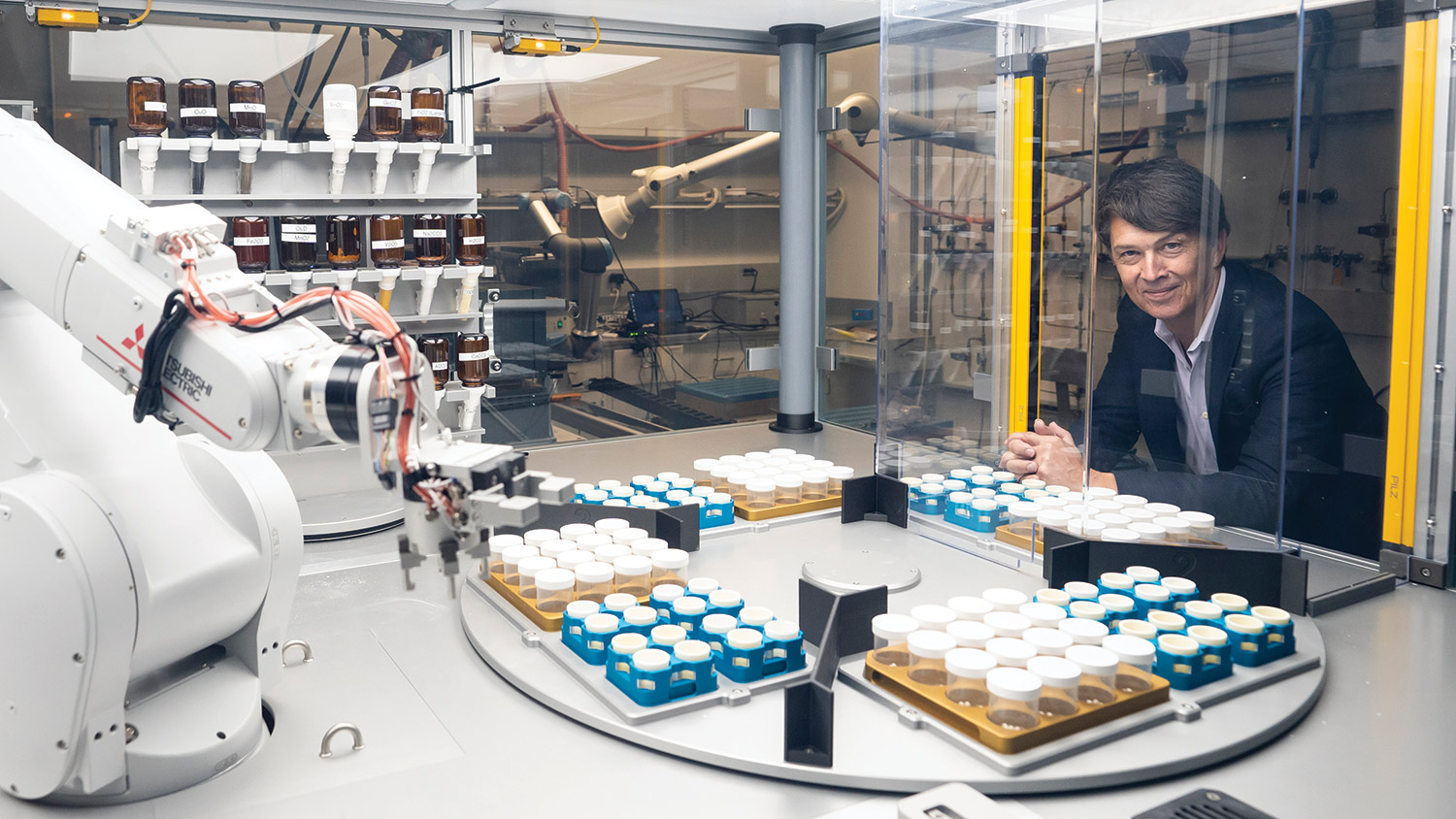
Gerbrand Ceder inside the fully automated A-Lab,Professor Gerbrand Ceder inside Berkeley Lab's fully automated A-Lab, which uses AI and robotics to synthesize new materials 24/7 without human intervention.

Materials Science & Engineering and Mechanical Engineering

  • Overview
  • Degree requirement
  • Degree worksheet

Do you want to design stronger, lighter and smarter products? The Materials Science and Engineering/Mechanical Engineering Joint Major will give you the tools to make it happen. This interdisciplinary program combines the science of materials with the principles of mechanical design, helping you understand how materials behave and how to select the right ones for real-world engineering challenges.

Contact

Engineering Student Services
120 Grimes Engineering Center
Berkeley, CA 94720
(510) 642-7594
ess@berkeley.edu

You’ll explore how metals, polymers, ceramics, composites and emerging materials perform under demanding conditions while developing the skills to design innovative solutions for structural and functional applications. Graduates are well prepared for careers in aerospace, automotive, energy, manufacturing, and other high-tech industries, as well as for graduate study at leading engineering programs.

The joint major programs are designed for students who wish to undertake study in two areas of engineering in order to qualify for employment in either field or for positions in which competence in two fields is required. These curricula include the core courses in each of the major fields. While they require slightly increased course loads, they can be completed in four years.

Want to know more? Check out the individual degree programs for Materials Science and Engineering and Mechanical Engineering.

3D printer printing blue bowl prototype.

Polymer manufacturers gain AI-powered tool to spot defects early

Close-up view of a semiconductor wafer, reflecting different colors.

Researchers discover a new pathway to building energy-efficient computing chips

Engineering Student Services
120 Grimes Engineering Center
Berkeley, CA 94720
ess@berkeley.edu
(510) 642-7594

Department Contacts

Degree worksheet:  2026

Undergraduate programs and degree worksheets from previous years are available through the Undergraduate Guide archive.

2026-2027 Joint Major Program in Materials Science and Engineering and Mechanical Engineering*
Course Fall Spring
Freshman Year
CHEM 1A – General Chemistry, or CHEM 4A – General Chemistry and Quantitative Analysis1
3-5
–
ENGIN 7 – Introduction to Computer Programming and Numerical Methods
–
4
ENGIN 26 – Three-Dimensional Modeling for Design
2
–
MATH 51 – Calculus I
4
–
MATH 52 – Calculus II
–
4
PHYSICS 7A – Physics for Scientists and Engineers
–
4
Reading & Composition Part A Course2
4
–
Reading & Composition Part B Course2
–
4
Optional Freshman Seminar or ENGIN 92 (Survey Course)
1
1
Total
15-16
16-17
Sophomore Year
ENGIN 29 – Manufacturing and Design Communication
4
–
MATSCI 45 – Properties of Materials + MATSCI 45L – Properties of Materials Laboratory
4
–
MATH 53 – Multivariable Calculus
4
–
MATH 54 – Linear Algebra and Differential Equations
–
4
MECENG 40 – Thermodynamics
–
3
MECENG C85 – Introduction to Solid Mechanics
–
3
PHYSICS 111A – Instrumentation Laboratory, or MECENG 100 – Electronics for the Internet of Things
–
4
PHYSICS 7B – Physics for Scientists and Engineers
4
–
Humanities/Social Science Course2
–
3-4
Total
16
17-18
Junior Year
ENGIN 178 – Statistics and Data Science for Engineers
–
4
MECENG 104 – Engineering Mechanics II
3
–
MECENG 106 – Fluid Mechanics
3
–
MECENG 108 – Mechanical Behavior of Engineering Materials, or MATSCI 113 – Mechanical Behavior of Engineering Materials
3-4
–
MATSCI 102 – Bonding, Crystallography, and Crystal Defects
3
–
MATSCI 103 – Phase Transformation and Kinetics
–
3
MATSCI 104 – Materials Characterization + MATSCI 104L – Materials Characterization Laboratory
–
4
Technical Elective3
–
3
Humanities/Social Science Course2
3-4
–
Total
15-17
14
Senior Year
MECENG 102B – Mechatronics Design
–
4
MECENG 103 – Experimentation and Measurements
–
4
MECENG 109 – Heat Transfer
3
–
MECENG 132 – Dynamic Systems and Feedback
3
–
MATSCI 131 – Additive Manufacturing Processes and Systems for Advanced Materials
3
–
Materials Processing and Lifecycle Elective4
3-4
Technical Electives3
3
3
Humanities/Social Science Courses2
3-4
3-4
Total
15-16
17-19
  Notes

1CHEM 4A is intended for students majoring in chemistry or a closely related field.

2The Humanities/Social Sciences (H/SS) requirement includes two approved Reading & Composition (R&C) courses and four additional approved courses, with which a number of specific conditions must be satisfied. R&C courses must be taken for a letter grade (C- or better required). The first half (R&C Part A) must be completed by the end of the freshman year; the second half (R&C Part B) must be completed by no later than the end of the sophomore year. The remaining courses may be taken at any time during the program. See engineering.berkeley.edu/hss for complete details and a list of approved courses.

3A total of 9 upper division technical elective units are required. These must include 6 units of upper division mechanical engineering courses, one of which must be from the following list: MECENG 101, 110, C117, 118, 119, 130, 133, C134, 135, 139, 146, 151, 165, C176, C178, 179 or ENGIN 128. In addition, 3 units must be from the Materials Processing and Lifecycle Elective list. Technical electives cannot include any course taken on a P/NP basis; MECENG 191AC, 190K, 191K. Students may receive up to 3 units of technical elective credit for work on a research project in MECENG H194 or MECENG 196.

4For the Materials Processing and Lifecycle Elective, please choose one course from the following:  MATSCI 112, 118, 120, 121, 122, 123, 125, 128, 129, 136, or 159.

* A minimum of 120 units is required for graduation.

The easiest, most convenient way to track your progress toward your degree requirements is to use a degree worksheet, with guidelines specific to your year of admission. You should bring your worksheet with you whenever you meet with your Engineering Student Services or faculty adviser. From your ‘My Academics’ page on CalCentral, use the ‘Semesters’ section to help complete your worksheet. When available, you can also use the Academic Progress Report to help update your degree worksheet.

Materials Science & Engineering and Mechanical Engineering: 2019 | 2020 | 2021 | 2022 | 2023 | 2024 | 2025 | 2026

If you would like to receive these documents in an alternative, accessible format, please contact eng-ada@berkeley.edu.

  • Contact
  • Give
  • Privacy
  • UC Berkeley
  • Accessibility
  • Nondiscrimination
  • instagram
  • X logo
  • linkedin
  • facebook
  • youtube
  • bluesky
© 2026 UC Regents