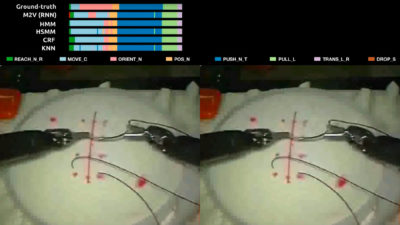
Berkeley Engineering researchers, in collaboration with an Intel team, have taught a surgical robot to suture by showing it surgical videos of actual doctors.
UC Berkeley and UIUC are the headquarters for the C3.ai Digital Transformation Institute, which announced a call for research proposals for AI technology to tackle the COVID-19 pandemic.
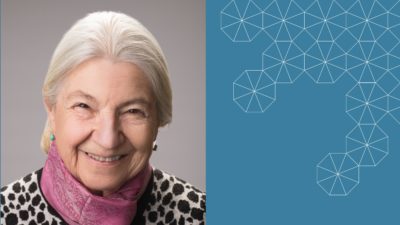
Popular Mechanics magazine named EECS professor Ruzena Bajcsy as one of 37 women who “upended science, tech, and engineering for the better.” Bajcsy, who conducted pioneering work in robotics and artificial intelligence, joins a list that includes Katherine Johnson of NASA and Nobel Prize winner Marie Curie
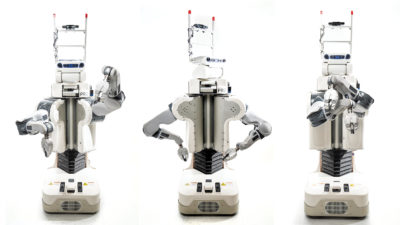
Pieter Abbeel, professor of electrical engineering and computer sciences, led a team of researchers to develop Blue, the Berkeley robot for Learning in Unstructured Environments.
Electrical engineering and computer sciences professor Dawn Song, a leading expert in computer security and trustworthy artificial intelligence, is building a platform in which people control their own data online and are compensated for its use by corporations.
Leaders in artificial intelligence are unveiling a tool to push back against deepfake videos, built in part on scanning software that UC Berkeley has been developing in partnership with the U.S. military.
Computer science researchers are using groundbreaking machine learning technologies to expose deepfake videos, manipulated images and other types of digital deception.
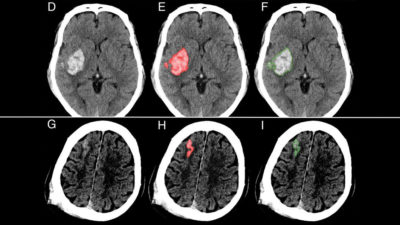
A computer algorithm developed by scientists at UCSF and UC Berkeley bested two out of four expert radiologists at finding tiny brain hemorrhages in head scans – an advance that one day may help doctors treat patients with traumatic brain injuries, strokes and aneurysms.