• Skip to main content
  • Skip to primary navigation
  • Departments
    • Bioengineering
    • Civil and Environmental Engineering
    • Electrical Engineering and Computer Sciences
    • Industrial Engineering and Operations Research
    • Materials Science and Engineering
    • Mechanical Engineering
    • Nuclear Engineering
    • Aerospace program
    • Engineering Science program
  • News
    • Berkeley Engineer magazine
    • Social media
    • News videos
    • News digest (email)
    • Press kit
  • Events
    • Events calendar
    • Commencement
    • Homecoming
    • Cal Day
    • Space reservations
    • View from the Top
    • Kuh Lecture Series
    • Minner Lecture
  • College directory
  • For staff & faculty
Berkeley Engineering

Berkeley Engineering

Educating leaders. Creating knowledge. Serving society.

  • About
    • Facts & figures
    • Rankings
    • Mission & values
    • Equity & inclusion
    • Voices of Berkeley Engineering
    • Leadership team
    • Milestones
    • Buildings & facilities
    • Maps
  • Admissions
    • Undergraduate admissions
    • Graduate admissions
    • New students
    • Visit
    • Maps
    • Admissions events
    • K-12 outreach
  • Academics
    • Undergraduate programs
    • Majors & minors
    • Undergraduate Guide
    • Graduate programs
    • Graduate Guide
    • Innovation & entrepreneurship
    • Kresge Engineering Library
    • International programs
    • Executive education
  • Students
    • New students
    • Advising & counseling
    • ESS programs
    • CAEE academic support
    • Grad student services
    • Student life
    • Wellness & inclusion
    • Undergraduate Guide
    • > Degree requirements
    • > Policies & procedures
    • Forms & petitions
    • Resources
  • Research & faculty
    • Centers & institutes
    • Undergrad research
    • Faculty
    • Sustainability and resiliency
  • Connect
    • Alumni
    • Industry
    • Give
    • Stay in touch
Home > News

Devices & inventions

EECS professor Rikky Muller

Q+A on neurotechnologies

11/10/25 — Rikky Muller is developing end-to-end devices that are smarter, safer and smaller than ever
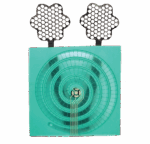
Sweat sensor

Sweat sense

11/10/25 — A tiny sweat sensor opens the door to hydration monitoring using wearables like smartwatches
underwater robot

Salty science

11/10/25 — An energy-efficient memsensor that uses vanadium dioxide works in wet, salty environments

Material intelligence

11/10/25 — Science meets shapeshifting at the Morphing Matter Lab
Headshot of Dan Fletcher, professor of bioengineering and biophysics, against gray background.

Dan Fletcher named to National Academy of Medicine

10/21/25 — Bioengineering professor recognized for his work developing mobile phone-based microscopy to diagnose infectious diseases in developing countries
Photo of Owen Kent and Todd Roberts.

Berkeley alums develop at-home robotic rehabilitation device

10/20/25 — ATDev co-founders advance new possibilities for assistive technologies
Rikky Muller, associate professor of electrical engineering and computer sciences.

With these devices, the doctor is always in

10/07/25 — Berkeley engineer Rikky Muller explains how implantable and wearable technologies are redefining patient care
Concept image of an autonomous underwater robotic snake surveying metal construction.

Researchers develop energy-efficient memory sensor for wet, salty environments

08/01/25 — Innovative design uses phase-shifting material, enabling electronic sensors to function like biological neurons
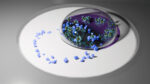
An illustration shows a ring of small purple particles, representing disease proteins, sitting on a surface. The ring is partially covered by a droplet of liquid containing enlarged cartoons of plasmonic particles.

From COVID to cancer, new at-home test spots disease with startling accuracy

07/08/25 — Novel technology uses the ‘coffee-ring effect,’ paired with plasmonics and AI, for rapid diagnostics
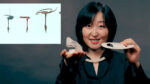
Professor Lining Yao with models created in the Morphing Matter Lab.

Inspired by nature, engineering professor’s designs fold, move and morph

07/03/25 — UC Berkeley’s Morphing Matter Lab is transforming what’s possible in engineering design with their biomimetic materials
Drew McPherson and Hannah Stuart demonstrate the newest version of the Dorsal Grasper in the Embodied Dexterity Group’s lab at UC Berkeley.

Q+A on assistive devices

06/11/25 — The Dorsal Grasper enables grasping with supernumerary robotic fingers on the back of the user's hand.
Photo of a brightly colored peacock

UC Berkeley scientists trick the eye into seeing new color ‘olo’

04/22/25 — Innovative technique provides new insight into the nature of color vision and vision loss
Runner tying her shoe next to a bottle of water.

Don’t sweat it!

04/15/25 — Wearable sweat sensor can track your hydration status during physical and mental activities
Ashmita Kumar, UC Berkeley M.E.T. student.

Ashmita Kumar’s startup aims to detect signs of stroke and save lives

03/31/25 — Using AI and an iPhone, Berkeley EECS student seeks to improve stroke health care
Yunsup Lee holding RISC V prototype chip.

‘RISC architecture is gonna change everything’

03/31/25 — Wired: David Patterson, CS professor emeritus and inventor of RISC, explains how words from the 1995 movie Hackers may hold true today
Macro shot of white insect-sized drone held in fingertips of a UC Berkeley researcher.

Berkeley engineers create world’s smallest wireless flying robot

03/28/25 — The bumblebee-inspired robot, less than a centimeter in diameter, can hover, change directions and even hit small targets.
The Dorsal Grasper assistive device, developed by UC Berkeley engineers, facilitates human-robot collaborative grasping. Its supernumerary robotic fingers on the back of the hand are grasping a tennis ball.

New assistive device enhances grasping for people with spinal cord injuries

02/10/25 — Dorsal Grasper provides an intuitive, collaborative grasping approach
SpaceCAL 3D printer awaiting June 2024 launch on VSS Unity; Taylor Waddell (inset)

Manufacturing in microgravity

11/20/24 — Berkeley researchers sent their 3D printing technology to space as part of the Virgin Galactic 07 mission.
Illustration of a person with the earbuds that can help them stay awake. Illustration by Adobe Stock and Adam Lau

Staying alert

11/20/24 — Engineers have designed earbuds that can detect signs of drowsiness in the brain.
Lung cancer metastasis.

Powerful new mini microscope will enable precision cancer surgery

08/22/24 — UCSF: Researchers win up to $15 million from ARPA-H to develop next-gen miniature scanner to detect individual cancer cells during surgery
  • Go to page 1
  • Go to page 2
  • Go to page 3
  • Interim pages omitted …
  • Go to page 23
  • Go to Next Page »
  • Contact
  • Give
  • Privacy
  • UC Berkeley
  • Accessibility
  • Nondiscrimination
  • instagram
  • X logo
  • linkedin
  • facebook
  • youtube
  • bluesky
© 2025 UC Regents