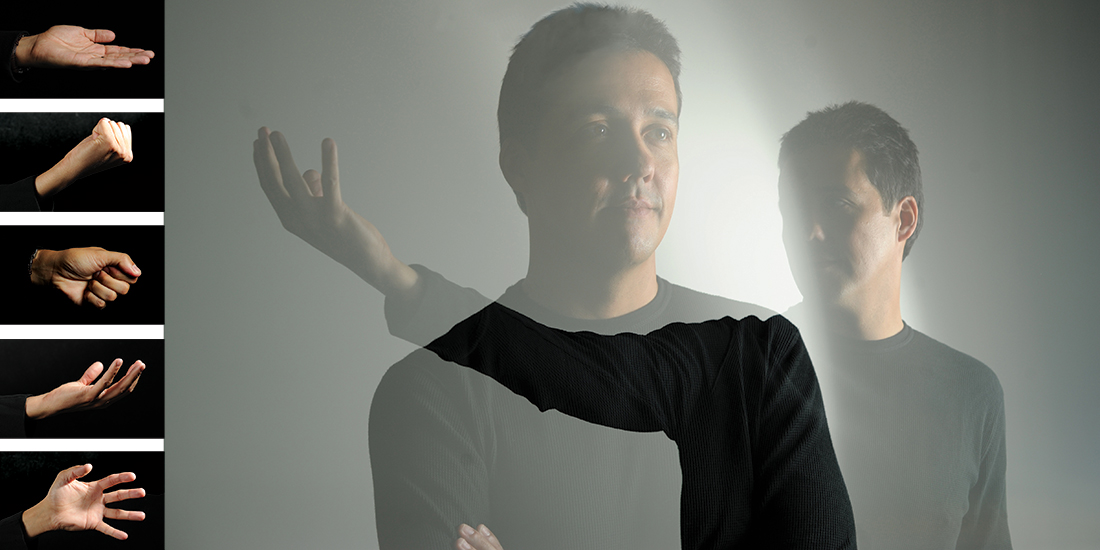
11/01/12 — A multi-institutional team of researchers has created the first artificial molecules whose chirality - a molecule's distinct right or left orientation - can be quickly switched from right to left with a beam of light.
09/26/12 — Civil engineering undergrad Lilian Kabelle is one of seven new students from Sub-Saharan Africa attending Berkeley this fall at no cost as part of The MasterCard Foundation Scholars Program. The $500-million initiative will provide some 15,000 talented yet financially disadvantaged young people in developing countries with full scholarships and comprehensive support for their high school and college educations.
09/02/12 Daily Cal — The first project of the Hyundai R&D Global Frontier Program establishes Hyundai Center of Excellence at UC Berkeley and UC Davis, world leaders in automotive engineering and technology research. Through this initiative, select Hyundai engineers will join top researchers at both universities to work on vehicle dynamics and integrated vehicle safety systems. The Center of Excellence will conduct research projects aimed at making Hyundai vehicles safer, better-handling, and more fun to drive.
05/25/12 R & D Magazine — Through biomineralization, nature is able to produce such engineering marvels as mother of pearl, or nacre, the inner lining of abalone shells renowned for both its iridescent beauty and amazing toughness. Key to biomineralization is the phenomenon known as "oriented attachment," whereby adjacent nanoparticles connect with one another in a common crystallographic orientation. Researchers at Berkeley Lab, including Berkeley Engineering professor Jillian Banfield, have reported the first direct observation of what they have termed "jump-to-contact," the critical step in oriented attachment.
05/17/12 — Thanks to a generous grant of $60 million from the Simons Foundation, UC Berkeley is poised to become the worldwide center for theoretical computer science.
05/01/12 — In January 2012, the Berkeley Lab named the Richmond Field Station as its top choice for a second campus; pending regulatory reviews, LBNL aims to open new research space by 2016.
05/01/12 — Bioengineering professor Amy Herr and graduate student Kelly Karns developed a microfluidic assay to test human tears for eye disease-specific proteins.
05/01/12 — In California, single drivers of hybrid vehicles could drive in carpool lanes until 2011, but after the state put the brakes on the program, transportation engineer Michael Cassidy and graduate student Kitae Jang found that hybrids in standard lanes slowed traffic on Bay Area freeways.
05/01/12 — In spring 2012, the Floating Sensor Network project, led by associate professor of EECS Alexandre Bayen, launched a flotilla of 100 robots down the Sacramento River to provide data on water movement and pollutant spread.
05/01/12 — Small and inexpensive wireless sensors placed throughout our physical world are capturing and transmitting streams of information about conditions in places, things and even our behavior.
04/17/12 — Electric motorcycles are quiet, and from a power perspective more efficient. Both traits are not lost on the rider. “If you get on these electric motorcycles the first thing you notice is a magic carpet ride feel,” says Abe Askenazi, B.S'92, M.S'94 ME. “It's almost like flying. It feels like you are on a glider and this thing is propelling you forward. You don't hear all of the drama of power production, you are just doing it.” Askenazi has traveled a long road to become the chief technology officer at Zero Motorcycles, one of the nation's leading electric motorcycle manufacturers.
04/10/12 Stanford University — Berkeley Engineering professor Scott Shenker is co-director of the new Open Networking Research Center, which is exploring software-defined networking (SDN) as a paradigm for making networks simpler and less expensive while expanding their capacities. Industry sponsors include Cisco, Google, Hewlett-Packard and Intel.
03/19/12 — About 60 percent of the water used in California comes from Sierra Nevada snowmelt. Monthly measurements help water managers estimate the amount of water held in the snowpack and allow them to allocate the state's most precious resource. Now, the Sierra Nevada is going high tech. Wireless sensors developed by Steven Glaser, professor of civil and environmental engineering, are being tested in an ambitious pilot project at the UC Merced Sierra Nevada Research Institute.
03/19/12 — After a year in Asia and South America visiting research labs that lacked the basics, Lina Nilsson - a post-doctoral researcher in the bioengineering lab of professor Daniel Fletcher - and a team of engineering colleagues brainstormed about how to develop low-cost, accessible tools that could produce research-grade results. The team evolved into Tekla Labs, a cooperative of ten partners from Berkeley Engineering and UCSF. Their idea won first place for social entrepreneurship in the 2010-11 Big Ideas @ Berkeley contest.
03/19/12 — Most days (and nights), you'll find Ernest Ting-Ta Yen, a mechanical engineering Ph.D. student, immersed in the complexities of his microelectromechanical systems research. The aluminum nitride resonators he builds, aimed at new cell phones and communications applications, are designed to help shrink mobile devices while increasing functionality. Happen upon him in his graduate student office at midnight, though, and you'll hear lovely strains of music. Yen practices from midnight to 2 a.m., the only hours available to this busy researcher.
02/09/12 — Industrial engineering professor Rhonda Righter (M.S'82, Ph.D'86 IEOR) is tackling a new assignment: serving as a volunteer role model to 35 middle-school girls. Visiting an after-school science enrichment program called Techbridge, Righter described her field and how she chose it to a group of students at Oakland's American Indian Public Charter School. Her presentation was intended to introduce the girls to engineering with the hope that they will one day be inspired to pursue studies and careers in it or a related field. “Industrial engineering is all about making things better,” Righter explained. “We're like detectives who solve puzzles.”