• Skip to main content
  • Skip to primary navigation
  • Departments
    • Bioengineering
    • Civil and Environmental Engineering
    • Electrical Engineering and Computer Sciences
    • Industrial Engineering and Operations Research
    • Materials Science and Engineering
    • Mechanical Engineering
    • Nuclear Engineering
    • Aerospace program
    • Engineering Science program
  • News
    • Berkeley Engineer magazine
    • Social media
    • News videos
    • News digest (email)
    • Brand & Press kit
  • Events
    • Cal Day
    • Commencement
    • Events calendar
    • Engineering Ethics workshop
    • Homecoming
    • Kuh Lecture Series
    • Minner Lecture
    • Space reservations
    • View from the Top
  • College directory
  • For staff & faculty
Berkeley Engineering

Educating leaders. Creating knowledge. Serving society.

  • About
    • Facts & figures
    • Rankings
    • Mission & values
    • Equity & inclusion
    • Voices of Berkeley Engineering
    • Leadership team
    • Milestones
    • Buildings & facilities
    • Maps
  • Admissions
    • Undergraduate admissions
    • Graduate admissions
    • New students
    • Visit
    • Maps
    • Admissions events
    • K-12 outreach
  • Academics
    • Undergraduate programs
    • Majors & minors
    • Undergraduate Guide
    • Graduate programs
    • Graduate Guide
    • Innovation & entrepreneurship
    • Kresge Engineering Library
    • International programs
    • Executive education
  • Students
    • New students
    • Advising & counseling
    • ESS programs
    • CAEE academic support
    • Grad student services
    • Student life
    • Wellness & inclusion
    • Undergraduate Guide
    • > Degree requirements
    • > Policies & procedures
    • Forms & petitions
    • Resources
  • Research & faculty
    • Centers & institutes
    • Undergrad research
    • Faculty
    • Sustainability and resiliency
  • Connect
    • Alumni
    • Industry
    • Give
    • Stay in touch
  • Undergraduate programs
    • Aerospace Engineering
    • Bioengineering
    • Civil Engineering
    • Electrical Engineering & Computer Sciences
    • Engineering Science
    • Industrial Engineering & Operations Research
    • Materials Science & Engineering
    • Mechanical Engineering
    • Nuclear Engineering
    • Undeclared
  • Majors & minors
    • Major options
    • Minors
    • Change of major
  • Undergraduate Guide
  • Graduate programs
    • Professional master’s programs
    • MBA/MEng
  • Graduate Guide
  • Innovation & entrepreneurship
  • Kresge Engineering Library
  • International programs
    • GLOBE
    • Study abroad
  • Executive education
Home > Academics > Undergraduate programs > Electrical & Computer Engineering
Three students working on a robotic structureThree students working together, building a robotics in a design showcase in Berkeley, Calif. (Photo by Adam Lau/UC Berkeley Engineering)

Electrical & Computer Engineering

  • Overview
  • Degree requirement
  • Degree worksheet

If you’re curious about how technology works and want to help shape the future, electrical and computer engineering (ECE) is a powerful path. ECE is behind many of today’s most exciting innovations — from smartphones and self-driving cars to medical devices and clean energy solutions. It’s a field that plays a crucial role in technological advancements across interdisciplinary areas that include neurotechnology, integrated circuits, microelectronics, nanotechnology, computer architecture, sensing and communication, robotics and sustainable energy systems. Electrical and computer engineers apply math, science and engineering to develop technology that has a direct impact on our daily lives.

Why choose Berkeley?

Contact

Department of Electrical Engineering & Computer Sciences

205 Cory Hall 
Berkeley, CA 94720-1770
(510) 642-3214
Contact EECS

As our world becomes more connected and digital, the demand for engineers with ECE skills is growing fast. From solving the global chip shortage to building smarter systems, ECE professionals are at the forefront of change. The ECE major at Berkeley prepares students to enter industry, federal government organizations and academia by providing a balanced combination of breadth and depth of knowledge about the ever-changing field and industrial market in ECE.

If you would like to concentrate on electrical engineering, ECE gives you the tools to make a real impact. Join our community of innovators to help build a better, smarter future.

Sound interesting? Learn more about the Department of Electrical Engineering and Computer Sciences. You can also explore a comparison chart to see how the department’s majors differ in their focus.
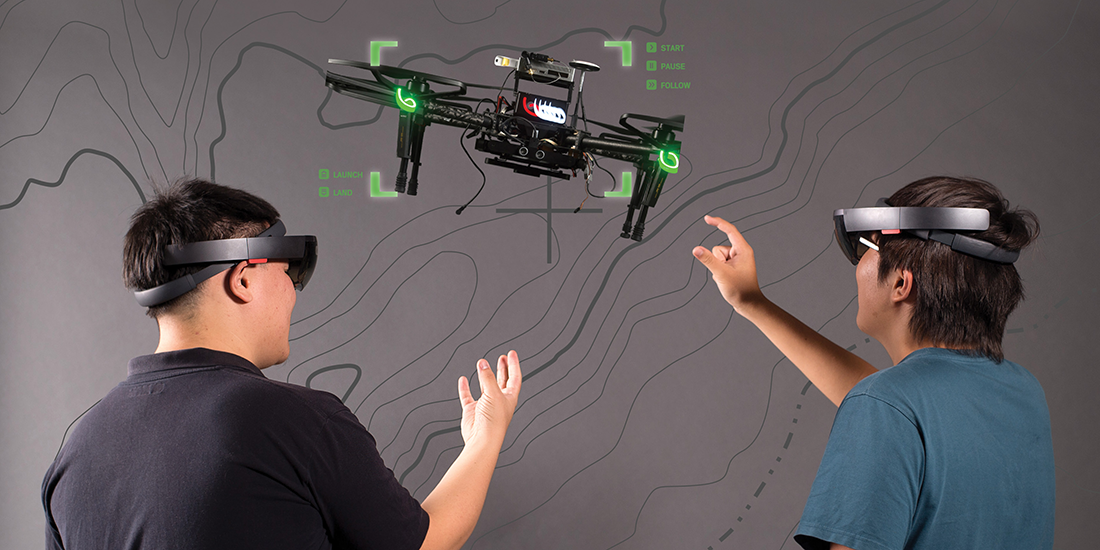
Men using augmented reality headsets to control a drone

Seeing is believing

Dash robot parts

Dash Robotics

Engineering Student Services
120 Grimes Engineering Center
Berkeley, CA 94720
ess@berkeley.edu
(510) 642-7594

Department Contacts

Degree worksheet:  2026

Undergraduate programs and degree worksheets from previous years are available through the Undergraduate Guide archive.

Course Fall Spring
Freshman Year
COMPSCI 61A – The Structure and Interpretation of Computer Programs
4
–
COMPSCI 61C – Great Ideas of Computer Architecture (Machine Structures)
–
4
MATH 51 – Calculus I
4
–
MATH 52 – Calculus II
–
4
Physics 7A – Physics for Scientists and Engineers – 4
Reading & Composition Part A Course1
4
–
Reading & Composition Part B Course1
–
4
Science Elective2
3-5
–
Total
15-17
16
Sophomore Year
MATH 53 – Multivariable Calculus
4
–
MATH 54 – Linear Algebra and Differential Equations or Physics 89 – Introduction to Mathematical Physics
–
4
PHYSICS 7B – Physics for Scientists and Engineers
4
–
Probability3 – 4
Ethics6 3-4 –
Free Electives7 3
Humanities/Social Sciences Courses1
3-4
3-4
Total
14-16
14-15
Junior Year
ELENG 66 – Introduction to Signals, Dynamics, and Information
4
–
ELENG 64 – Introduction to Circuits & Devices
4
–
ECE Major Breadth4 – 8
Technical Elective5
4
4
Humanities/Social Sciences Courses1
3-4
3-4
Total
15-16
15-16
Senior Year
Technical Elective5
8
–
ECE Major Breadth4
4
–
Free Electives7
4
9-12
Total
16
9-12
Notes

* A minimum of 120 units is required for graduation.

1The Humanities/Social Sciences (H/SS) requirement includes two approved Reading & Composition (R&C) courses and four additional approved courses, with which a number of specific conditions must be satisfied. R&C courses must be taken for a letter grade (C- or better required). The first half (R&C Part A) must be completed by the end of the freshman year; the second half (R&C Part B) must be completed by no later than the end of the sophomore year. The remaining courses may be taken at any time during the program. See engineering.berkeley.edu/hss for complete details and a list of approved courses.

2Students must complete one Science Elective option from the following list:  ASTRON 7A, 7B; BIOLOGY 1A+1AL, 1B; CHEM 1A+1AL, 1B, 3A+3AL, 3B+3BL, 4A, 4B; MCELLBI 32+32L; PHYSICS 5C+5CL, 7C; an upper division course of at least three units in ASTRON, CHEM (except 100, 149, or 192), EPS (except C100), INTEGBI (except 101, C105, 191), MCELLBI, or PHYSICS (except 100).

3Students must complete one Probability course from the following list:  COMPSCI 70, MATH 55, STAT 134, or INDENG 172.

4Students must complete three ECE Major Breadth courses from the following  list:  COMPSCI 61B; ELENG 105, 108, 117, 120; EECS C106A.

5Students must complete four Technical Electives from the following list:  COMPSCI 152, 162, 164; EECS 106A, 106B, 127, 149, 151 (must also take either 151LA or 151LB); ELENG 113, 113B, 117, 118, 120, 121, 122, 123, 126, C128, 130, 134, 137A, 137B, 140, 142, 143, 144, C145B, C145L, C145M, 146L, 147, 192, 194 (must be 3+ units).

  • One of the four courses must provide a major design experience and be selected from the following options:  COMPSCI 162, 164; ELENG 113B, C128, 130, 140, 143, 192; EECS C106A, C106B, 149, 151 (must also take either 151LA or 151LB).

6Students must complete one course about Engineering Ethics or social implications of technology. This may be fulfilled by completing one of the following courses: BIOENG 100*; COMPSCI 195, H195; DATA C104*; ENE,RES C100*, W100*; ENGIN 125*, 157AC*, 185*; HISTORY C184D*; IAS 157AC*; ISF 100D*, 100G* (C100G does not fulfill ethics); MEDIAST 104D*; NWMEDIA 151AC*; PHILOS 121*; PUBPOL C184*, W184*; STS C104D*; UGBA 107* (cannot be used by M.E.T. students). Of these courses, those with an asterisk (*) will also fulfill an upper division Humanities/Social Sciences requirement.

7Free electives can be any technical or non-technical course, any course of your interest offered by any department; there are no restrictions. Free electives may be necessary in order to obtain the minimum 120 units for graduation.

Course Fall Spring
1st and 2nd Semesters
COMPSCI 61A – The Structure and Interpretation of Computer Programs
4
–
COMPSCI 61C – Great Ideas of Computer Architecture (Machine Structures)
–
4
ELENG 66 – Introduction to Signals, Dynamics, and Information
4
–
ELENG 64 – Introduction to Circuits & Devices
–
4
Humanities/Social Sciences Courses1
4
4
Total
12
12
3rd and 4th Semesters
Probability3
4
–
ECE Major Breadth4
4
4
Technical Elective5
4
8
Humanities/Social Sciences Courses1
3-4
3-4
Total
15-16
15-16
5th Semester**
ECE Major Breadth4
4
Technical Elective5
4
Ethics6
1-4
Total
9-12
Notes

* A minimum of 120 units is required for graduation.

1The Humanities/Social Sciences (H/SS) requirement includes two approved Reading & Composition (R&C) courses and four additional approved courses, with which a number of specific conditions must be satisfied. R&C courses must be taken for a letter grade (C- or better required). The first half (R&C Part A) must be completed by the end of the freshman year; the second half (R&C Part B) must be completed by no later than the end of the sophomore year. The remaining courses may be taken at any time during the program. See engineering.berkeley.edu/hss for complete details and a list of approved courses.

2Students must complete one Science Elective option from the following list:  ASTRON 7A, 7B; BIOLOGY 1A+1AL, 1B; CHEM 1A+1AL, 1B, 3A+3AL, 3B+3BL, 4A, 4B; MCELLBI 32+32L; PHYSICS 5C+5CL, 7C; an upper division course of at least three units in ASTRON, CHEM (except 100, 149, or 192), EPS (except C100), INTEGBI (except 101, C105, 191), MCELLBI, or PHYSICS (except 100).

3Students must complete one Probability course from the following list:  COMPSCI 70, MATH 55, STAT 134, or INDENG 172.

4Students must complete three ECE Major Breadth courses from the following  list:  COMPSCI 61B; ELENG 105, 108, 117, 120; EECS C106A.

5Students must complete four Technical Electives from the following list:  COMPSCI 152, 162, 164; EECS 106A, 106B, 127, 149, 151 (must also take either 151LA or 151LB); ELENG 113, 113B, 117, 118, 120, 121, 122, 123, 126, C128, 130, 134, 137A, 137B, 140, 142, 143, 144, C145B, C145L, C145M, 146L, 147, 192, 194 (must be 3+ units).

  • One of the four courses must provide a major design experience and be selected from the following options:  COMPSCI 162, 164; ELENG 113B, C128, 130, 140, 143, 192; EECS C106A, C106B, 149, 151 (must also take either 151LA or 151LB).

6Students must complete one course about Engineering Ethics or social implications of technology. This may be fulfilled by completing one of the following courses: BIOENG 100*; COMPSCI 195, H195; DATA C104*; ENE,RES C100*, W100*; ENGIN 125*, 157AC*, 185*; HISTORY C184D*; IAS 157AC*; ISF 100D*, 100G* (C100G does not fulfill ethics); MEDIAST 104D*; NWMEDIA 151AC*; PHILOS 121*; PUBPOL C184*, W184*; STS C104D*; UGBA 107* (cannot be used by M.E.T. students). Of these courses, those with an asterisk (*) will also fulfill an upper division Humanities/Social Sciences requirement.

7Free electives can be any technical or non-technical course, any course of your interest offered by any department; there are no restrictions. Free electives may be necessary in order to obtain the minimum 120 units for graduation.

The easiest, most convenient way to track your progress toward your degree requirements is to use a degree worksheet, with guidelines specific to your year of admission. You should bring your worksheet with you whenever you meet with your Engineering Student Services or faculty adviser. From your ‘My Academics’ page on CalCentral, use the ‘Semesters’ section to help complete your worksheet. When available, you can also use the Academic Progress Report to help update your degree worksheet.

Electrical & Computer Engineering:  2025 | 2026

If you would like to receive these documents in an alternative, accessible format, please contact eng-ada@berkeley.edu.

  • Contact
  • Give
  • Privacy
  • UC Berkeley
  • Accessibility
  • Nondiscrimination
  • instagram
  • X logo
  • linkedin
  • facebook
  • youtube
  • bluesky
© 2026 UC Regents