• Skip to main content
  • Skip to primary navigation
  • Departments
    • Bioengineering
    • Civil and Environmental Engineering
    • Electrical Engineering and Computer Sciences
    • Industrial Engineering and Operations Research
    • Materials Science and Engineering
    • Mechanical Engineering
    • Nuclear Engineering
    • Aerospace program
    • Engineering Science program
  • News
    • Berkeley Engineer magazine
    • Social media
    • News videos
    • News digest (email)
    • Brand & Press kit
  • Events
    • Cal Day
    • Commencement
    • Events calendar
    • Homecoming
    • Kuh Lecture Series
    • Minner Lecture
    • Space reservations
    • View from the Top
  • College directory
  • For staff & faculty
Berkeley Engineering

Educating leaders. Creating knowledge. Serving society.

  • About
    • Facts & figures
    • Rankings
    • Mission & values
    • Equity & inclusion
    • Voices of Berkeley Engineering
    • Leadership team
    • Milestones
    • Buildings & facilities
    • Maps
  • Admissions
    • Undergraduate admissions
    • Graduate admissions
    • New students
    • Visit
    • Maps
    • Admissions events
    • K-12 outreach
  • Academics
    • Undergraduate programs
    • Majors & minors
    • Undergraduate Guide
    • Graduate programs
    • Graduate Guide
    • Innovation & entrepreneurship
    • Kresge Engineering Library
    • International programs
    • Executive education
  • Students
    • New students
    • Advising & counseling
    • ESS programs
    • CAEE academic support
    • Grad student services
    • Student life
    • Wellness & inclusion
    • Undergraduate Guide
    • > Degree requirements
    • > Policies & procedures
    • Forms & petitions
    • Resources
  • Research & faculty
    • Centers & institutes
    • Undergrad research
    • Faculty
    • Sustainability and resiliency
  • Connect
    • Alumni
    • Industry
    • Give
    • Stay in touch
  • Undergraduate programs
    • Aerospace Engineering
    • Bioengineering
    • Civil Engineering
    • Electrical Engineering & Computer Sciences
    • Engineering Science
    • Industrial Engineering & Operations Research
    • Materials Science & Engineering
    • Mechanical Engineering
    • Nuclear Engineering
    • Undeclared
  • Majors & minors
    • Major options
    • Minors
    • Change of major
  • Undergraduate Guide
  • Graduate programs
    • Professional master’s programs
    • MBA/MEng
  • Graduate Guide
  • Innovation & entrepreneurship
  • Kresge Engineering Library
  • International programs
    • GLOBE
    • Study abroad
  • Executive education
Home > Academics > Undergraduate programs > Bioengineering
Bioengineers in the labBioengineering researchers study regenerating damaged cardiac tissue. (Photo by Noah Berger)

Bioengineering

  • Overview
  • Degree requirement
  • Degree worksheet

You’re equally intrigued by electronics and biology. Or you want to invent revolutionary biocompatible medical implants. Or you’re interested in the intersection of information technology and pharmaceutical development. Or any number of the infinite possibilities that come from applying engineering to biological systems. Bioengineering is a growing discipline, and much work in this area involves research and development. Genetics, nanotechnology, medical devices and tissue engineering are just a few of the many professional outlets for bioengineers. Some students even use their degrees as launching points for careers in management, business or law.

Why choose Berkeley?

Contact

Department of Bioengineering
306 Stanley Hall # 1762
Berkeley, CA 94720-1762
(510) 642-5833
bioeng@berkeley.edu

Because our bioengineering programs are ranked among the top in the nation, according to U.S. News & World Report. Because our major features small, specialized upper-division courses in multiple concentration areas — biomedical devices, biomedical imaging, cell and tissue engineering and computational and synthetic biology — as well as significant interaction with professors. Because we collaborate with such institutions as UCSF and Lawrence Berkeley National Laboratory, and we connect with the larger Bay Area biotech industry. Our faculty research specialties include bioinstrumentation, biomaterials and nanotechnology, cell and tissue engineering, computational biology, and systems and synthetic biology. And the department offers many opportunities for undergraduate research.

Sound interesting? Learn more about the Department of Bioengineering.

Kevin Healy

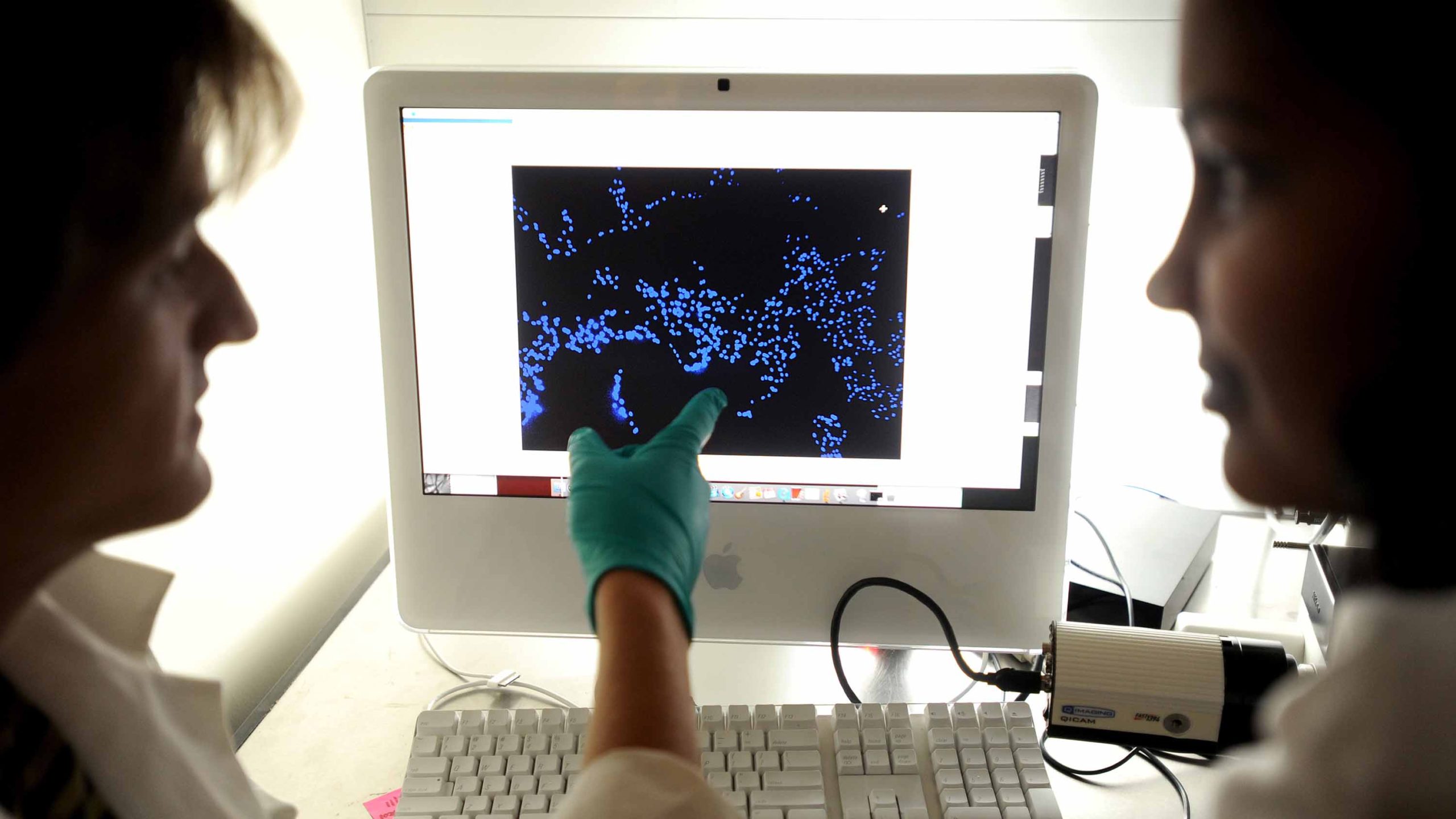
Microscopic models of the human heart

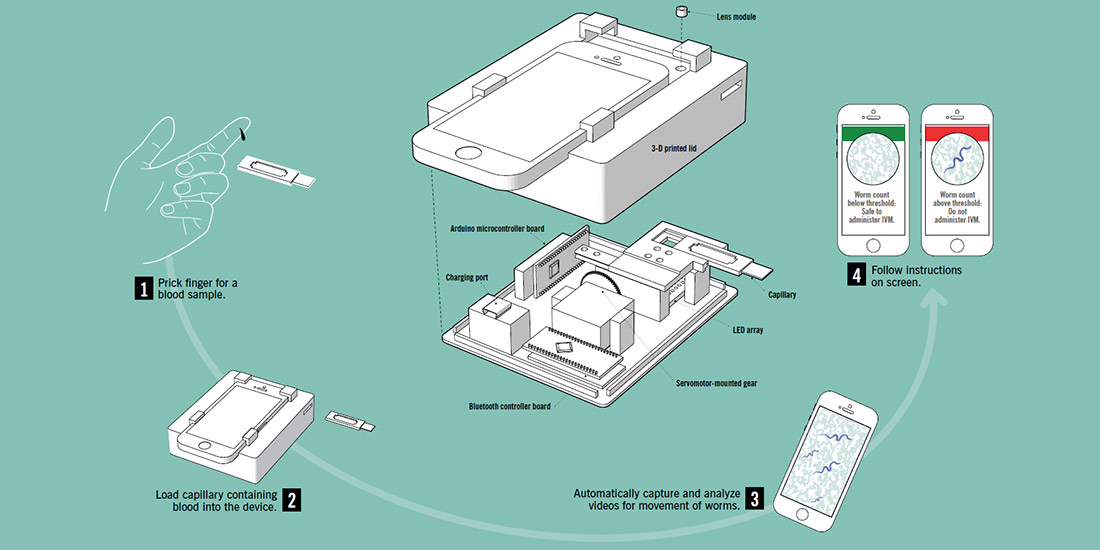
CellScope Loa

Engineering Student Services
120 Grimes Engineering Center
Berkeley, CA 94720
ess@berkeley.edu
(510) 642-7594

Department Contacts

Degree worksheet:  2026

Undergraduate programs and degree worksheets from previous years are available through the Undergraduate Guide archive.

Course Fall Spring
Freshman Year
BIOENG 10 – Introduction to Biomedicine for Engineers 4 –
CHEM 1A+1AL – General Chemistry, or CHEM 4A – General Chemistry and Quantitative Analysis1 5 –
CHEM 3A+3AL – Chemical Structure and Reactivity, or CHEM 12A – Organic Chemistry1 – 5
MATH 51 – Calculus I 4 –
MATH 52 – Calculus II – 4
PHYSICS 7A – Physics for Scientists and Engineers – 4
Seminars: BIOENG 26 – Introduction to Bioengineering, and BIOENG 25 – Careers in Biotechnology2 1 1
Reading & Composition Part A Course3 4 –
Reading & Composition Part B Course3 – 4
Total 18 18
Sophomore Year
BIOENG 11 – Engineering Molecules 1 – 3
ENGIN 7 – Introduction to Computer Programming and Numerical Methods, or COMPSCI 61A – Structure and Interpretation of Computer Programs 4 –
MATH 53 – Multivariable Calculus 4 –
MATH 54 – Linear Algebra and Differential Equations – 4
PHYSICS 7B – Physics for Scientists and Engineers 4 –
Engineering Course4 – 3-4
Humanities/Social Sciences Courses2,3 3-4 3-4
Total 15-16 13-15
Junior Year
Bioengineering Fundamentals5 4 4
Engineering Course4 3-4 –
Upper Division Technical Topics6 3-4 3
Upper Division Technical Topics (also an Engineering Course)4,6 3
Humanities/Social Sciences Course2,3 – 3-4
BIOENG 100 – Ethics in Science and Engineering, or Humanities/Social Sciences Course (with Ethics Content)2,3 3 –
Total 13-15 13-14
Senior Year
Bioengineering Lab Course7 4 –
Upper Division Technical Topics (also an Engineering Course)4,6 3-4 –
Bioengineering Design Project or Research8 3-4 –
Bioengineering Upper Division Courses9 8
Free Electives10 3-4 7
Total 13-16 15
Notes

* A minimum of 120 units is required for graduation.

1CHEM 4A and 12A are intended for students majoring in chemistry or a closely related field. Note: Prerequisites to CHEM 12A include CHEM 1B or CHEM 4B.

2This requirement may be completed at any time in the program.

3The Humanities/Social Sciences (H/SS) requirement includes two approved Reading & Composition (R&C) courses and four additional approved courses, with which a number of specific conditions must be satisfied. R&C courses must be taken for a letter grade (C- or better required). The first half (R&C Part A) must be completed by the end of the freshman year; the second half (R&C Part B) must be completed by no later than the end of the sophomore year. The remaining courses may be taken at any time during the program. See engineering.berkeley.edu/hss for complete details and a list of approved courses. Consult the Ethics Content List for a list of approved courses with ethics content.

4Students must complete a minimum of 48 engineering units. See concentrations for recommendations. The 48 units of engineering courses cannot include: any course taken on a P/NP basis; courses numbered 24, 39, 84; BIOENG 100; CHMENG 185; COMPSCI 70, C79; DATA C104; DESINV courses (except DESINV 15, 22, 23, 90E, 190E); ENGIN 68, 125, 157AC, 170 series, 180, 183 series, 184, 185, 187, 195 series; INDENG 95, 172, 185, 186, 190 series, 191, 192, 195; MECENG 191AC, 190K, 191K. There is no limit to the number of letter-graded research units that can be applied to the 48 engineering units.

5Choose courses from the approved Bioengineering Fundamentals list. See concentrations for recommendations.

6Students must complete a minimum of 36 units of upper division Technical Topics courses. Choose courses from the approved Technical Topics list.  See concentrations for recommendations. Up to 8 units of research (BIOENG H194 and/or BIOENG 196) can be included in this total. The 36 units of upper division Technical Topics cannot include BIOENG 100, 153, 253, any other seminar-style courses or group meetings, or any course taken on a P/NP basis.

7Choose course from the approved Bioengineering Lab list. See concentrations for recommendations.

8Choose course from the approved Bioengineering Design Project or Research list. See concentrations for recommendations.

9Students must complete a minimum of 24  units of upper division Bioengineering courses, including at least two Bioengineering Fundamentals courses, one Bioengineering Design Project or Research course, and one Bioengineering Lab course. See concentrations for recommendations. Up to 4 units of research (BIOENG H194 and/or BIOENG 196) can be included in this total. The 24 units of upper division Bioengineering courses cannot include BIOENG 100, 153, 253, any other seminar-style courses or group meetings, or any courses taken on a P/NP basis.

10Free electives can be any technical or non-technical course, any course of your interest offered by any department; there are no restrictions. Free electives may be necessary in order to obtain the minimum 120 units for graduation.

Course Fall Spring
1st and 2nd Semesters
Seminars: BIOENG 26 – Introduction to Bioengineering, and BIOENG 25 – Careers in Biotechnology1 1 1
BIOENG 11 – Engineering Molecules I – 3-4
ENGIN 7 –  Introduction to Computer Programming for Scientists and Engineers, or COMPSCI 61A – Structure and Interpretation of Computer Programs 4 –
Engineering Course2 4 –
Bioengineering Fundamentals3 4 4
Engineering Course2 4
BIOENG 100 – Ethics in Science and Engineering, or Humanities/Social Sciences Course (with Ethics Content)1,4 3-4 –
Humanities/Social Sciences Course1,4 – 3-4
Total 16-17 15-17
3rd and 4th Semesters
Bioengineering Upper Division Courses5 4 4
Upper Division Technical Topics6 4 4
Upper Division Technical Topics (also an Engineering Courses)2,6 4 4
Humanities/Social Sciences Courses1,4 3-4 3-4
Total 15-16 15-16
5th Semester**
Bioengineering Lab Course7 4
Bioengineering Design Project or Research8 4
Engineering Course 4
Total 12
Notes

* A minimum of 120 units is required for graduation.

**Transfer students who would like to enroll for a fifth semester must contact their ESS Adviser to change their degree term.

1This requirement may be completed at any time in the program.

2Students must complete a minimum of 48 engineering units. See concentrations for recommendations. The 48 units of engineering courses cannot include: any course taken on a P/NP basis; courses numbered 24, 39, 84; BIOENG 100; CHMENG 185; COMPSCI 70, C79; DATA C104; DESINV courses (except DESINV 15, 22, 23, 90E, 190E); ENGIN 68, 125, 157AC, 170 series, 180, 183 series, 184, 185, 187, 195 series; INDENG 95, 172, 185, 186, 190 series, 191, 192, 195; MECENG 191AC, 190K, 191K. There is no limit to the number of letter-graded research units that can be applied to the 48 engineering units.

3Choose courses from the approved Bioengineering Fundamentals list. See concentrations for recommendations.

4The Humanities/Social Science (H/SS) requirement includes two approved Reading & Composition courses and four additional approved courses, with which a number of specific conditions must be satisfied. Reading & Composition parts A and B must be completed by no later than the end of the sophomore year. The remaining courses may be taken at any time during the program. See engineering.berkeley.edu/hss for complete details and a list of approved courses. Consult the Ethics Content List  for a list of approved courses with ethics content.

5Students must complete a minimum of 24  units of upper division Bioengineering courses, including at least two Bioengineering Fundamentals courses, one Bioengineering Design Project or Research course, and one Bioengineering Lab course. See concentrations for recommendations. Up to 4 units of research (BIOENG H194 and/or BIOENG 196) can be included in this total. The 24 units of upper division Bioengineering courses cannot include BIOENG 100, 153, 253, any other seminar-style courses or group meetings, or any courses taken on a P/NP basis.

6Students must complete a minimum of 36 units of upper division Technical Topics courses. Choose courses from the approved Technical Topics list.  See concentrations for recommendations. Up to 8 units of research (BIOENG H194 and/or BIOENG 196) can be included in this total. The 36 units of upper division Technical Topics cannot include BIOENG 100, 153, 253, any other seminar-style courses or group meetings, or any course taken on a P/NP basis.

7Choose course from the approved Bioengineering Lab list. See concentrations for recommendations.

8Choose course from the approved Bioengineering Design Project or Research list. See concentrations for recommendations.

The easiest, most convenient way to track your progress toward your degree requirements is to use a degree worksheet, with guidelines specific to your year of admission. You should bring your worksheet with you whenever you meet with your Engineering Student Services or faculty adviser. From your ‘My Academics’ page on CalCentral, use the ‘Semesters’ section to help complete your worksheet. When available, you can also use the Academic Progress Report to help update your degree worksheet.

Bioengineering: 2019 | 2020 | 2021 | 2022 | 2023 | 2024 I 2025 | 2026

If you would like to receive these documents in an alternative, accessible format, please contact eng-ada@berkeley.edu.

  • Contact
  • Give
  • Privacy
  • UC Berkeley
  • Accessibility
  • Nondiscrimination
  • instagram
  • X logo
  • linkedin
  • facebook
  • youtube
  • bluesky
© 2026 UC Regents