• Skip to main content
  • Skip to primary navigation
  • Departments
    • Bioengineering
    • Civil and Environmental Engineering
    • Electrical Engineering and Computer Sciences
    • Industrial Engineering and Operations Research
    • Materials Science and Engineering
    • Mechanical Engineering
    • Nuclear Engineering
    • Aerospace program
    • Engineering Science program
  • News
    • Berkeley Engineer magazine
    • Social media
    • News videos
    • News digest (email)
    • Brand & Press kit
  • Events
    • Cal Day
    • Commencement
    • Events calendar
    • Engineering Ethics workshop
    • Homecoming
    • Kuh Lecture Series
    • Minner Lecture
    • Space reservations
    • View from the Top
  • College directory
  • For staff & faculty
Berkeley Engineering

Berkeley Engineering

Educating leaders. Creating knowledge. Serving society.

  • About
    • Facts & figures
    • Rankings
    • Mission & values
    • Equity & inclusion
    • Voices of Berkeley Engineering
    • Leadership team
    • Milestones
    • Buildings & facilities
    • Maps
  • Admissions
    • Undergraduate admissions
    • Graduate admissions
    • New students
    • Visit
    • Maps
    • Admissions events
    • K-12 outreach
  • Academics
    • Undergraduate programs
    • Majors & minors
    • Undergraduate Guide
    • Graduate programs
    • Graduate Guide
    • Innovation & entrepreneurship
    • Kresge Engineering Library
    • International programs
    • Executive education
  • Students
    • New students
    • Advising & counseling
    • ESS programs
    • CAEE academic support
    • Grad student services
    • Student life
    • Wellness & inclusion
    • Undergraduate Guide
    • > Degree requirements
    • > Policies & procedures
    • Forms & petitions
    • Resources
  • Research & faculty
    • Centers & institutes
    • Undergrad research
    • Faculty
    • Sustainability and resiliency
  • Connect
    • Alumni
    • Industry
    • Give
    • Stay in touch
Home > News

Research

Dean’s word: Disrupting health care by design

11/01/15 — An expanding network, including a new partnership with UCSF Benioff Children's Hospital Oakland, allows the joint efforts of alumni, faculty and students to engineer solutions and change the scope of improving health care.
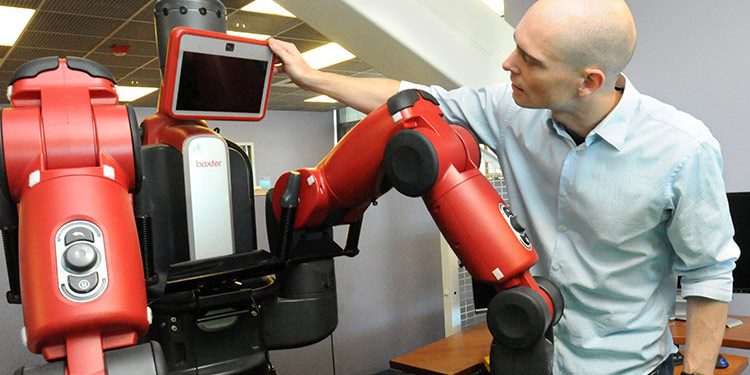
BRETT with EECS professor Pieter Abbeel.

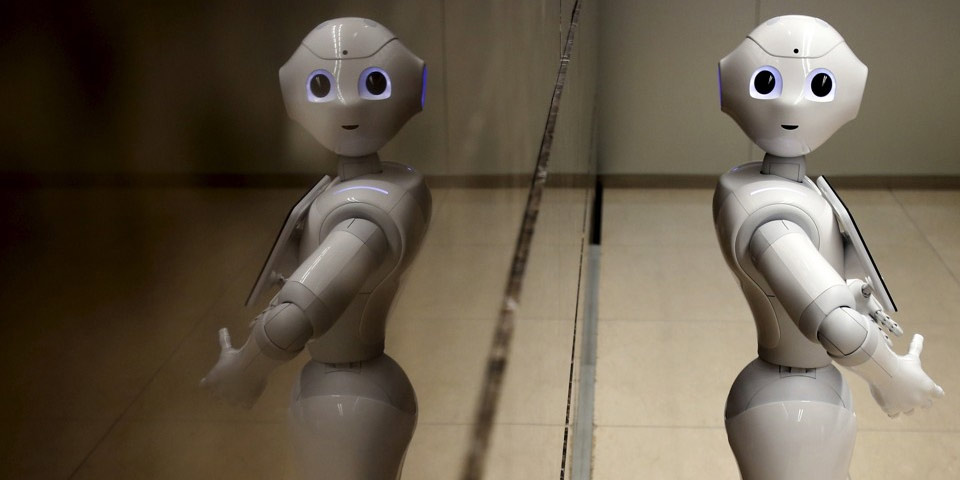
Q+A with BRETT

11/01/15 — “How can we get a robot to think about situations it's never seen before?” asks EECS professor Pieter Abbeel. In this Q&A, BRETT, resident robot in Abbeel's lab, describes its experiences with deep learning.
Aeriel view of glaciers in Southwest British Columbia.

Origin science

11/01/15 — Where did the first Americans come from? Recent findings suggest evidence that both supports and dispels some earlier ideas about the origin of the Americas.

GMOs on lockdown

11/01/15 — Using a strain of E. coli, Berkeley engineers may have found a way to lock and unlock a single gene with a single chemical molecule.

Light-speed genetics

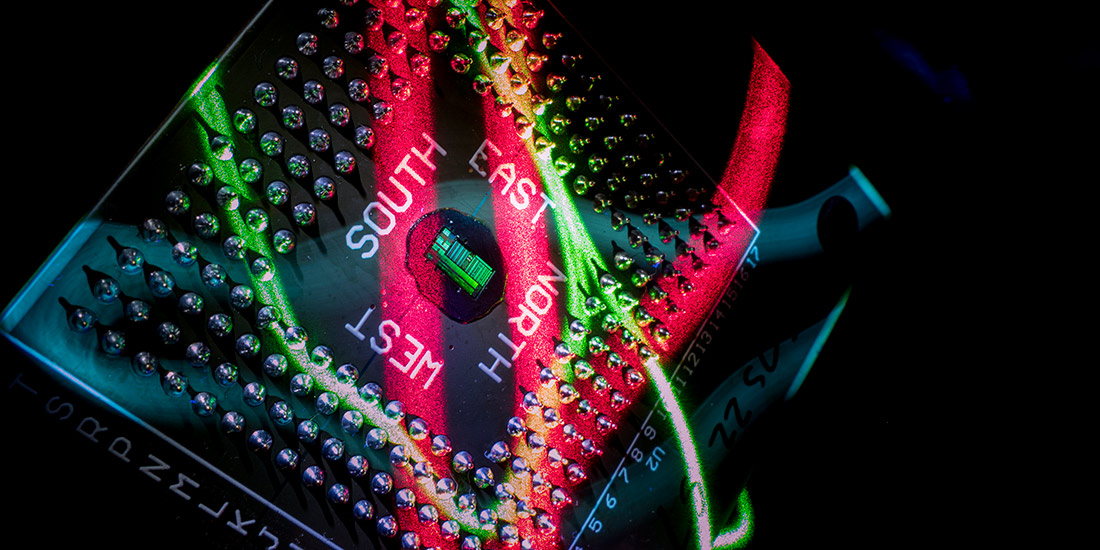
11/01/15 — Traditional polymerase chain reaction genetics tests take hours and lots of energy to perform. Researchers have now cut the waiting time and cost of the photonic PCR system without losing resolution.
Graduate student researcher Zack Phillips demonstrating the modified Cellscope

Undergrad research on the rise at Cal

10/27/15 Blum Center — A team of six young EECS students working in the Computational Imaging Lab, whose LED array dome extended the reach of the CellScope microscope, exemplifies the mutual benefits of research by undergraduates at UC Berkeley.
Dignitaries open TBSI

Tsinghua-Berkeley Shenzhen Institute inaugurated in China

10/26/15 — Some 200 guests turned out Oct. 20 for a ceremony to inaugurate the new Tsinghua-Berkeley Shenzhen Institute (TBSI) in Shenzhen, China. The joint research institute provides a platform for innovative research and graduate student education to fuel economic growth, solve global problems and train industry leaders.
Electric field at the edges of a 2D excitonic laser resonator

Exciting breakthrough in 2D lasers

10/20/15 Berkeley Lab — Berkeley Lab researchers, led by mechanical engineering professor Xiang Zhang, have developed an atomically thin excitonic laser, achieving bright light emissions at visible light wavelengths in what could be a major step forward for high-performance optical communication and computing applications.
Image by Barrett Lyon/The Opte Project

EECS faculty members awarded NSF grants for cybersecurity research

10/08/15 National Science Foundation — Three EECS faculty members, David Wagner, Dawn Song and Sanjit Seshia, were awarded cybersecurity research grants from the National Science Foundation. The grants are part of NSF's $74.5 million Secure and Trustworthy Cyberspace (SaTC) program.
Thermal power plant

Berkeley to lead energy and water consortium

10/05/15 — Berkeley, in partnership with UC Irvine and Berkeley Lab, will lead a five-year, multi-million dollar international research effort to tackle water-related aspects of energy production and use. Civil and environmental engineering professor Ashok Gadgil will head the new consortium.
Brett (Berkeley Robot for the Elimination of Tedious Tasks)

Preschool for robots

09/08/15 Bloomberg Business — Want machines to learn the way human toddlers do? You need a “classroom” equipped with Lego blocks and plenty of patience. Just ask Brett, or robotics professor Pieter Abbeel.
LIDAR map from NOAA

Self-sweeping laser could dramatically shrink 3-D mapping systems

09/03/15 — A new approach that uses light to move mirrors could usher in a new generation of laser technology for a wide range of applications, including remote sensing, self-driving car navigation and 3-D biomedical imaging. The engineering team was led by EECS professor Connie Chang-Hasnain.
Frame from time-lapse video showing DNA repair activity in a cell

Time-lapse analysis offers new look at how cells repair DNA damage

09/01/15 Berkeley Lab — Time-lapse imaging can make lengthy, complicated processes easier to grasp. Now Berkeley Lab scientists led by Sylvain Costes (Ph.D'99 NE) are using a similar approach to study how cells repair DNA damage.
Chameleon

Nature’s mood rings: How chameleons really change color

08/31/15 KQED — A PBS program on chameleons' color-changing abilities also looks at work led by EECS professor Connie Chang-Hasnain to create a color-changing array out of nano-sized silicon ribbons etched onto a flexible film.
Flashing LEDs on drone

‘License plates’ for drones could hold rogue operators accountable

08/20/15 — Berkeley engineers from the Lightcense project are testing a kind of license plate for drones - a rectangular array of bright, multicolored LEDs attached to the underside of a craft - that they think could help make drone operators more accountable.
Mouse with cheese

Engineered hot fat implants reduce weight gain in mice

08/20/15 — Scientists at UC Berkeley have developed a novel way to engineer the growth and expansion of energy-burning “good” fat, and then found that this fat helped reduce weight gain and lower blood glucose levels in mice. The technique could lead to new approaches to combat obesity, diabetes and other metabolic disorders.
Ricky Muller

Entrepreneur and alumna Rikky Muller named a top Innovator under 35

08/18/15 Berkeley Research — Rikky Muller (Ph.D.'13 EECS), co-founder of the medical device start-up Cortera Neurotechnologies, has been named one of 35 Innovators Under 35 by the MIT Technology Review. Muller's research into hardware that buzzes the brain at the right moments could help treat debilitating mental disorders.
Testing on PEER

Pioneering shaking table continues to be innovative

08/12/15 Structure magazine — Built in 1972, PEER's shaking table at the Richmond Field Station continues to make waves. With smart technology and other enhancements, the venerable testing device - the largest six-degree-of-freedom table in the U.S. - advances the science of earthquake engineering.
Energy-generating wind turbines

Siebel Energy Institute launches with major Berkeley presence

08/03/15 — The Siebel Energy Institute, a global university consortium focused on smart energy, marked its debut Aug. 3 by announcing 24 research grants nearing $1 million. The winning proposals, many of them led by Berkeley Engineering faculty, will accelerate improved performance in modern energy systems.
Memory chip and circuit diagram

Small tilt in magnets makes them viable memory chips

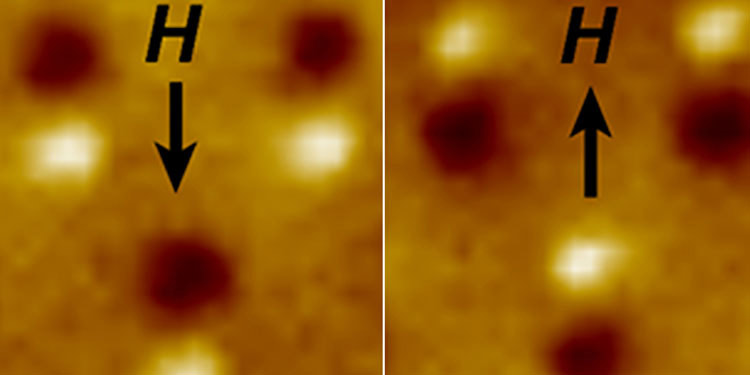
08/03/15 — EECS researchers at Berkeley have discovered a new way to switch the polarization of nanomagnets, paving the way for high-density storage to move from hard disks onto integrated circuits. The development could lead to computers that turn on in an instant, operate with far greater speed and use significantly less power.
  • « Go to Previous Page
  • Go to page 1
  • Interim pages omitted …
  • Go to page 22
  • Go to page 23
  • Go to page 24
  • Go to page 25
  • Go to page 26
  • Interim pages omitted …
  • Go to page 35
  • Go to Next Page »
  • Contact
  • Give
  • Privacy
  • UC Berkeley
  • Accessibility
  • Nondiscrimination
  • instagram
  • X logo
  • linkedin
  • facebook
  • youtube
  • bluesky
© 2026 UC Regents