• Skip to main content
  • Skip to primary navigation
  • Departments
    • Bioengineering
    • Civil and Environmental Engineering
    • Electrical Engineering and Computer Sciences
    • Industrial Engineering and Operations Research
    • Materials Science and Engineering
    • Mechanical Engineering
    • Nuclear Engineering
    • Aerospace program
    • Engineering Science program
  • News
    • Berkeley Engineer magazine
    • Social media
    • News videos
    • News digest (email)
    • Press kit
  • Events
    • Events calendar
    • Commencement
    • Homecoming
    • Cal Day
    • Space reservations
    • View from the Top
    • Kuh Lecture Series
    • Minner Lecture
  • College directory
  • For staff & faculty
Berkeley Engineering

Berkeley Engineering

Educating leaders. Creating knowledge. Serving society.

  • About
    • Facts & figures
    • Rankings
    • Mission & values
    • Equity & inclusion
    • Voices of Berkeley Engineering
    • Leadership team
    • Milestones
    • Buildings & facilities
    • Maps
  • Admissions
    • Undergraduate admissions
    • Graduate admissions
    • New students
    • Visit
    • Maps
    • Admissions events
    • K-12 outreach
  • Academics
    • Undergraduate programs
    • Majors & minors
    • Undergraduate Guide
    • Graduate programs
    • Graduate Guide
    • Innovation & entrepreneurship
    • Kresge Engineering Library
    • International programs
    • Executive education
  • Students
    • New students
    • Advising & counseling
    • ESS programs
    • CAEE academic support
    • Grad student services
    • Student life
    • Wellness & inclusion
    • Undergraduate Guide
    • > Degree requirements
    • > Policies & procedures
    • Forms & petitions
    • Resources
  • Research & faculty
    • Centers & institutes
    • Undergrad research
    • Faculty
    • Sustainability and resiliency
  • Connect
    • Alumni
    • Industry
    • Give
    • Stay in touch
Home > News

Computer science

Software for blending and averaging images

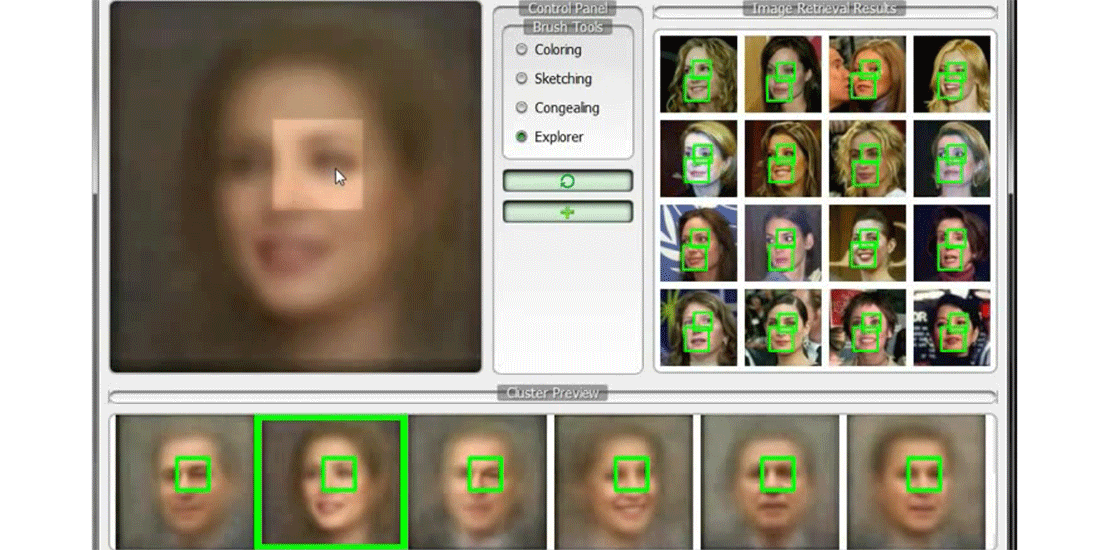
New tool makes a single picture worth a thousand – and more – images

08/14/14 — New software developed by UC Berkeley computer scientists seeks to tame the growing sea of visual data by generating an "average" photo that can represent many thousands of related images.
AMPlab: Algorithms, machines, people

What cars did for today’s world, data may do for tomorrow’s

08/12/14 New York Times — Berkeley's AMP Lab, created two years ago for research into new kinds of large-scale computing, has become a key part of the world-changing ecosystem of digital hardware and software, spinning out companies like Databricks and Mesosphere that make megacomputing systems available and affordable.
Manipulated 3D images of a paper crane

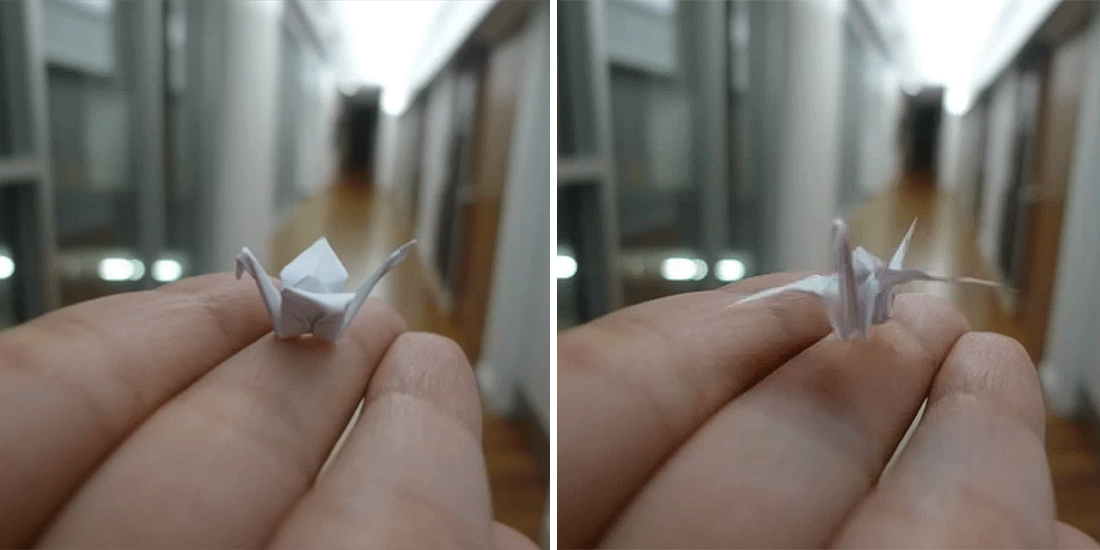
Photo editing tool enables object images to be manipulated in 3-D

08/06/14 R&D Magazine — A team including EECS professor Alexei Efros, formerly of Carnegie Mellon but now at Berkeley, created a photo editing tool that lets users manipulate images in 3-D so that objects can be turned or flipped and even originally hidden surfaces can be exposed.
Video showing how vision correction technology works

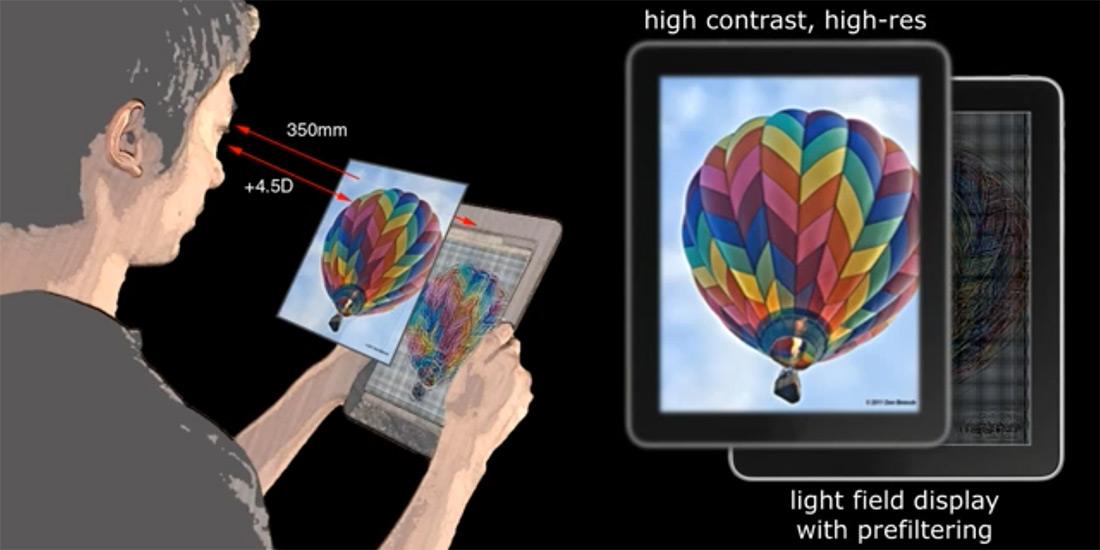
Vision-correcting display makes reading glasses so yesterday

07/29/14 — Researchers at UC Berkeley are developing vision-correcting displays that can compensate for a viewer's visual impairments to create sharp images without the need for glasses or contact lenses.
Michael Jordan

Researcher Michael Jordan wins $100,000 Rumelhart Prize for cognitive science

07/28/14 — EECS and statistics professor Michael Jordan is the 2015 recipient of the prestigious David E. Rumelhart Prize for his contributions to computational models of human learning.
Password entry field

Password managers hacked: Researchers find ‘critical’ vulnerabilities

07/15/14 siliconANGLE — Berkeley Engineering researchers have discovered several quickly-patched vulnerabilities in popular password managers that could allow attackers to gain access.
Ian Stoica

Databricks Spark plans: Big data Q&A

07/01/14 Information Week — Ian Stoica, computer science professor and CEO of Databricks, talks about his company's bold vision to make Databricks and its Apache Spark core, developed in UC Berkeley's AMPLab in 2009, into big data's epicenter of analysis.
diagram of laser sensing technology

New laser sensing technology for self-driving cars, smartphones and 3-D video games

05/29/14 Science Codex — A new twist on 3-D imaging technology, being developed at Berkeley Engineering, could one day enable your self-driving car to spot a child in the street half a block away, let you answer your Smartphone from across the room with a wave of your hand, or play "virtual tennis" on your driveway. EECS Ph.D. candidate Behnam Behroozpour will present the team's work at the CLEO: 2014 conference in San Jose in June.
Dawn Song

The last firewall

05/01/14 — Implantable medical devices, brain-machine interfaces and wearable technology all present intensifying privacy and security challenges. Better to build security into such devices rather than trying to layer it over them later.

Out for a spin

05/01/14 — New work by Berkeley researchers could transform modern electronics by making nanomagnetic switches a viable replacement for the conventional transistors found in all computers.
Johnny Depp in Transcendence

Neuroengineers bring science cred, Berkeley feel to ‘Transcendence’ film

04/18/14 — When Hollywood knocked on the doors of UC Berkeley engineering professors Michel Maharbiz and Jose Carmena, the researchers answered. Director Wally Pfister tapped the researchers' expertise in neural engineering and brain-machine interfaces during the filming of his movie, “Transcendence.”
Eric Allman

Email innovator Eric Allman named to Internet Hall of Fame

04/09/14 Internet Society — Software pioneer Eric Allman (B.S.'77 EECS, M.S.'80 CS), whose creation of the sendmail program in the 1980s made possible email as we know it today, has been inducted into the Internet Hall of Fame. Joining him as a member of the class of 2014 is the late Douglas Engelbart (Ph.D.'55 EE), father of the computer mouse.

Be the change, Code the Change

04/04/14 — Christine Loh first heard of “Code the Change” in a Facebook post as a junior electrical engineering and computer science major in 2012. Shortly after, she and classmate Brian Tseng (Class of 2016) launched a Berkeley chapter of the national organization, began hosting a student-run course, and connected eager classmates with more than a dozen nonprofit organizations in need of technical help.
Ben Recht with students

Making sense of big data

03/12/14 Berkeley Research — Ben Recht is looking for problems. Recht, an assistant professor with dual appointments in EECS and statistics, develops mathematical strategies that help researchers cut through blizzards of data to find what they're after, be they urban planners or online retailers.
Application engineers at Box Notes

Women missing out on lucrative careers in computer science

02/27/14 SiliconValley.com — A special report on women in computing profiles Ayushi Samaddar (B.S.'13 EECS), having a "marvelous" time in her first post-graduation job as an associate software engineer, and talks to EECS chair David Culler about the need to involve more women in shaping information technology, "something that is so important to our future."
Students in computer science class

Revamped computer science classes attracting more women

02/18/14 San Francisco Chronicle — A gender flip in computer science classes -- with more women than men enrolled in an introductory course -- shows UC Berkeley at the vanguard of a tech world shift, beginning to see a payoff in efforts to attract more women to a field where they have always been vastly underrepresented.

With Melt app, Shane Wey rediscovers the power of voice

09/11/13 — For some, the explosion of visual media and the Internet's transformation as a space dominated by images feels inevitable. But Shane Wey (B.S. '10 EECS) sees things differently. Bucking the digital visual trend, Wey cofounded Melt, an audio-based micro-blogging app that underscores the power of voice. Have a listen.

Paying bug bounties is more cost-effective than a security team, study finds

07/10/13 PC World — Paying rewards to independent security researchers for finding software problems is a vastly better investment than hiring employees to do the same work, according to UC Berkeley computer science researchers who studied vulnerability reward programs run by Google and Mozilla.

Spark, born in Berkeley’s AMPLab, ‘rewrites future of big data’

06/21/13 Wired — Teaming with a particularly ambitious group of computer scientists from UC Berkeley, Yahoo is installing a new data crunching platform called Spark, which is about 100 times faster than the mighty Hadoop - an open source software creation that underpins a Who's Who of the internet, including Facebook and Twitter - and could very well replace Hadoop as the stuff that fuels the modern web.

Return of the Borg: How Twitter rebuilt Google’s secret weapon

03/05/13 Wired — Borg is a Google software system that coordinates tasks across the search giant's vast fleet of servers. At Twitter, a small team of engineers has built a similar system using Mesos, an open-source software platform developed by UC Berkeley researchers. Ben Hindman, who founded the Mesos project as an EECS Ph.D. student, now oversees its use at Twitter.
  • « Go to Previous Page
  • Go to page 1
  • Interim pages omitted …
  • Go to page 9
  • Go to page 10
  • Go to page 11
  • Go to page 12
  • Go to Next Page »
  • Contact
  • Give
  • Privacy
  • UC Berkeley
  • Accessibility
  • Nondiscrimination
  • instagram
  • X logo
  • linkedin
  • facebook
  • youtube
  • bluesky
© 2025 UC Regents