• Skip to main content
  • Skip to primary navigation
  • Departments
    • Bioengineering
    • Civil and Environmental Engineering
    • Electrical Engineering and Computer Sciences
    • Industrial Engineering and Operations Research
    • Materials Science and Engineering
    • Mechanical Engineering
    • Nuclear Engineering
    • Aerospace program
    • Engineering Science program
  • News
    • Berkeley Engineer magazine
    • Social media
    • News videos
    • News digest (email)
    • Press kit
  • Events
    • Events calendar
    • Commencement
    • Homecoming
    • Cal Day
    • Space reservations
    • View from the Top
    • Kuh Lecture Series
    • Minner Lecture
  • College directory
  • For staff & faculty
Berkeley Engineering

Berkeley Engineering

Educating leaders. Creating knowledge. Serving society.
  • About
    • Facts & figures
    • Rankings
    • Mission & values
    • Equity & inclusion
    • Voices of Berkeley Engineering
    • Leadership team
    • Milestones
    • Buildings & facilities
    • Maps
  • Admissions
    • Undergraduate admissions
    • Graduate admissions
    • New students
    • Visit
    • Maps
    • Admissions events
    • K-12 outreach
  • Academics
    • Undergraduate programs
    • Majors & minors
    • Undergraduate Guide
    • Graduate programs
    • Graduate Guide
    • Innovation & entrepreneurship
    • Kresge Engineering Library
    • International programs
    • Executive education
  • Students
    • New students
    • Advising & counseling
    • ESS programs
    • CAEE academic support
    • Grad student services
    • Student life
    • Wellness & inclusion
    • Undergraduate Guide
    • > Degree requirements
    • > Policies & procedures
    • Forms & petitions
    • Resources
  • Research & faculty
    • Centers & institutes
    • Undergrad research
    • Faculty
    • Sustainability and resiliency
  • Connect
    • Alumni
    • Industry
    • Give
    • Stay in touch
Home > News

Computer science

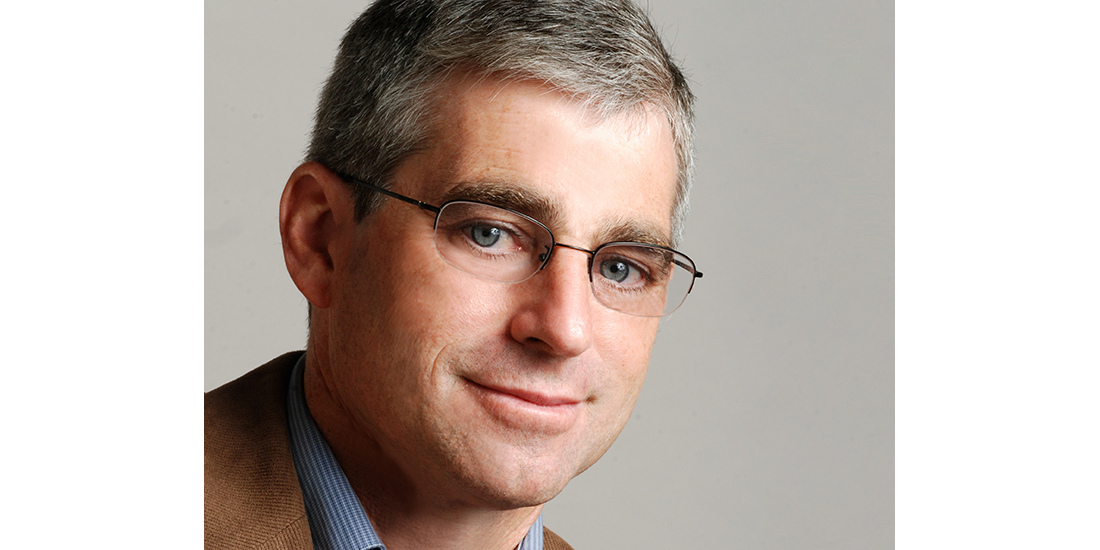
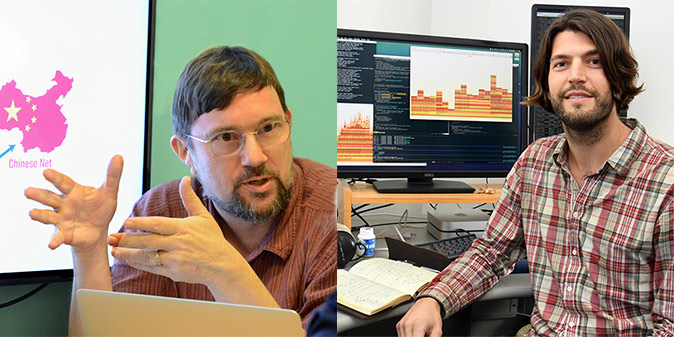
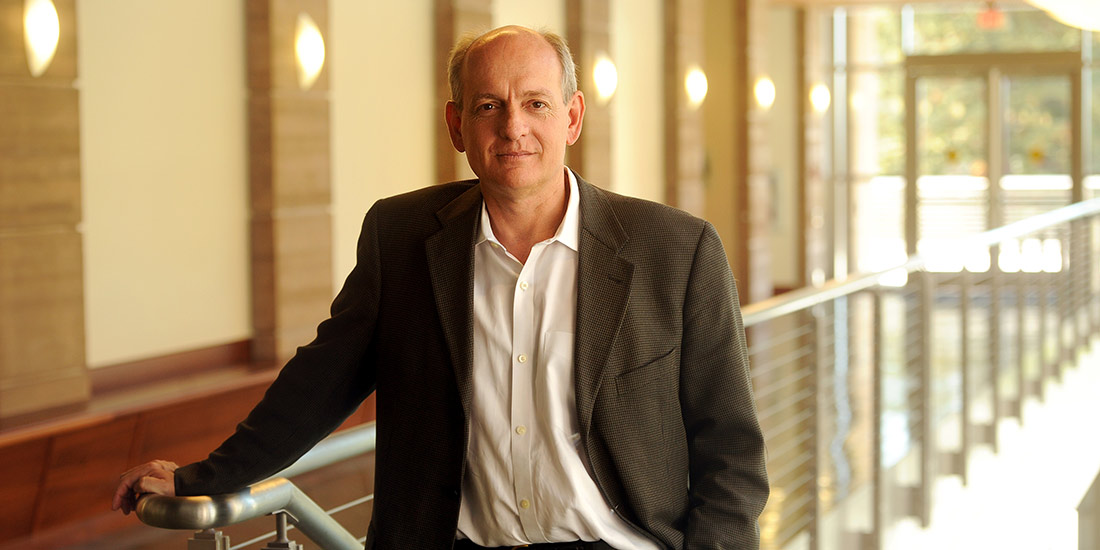
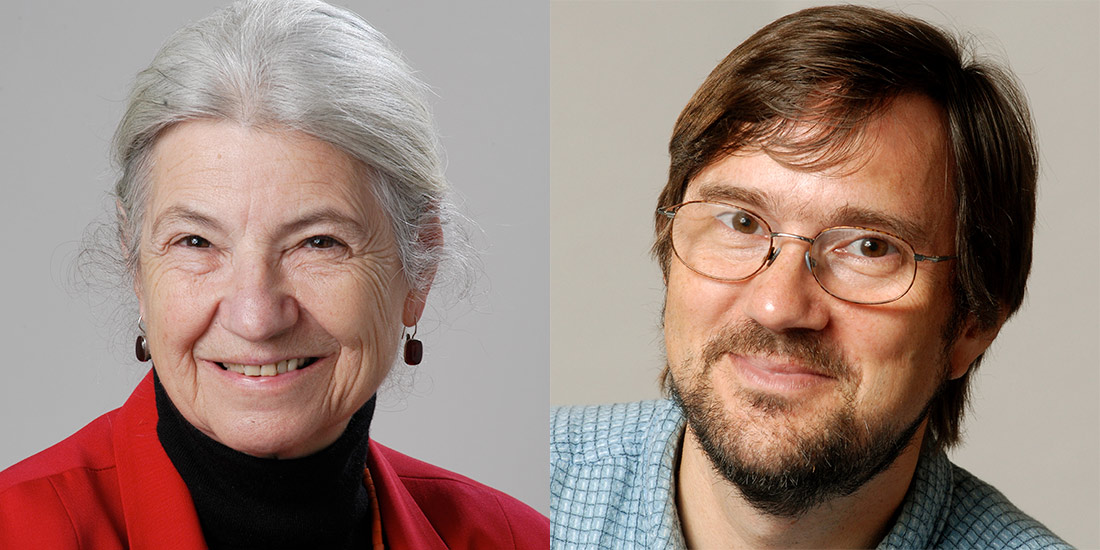
Ruzena Bajcsy and Vern Paxson

Bajcsy, Paxson honored as visionary faculty entrepreneurs

03/30/16 — EECS professors Ruzena Bajcsy and Vern Paxson have been selected as 2016-17 Signatures Innovation Fellows, receiving funding to pursue their commercially promising research to assess personal injury and recovery (Bajcsy) and network cyberattacks (Paxson).
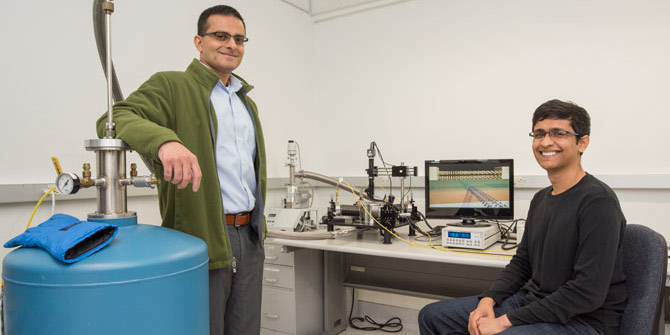
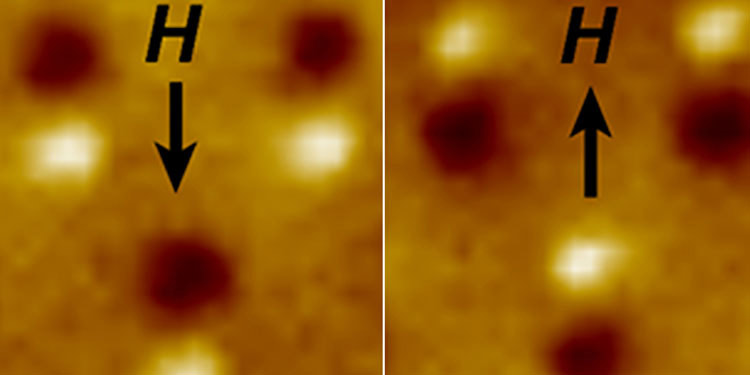
Magnetic microscope image of three nanomagnetic computer bits

Experiments show magnetic chips could dramatically increase computing’s energy efficiency

03/14/16 — In a breakthrough for energy-efficient computing, Berkeley engineers have shown for the first time that magnetic chips can operate at the lowest fundamental energy dissipation theoretically possible under the laws of thermodynamics.
Dan Garcia teaching CS10

Adding ‘Beauty and Joy’ to Obama’s push for computer science teaching

01/15/16 NPR — President Obama wants hands-on computer science classes for every student. Computer science professor Dan Garcia, creator of "CS10: The Beauty and Joy of Computing," spends part of each day trying to figure out what that would look like.
Gradescope co-founders Pieter Abbeel, Arjun Singh and Sergey Karayev, left to right. (Marla Aufmuth photo)

Gradescope: Taking the pain out of grading

01/15/16 — Sergey Karayev and Arjun Singh bonded over an "extremely painful" experience well-known to GSI's everywhere: grading handwritten papers and exams.
Photonic microprocessor

Engineers demo first processor that uses light for ultrafast communications

12/23/15 — Engineers at Berkeley, MIT and Colorado have successfully married electrons and photons within a single-chip microprocessor, a landmark development that opens the door to ultrafast, low-power data crunching.
Elon Musk

Tech titans create nonprofit to develop artificial intelligence

12/15/15 Bloomberg Business — A group of prominent Silicon Valley entrepreneurs has established a nonprofit organization to develop "digital intelligence" that will benefit humanity. “This collection of people is stunning,” said EECS professor and company adviser Pieter Abbeel, who said he expects the company's research and ideas to be “impressive and surprising.”

Cambridge launches new center to study AI and the future of intelligence

12/04/15 Phys.org — The University of Cambridge is establishing a new interdisciplinary research center to address technical, practical and philosophical questions related to artificial intelligence, thanks to a landmark grant of £10 million from the Leverhulme Trust. EECS professor Stuart Russell, a leading AI researcher at Berkeley Engineering, will collaborate on the project.
Michael Franklin of the AMP Lab

AMP Lab: Solving big data’s biggest problems

12/02/15 Berkeley Research — The AMP Lab, launched in 2011 by Michael Franklin and colleagues in computer science, has already had an outsized impact on industry, from battling cancer to getting an answer from Siri.
Bin Yu

Seeking data wisdom

11/23/15 Berkeley Research — Science and engineering have a way of turning what seems like fantasy into reality - like "mind reading," or genetic organ formation, two promising research areas that rely on a powerful interlocking of science, computation and statistics that EECS and statistics professor Bin Yu calls "data wisdom."
Shyh Wang Hall at Berkeley Lab

Berkeley Lab dedicates new computing center to late EECS professor

11/17/15 — Lawrence Berkeley National Laboratory has opened a new building dedicated to energy supercomputing and networking, and named it after the late Shyh Wang, an EECS professor and a pioneer in semiconductor lasers.
Big data stock image

UC Berkeley to co-lead regional big data ‘brain trust’

11/02/15 — UC Berkeley is teaming up with UC San Diego and the University of Washington to lead one of four regional innovation hubs established by the National Science Foundation to facilitate multi-sector collaborations that can accelerate advances in data science.
Stuart Russell quote: "Artificial Intelligence (AI) technology has reached a point where the deployment of such systems is — practically, if not legally — feasible within years, not decades, and the stakes are high: autonomous weapons have been described as the third revolution in warfare, after gunpowder and nuclear arms."

Open letter on AI

11/01/15 — Computer science professor, Stuart Russell, has written a series of open letters calling on the global community of scientists, engineers, and technologists, to develop guidelines surrounding artificial intelligence (AI) research.
Image by Barrett Lyon/The Opte Project

EECS faculty members awarded NSF grants for cybersecurity research

10/08/15 National Science Foundation — Three EECS faculty members, David Wagner, Dawn Song and Sanjit Seshia, were awarded cybersecurity research grants from the National Science Foundation. The grants are part of NSF's $74.5 million Secure and Trustworthy Cyberspace (SaTC) program.
Vern Paxson

Cyber-defense and forensic tools turn 20

08/14/15 National Science Foundation — In 1995, when Vern Paxson (now an EECS professor) was a doctoral student at Berkeley, he began writing what eventually became Bro, the ground-breaking open source cybersecurity software that was used to build a network monitoring framework. Today Bro is used by many of the largest supercomputing centers, national labs, universities and Fortune 10 companies.
Memory chip and circuit diagram

Small tilt in magnets makes them viable memory chips

08/03/15 — EECS researchers at Berkeley have discovered a new way to switch the polarization of nanomagnets, paving the way for high-density storage to move from hard disks onto integrated circuits. The development could lead to computers that turn on in an instant, operate with far greater speed and use significantly less power.
Computational CellScope LED dome

Enhanced microscopic resolution for improved diagnostics

06/17/15 — Researchers in the Waller Lab aim to make diagnosing diseases easier by algorithmically boosting the power of ordinary optical devices.

Robots are really bad at folding towels

05/20/15 NPR — Seven years ago, Berkeley researcher Pieter Abbeel set out on a quest: to teach a robot how to fold laundry. This proved to be a remarkably difficult task - and the difficulty of the task illuminates some key things about the limits of machines. See story and hear four-minute podcast.

How smart is today’s artificial intelligence?

05/20/15 PBS News Hour — How far away are we from making intelligent machines that actually have minds of their own? Berkeley researchers Stuart Russell and Pieter Abbeel weigh in on this nine-minute PBS News Hour segment, along with Elon Musk and Google's Ray Kurzweil.
Cecilia Aragon

Award-winning computer scientist opening doors for fellow Latinas

05/05/15 — Data scientist and University of Washington professor Cecilia Aragon co-founded Latinas in Computing, an international professional association that mentors Latinas working in technology, because she believes in numbers.
Claude Shannon, the creator of Information Theory, and Alan Turing, the creator of modern Computer Science

Through the computational lens

05/01/15 Simons Institute — EECS professor Umesh Vazirani discusses efforts at the Simons Institute for the Theory of Computing to foster a dialogue between the disciplines of information theory and computer science.
  • « Go to Previous Page
  • Go to page 1
  • Interim pages omitted …
  • Go to page 8
  • Go to page 9
  • Go to page 10
  • Go to page 11
  • Go to page 12
  • Go to page 13
  • Go to Next Page »
  • Contact
  • Give
  • Privacy
  • UC Berkeley
  • Accessibility
  • Nondiscrimination
  • instagram
  • X logo
  • linkedin
  • facebook
  • youtube
  • bluesky
© 2026 UC Regents