• Skip to main content
  • Skip to primary navigation
  • Departments
    • Bioengineering
    • Civil and Environmental Engineering
    • Electrical Engineering and Computer Sciences
    • Industrial Engineering and Operations Research
    • Materials Science and Engineering
    • Mechanical Engineering
    • Nuclear Engineering
    • Aerospace program
    • Engineering Science program
  • News
    • Berkeley Engineer magazine
    • Social media
    • News videos
    • News digest (email)
    • Press kit
  • Events
    • Events calendar
    • Commencement
    • Homecoming
    • Cal Day
    • Space reservations
    • View from the Top
    • Kuh Lecture Series
    • Minner Lecture
  • College directory
  • For staff & faculty
Berkeley Engineering

Berkeley Engineering

Educating leaders. Creating knowledge. Serving society.

  • About
    • Facts & figures
    • Rankings
    • Mission & values
    • Equity & inclusion
    • Voices of Berkeley Engineering
    • Leadership team
    • Milestones
    • Buildings & facilities
    • Maps
  • Admissions
    • Undergraduate admissions
    • Graduate admissions
    • New students
    • Visit
    • Maps
    • Admissions events
    • K-12 outreach
  • Academics
    • Undergraduate programs
    • Majors & minors
    • Undergraduate Guide
    • Graduate programs
    • Graduate Guide
    • Innovation & entrepreneurship
    • Kresge Engineering Library
    • International programs
    • Executive education
  • Students
    • New students
    • Advising & counseling
    • ESS programs
    • CAEE academic support
    • Grad student services
    • Student life
    • Wellness & inclusion
    • Undergraduate Guide
    • > Degree requirements
    • > Policies & procedures
    • Forms & petitions
    • Resources
  • Research & faculty
    • Centers & institutes
    • Undergrad research
    • Faculty
    • Sustainability and resiliency
  • Connect
    • Alumni
    • Industry
    • Give
    • Stay in touch
Home > News

Computer science

Computers and mouse

At Berkeley, ‘ethical hackers’ learn to wage cyberwar

11/29/17 New Yorker — EECS professor Doug Tygar is teaching a new generation of cyber security researchers to prevent cyberwar attacks by forensically examining them, and even sometimes mounting "ethical hacking" schemes of their own.
Cybersecurity graphic

Berkeley offers new cybersecurity degree

11/15/17 CLTC — Applications are being accepted for a new, online master's of information and cybersecurity program at UC Berkeley's School of Information, in collaboration with the College of Engineering and the I-School's Center for Long-Term Cybersecurity.

Students learn to ‘think like a hacker’

11/09/17 EdScoop — Through a partnership with HackerOne's bug bounty platform, students in EECS professor Doug Tygar's computer science class are gaining real-world experience in cybersecurity and ethical hacking - with the potential for real-world payoffs.
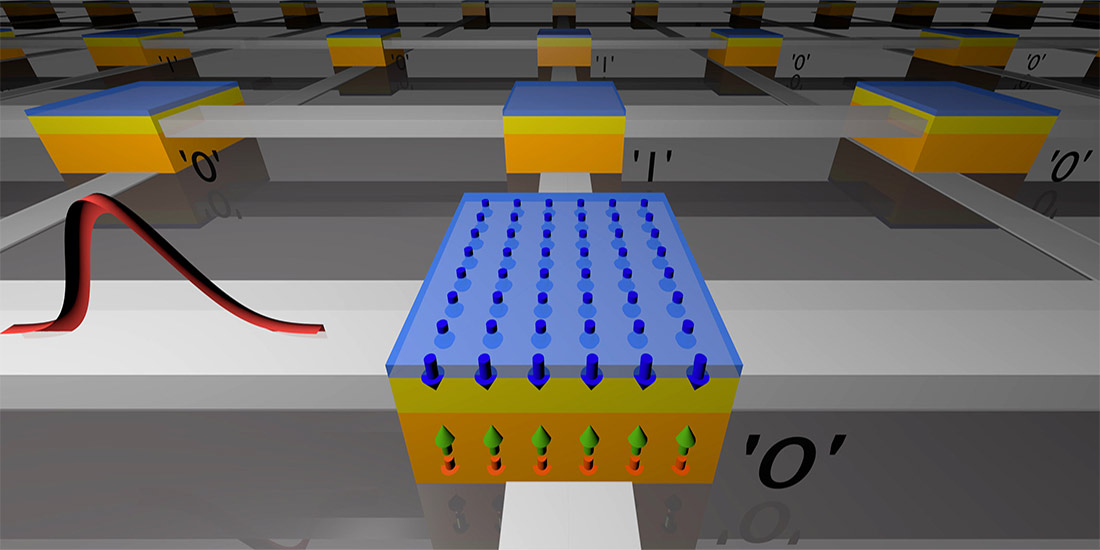
schematic of a magnetic memory array

Ultrafast magnetic reversal points the way toward speedy, low-power computer memory

11/03/17 — Researchers at UC Berkeley and UC Riverside have developed a new, ultrafast method for electrically controlling magnetism in certain metals, a breakthrough that could lead to speedier, more energy-efficient computer memory.
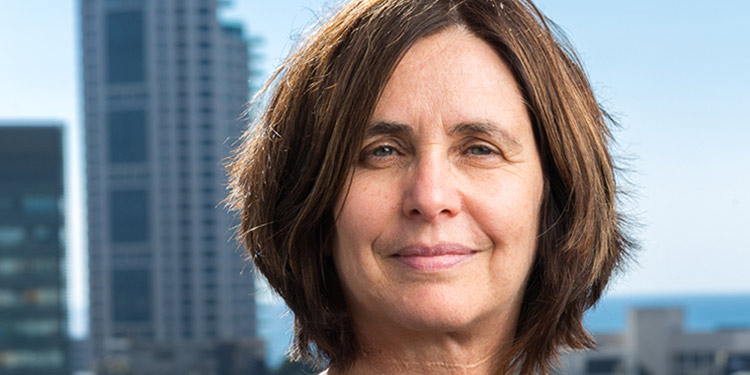
Shafi Goldwasser

Shafi Goldwasser appointed director of Simons Institute

10/18/17 — Turing Award-winning computer scientist Shafi Goldwasser will become the new director of the Simons Institute for the Theory of Computing on January 1, 2018.
RISElab

Berkeley experts on how to build more secure, faster AI systems

10/16/17 — In a new report from Berkeley's Real-Time Intelligent Secure Execution Lab (RISELab), leading researchers outline challenges in systems, security and architecture that may impede the progress of artificial intelligence, and propose new research directions to address them.
David Culler

EECS professor David Culler named interim dean for data sciences

05/26/17 — Chancellor-designate Carol Christ has appointed EECS professor David Culler as interim dean for the newly created Division of Data Sciences, effective July 1.
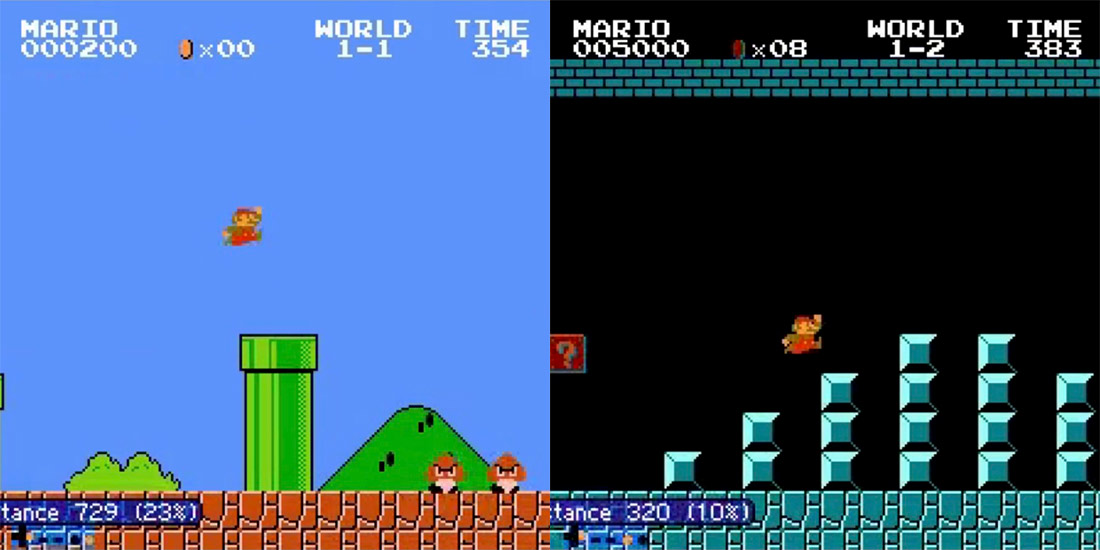
Screenshots from Super Mario Bros. game

Researchers teach computers to be curious

05/25/17 Engadget — When you first played Super Mario Bros, you probably started by exploring, not by racing through the game. Berkeley computer scientists have imparted that same sense of curiosity into their algorithm in a move that could drastically advance the field of artificial intelligence.
Google

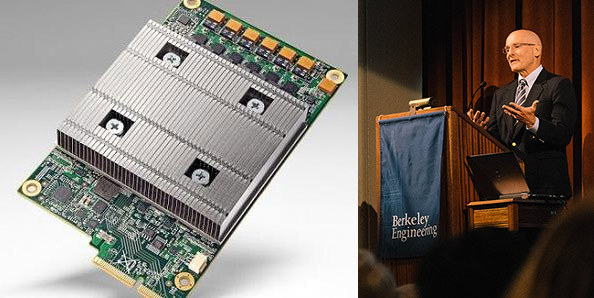
Next big thing for David Patterson: New chip for Google Brain

05/08/17 CNBC — Less than a year after retiring from 40 years at Berkeley Engineering, legendary EECS professor David Paterson is now a key part of the team behind a critical chip that Google uses for artificial intelligence processing.
Jitendra Malik

Malik honored for pioneering computer vision work

05/03/17 ACM — EECS chair and professor Jitendra Malik has won the 2016 ACM - AAAI Allen Newell Award "for seminal contributions to computer vision that have led the field in image segmentation and object category recognition."
Students performing an exercise in Dan Garcia

Learning to think like a computer

04/04/17 New York Times — Computer science professor Daniel Garcia explains an all-important concept in computer science - abstraction - in terms of milkshakes. It's part of a hot trend in education: Demystifying the "magic" of computers and computational thinking.
Vern Paxson and Matthias Vallentin

A “VAST” step forward in cybersecurity

03/15/17 Berkeley Research — Working closely with cybersecurity experts at Berkeley Lab, CS professor Vern Paxson and postdoc researcher Matthias Vallentin are developing VAST, a system to help forensic analysts pinpoint how much of an organization's computer network has been compromised - and where.

WikiLeaks says it has obtained trove of CIA hacking tools

03/08/17 Washington Post — Nicholas Weaver (Ph.D.'03 CS), a senior researcher at the Berkeley-affiliated International Computer Science Institute, says the massive collection of CIA hacking data being released by WikiLeaks "is probably legitimate or contains a lot of legitimate stuff."
RISELab

Berkeley launches RISELab, enabling computers to make intelligent real-time decisions

01/23/17 — UC Berkeley has launched the RISELab, the successor of AMPLab, and the latest in its series of five-year intensive research labs in computer science, with the goal of improving how machines make intelligent decisions based on real-time input.
Bill Marczak

How a grad student found spyware that could control anybody’s iPhone

12/07/16 Vanity Fair — Last summer, computer science Ph.D. candidate Bill Marczak stumbled across a program that could spy on an iPhone's contact list and messages - and even record calls. Illuminating shadowy firms that sell spyware to corrupt governments across the globe, Marczak's story reveals the new arena of cyber-warfare.
Drone guidance assisted by augmented reality

Seeing is believing

11/01/16 — Emerging augmented reality and virtual reality technologies are opening up a new frontier of possibilities for researchers at Berkeley's new Center for Augmented Cognition.

Huawei puts $1M into AI research partnership with UC Berkeley

10/11/16 TechCrunch — China's Huawei on Tuesday announced a $1 million partnership between its Noah's Ark Laboratory and the Berkeley Artificial Intelligence Research (BAIR) Lab to perform basic research into machine learning, computer vision and other areas of artificial intelligence.

Ali Javey and graduate student Sujay Desai with a vacuum probe station

Smallest. Transistor. Ever.

10/10/16 — For more than a decade, engineers have been racing to shrink the size of components in integrated circuits. Now, a research team led by EECS professor Ali Javey has surpassed a theoretical limit of physics and created the smallest transistor reported to date.
EECS professor Stuart Russell

Toward human-centric A.I.

09/20/16 — Twenty years ago, Stuart Russell co-wrote a book titled Artificial Intelligence: A Modern Approach, destined to become the dominant text in its field. Near the end of the book, he posed a question: “What if A.I. does succeed?”
Spreadsheet

Spreadsheet tools to help everyone escape from the cell

08/04/16 Financial Times — Alumnus and Microsoft researcher Sumit Gulwani (Ph.D.'05 CS) is behind the development of user-friendly spreadsheet tools that can, in his view, “keep control of the digital divide.”
  • « Go to Previous Page
  • Go to page 1
  • Interim pages omitted …
  • Go to page 7
  • Go to page 8
  • Go to page 9
  • Go to page 10
  • Go to page 11
  • Interim pages omitted …
  • Go to page 13
  • Go to Next Page »
  • Contact
  • Give
  • Privacy
  • UC Berkeley
  • Accessibility
  • Nondiscrimination
  • instagram
  • X logo
  • linkedin
  • facebook
  • youtube
  • bluesky
© 2026 UC Regents