• Skip to main content
  • Skip to primary navigation
  • Departments
    • Bioengineering
    • Civil and Environmental Engineering
    • Electrical Engineering and Computer Sciences
    • Industrial Engineering and Operations Research
    • Materials Science and Engineering
    • Mechanical Engineering
    • Nuclear Engineering
    • Aerospace program
    • Engineering Science program
  • News
    • Berkeley Engineer magazine
    • Social media
    • News videos
    • News digest (email)
    • Press kit
  • Events
    • Events calendar
    • Commencement
    • Homecoming
    • Cal Day
    • Space reservations
    • View from the Top
    • Kuh Lecture Series
    • Minner Lecture
  • College directory
  • For staff & faculty
Berkeley Engineering

Berkeley Engineering

Educating leaders. Creating knowledge. Serving society.

  • About
    • Facts & figures
    • Rankings
    • Mission & values
    • Equity & inclusion
    • Voices of Berkeley Engineering
    • Leadership team
    • Milestones
    • Buildings & facilities
    • Maps
  • Admissions
    • Undergraduate admissions
    • Graduate admissions
    • New students
    • Visit
    • Maps
    • Admissions events
    • K-12 outreach
  • Academics
    • Undergraduate programs
    • Majors & minors
    • Undergraduate Guide
    • Graduate programs
    • Graduate Guide
    • Innovation & entrepreneurship
    • Kresge Engineering Library
    • International programs
    • Executive education
  • Students
    • New students
    • Advising & counseling
    • ESS programs
    • CAEE academic support
    • Grad student services
    • Student life
    • Wellness & inclusion
    • Undergraduate Guide
    • > Degree requirements
    • > Policies & procedures
    • Forms & petitions
    • Resources
  • Research & faculty
    • Centers & institutes
    • Undergrad research
    • Faculty
    • Sustainability and resiliency
  • Connect
    • Alumni
    • Industry
    • Give
    • Stay in touch
Home > News

Research

Measuring your DNA health

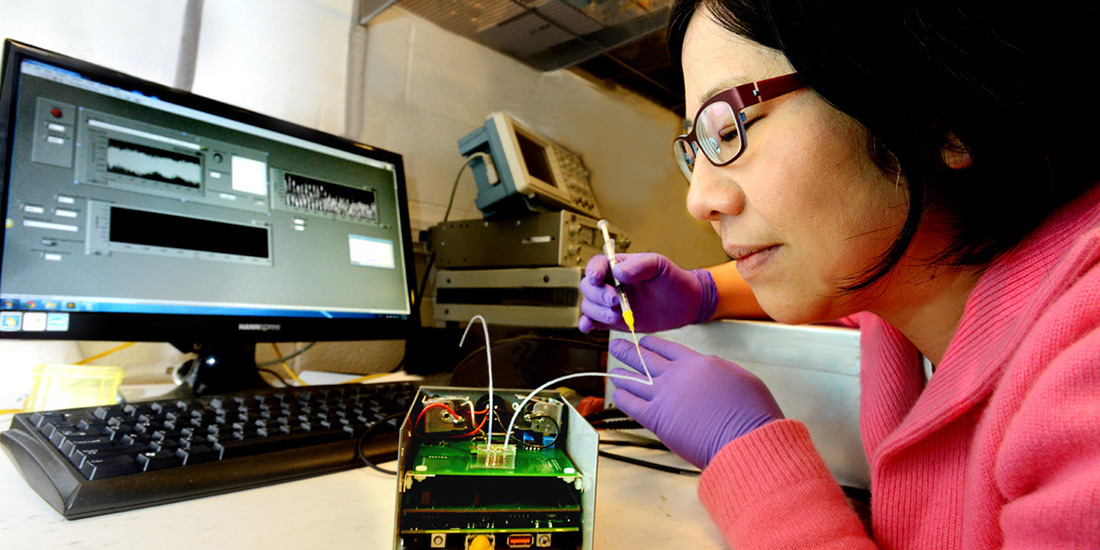
04/04/14 — Sometime soon, Sylvain Costes (Ph.D'99 NE) hopes that annual medical checkups will include a simple blood test to determine levels of DNA damage. The list of things assaultive to the body's basic building blocks is long - radiation, ultraviolet light and toxins, to name a few - and errors occur even during normal cell division. The body continually repairs this damaged DNA, but sometimes, the routine repair process can fail. DNA damage and genetic mutations can lead to serious health problems like cancer, immunological disorders, neurological disorders and premature aging.
Dissecting skin from a turkey head

Dermatologically derived

04/01/14 The Scientist — Inspired by turkey skin, bioengineering professor Seung-Wuk Lee's team has devised a bacteriophage-based sensor whose color changes upon binding specific molecules.
Liwei Lin

Berkeley scientists advance on-chip inductor technology

03/21/14 EE Times — Berkeley scientists led by mechanical engineering professor Liwei Lin report they have found a way to advance on-chip inductor technology, a breakthrough that could lead to a new generation of miniature electronics and wireless communications systems.
Student entrepreneurs in SkyDeck incubator

New ideas and technology spreading from campus faster than ever

03/19/14 — Backed by a vibrant startup culture that serves as the engine of economic growth for much of the Bay Area, UC Berkeley has established several new programs that support the translation of university research into real-world solutions. One key element is the SkyDeck startup incubator, a collaboration of Berkeley Engineering, the Haas School of Business and the Office of the Vice Chancellor of Research.
Researcher in lab

Corporate-funded academic inventions spur increased innovation, analysis says

03/19/14 — Academic research sponsored by industry has a strong track record of leading to innovative patents and licenses, challenging assumptions that corporate support skews science toward inventions that are less accessible and less useful to others than those funded by the government or non-profit organizations, according to a new analysis.
Ben Recht with students

Making sense of big data

03/12/14 Berkeley Research — Ben Recht is looking for problems. Recht, an assistant professor with dual appointments in EECS and statistics, develops mathematical strategies that help researchers cut through blizzards of data to find what they're after, be they urban planners or online retailers.

Scientists ‘herd’ cells in new approach to tissue engineering

03/11/14 — Berkeley engineers have found that an electrical current can be used to orchestrate the flow of a group of cells. This achievement sets the stage for more controlled forms of tissue engineering and for potential applications such as “smart bandages” that use electrical stimulation to help heal wounds.
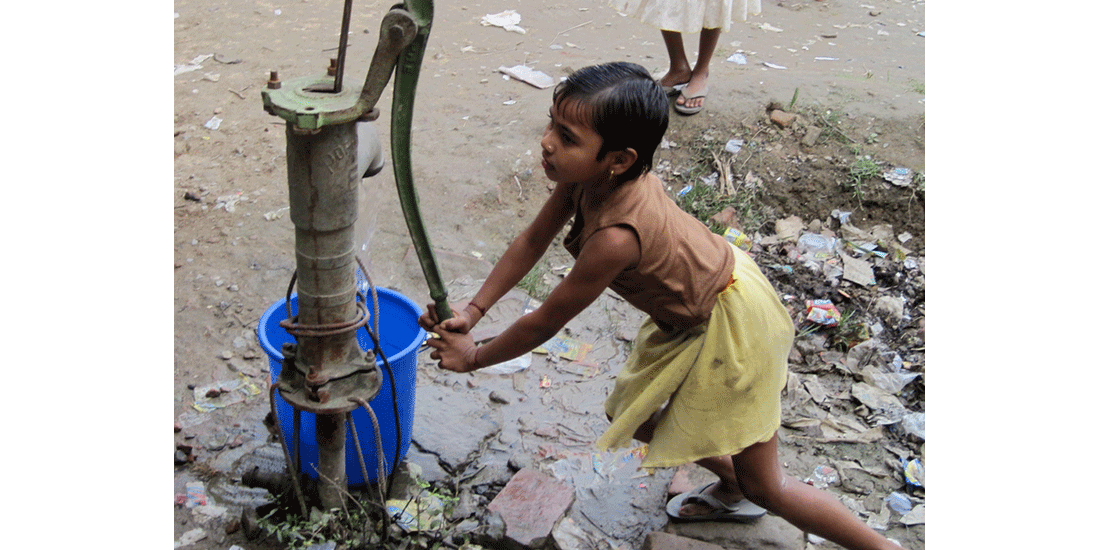
Girl in India pumping water

Indian company licenses invention for arsenic-free water

03/10/14 Berkeley Lab — Berkeley researchers, led by Ashok Gadgil and Susan Amrose of civil and environmental engineering, have developed technology that uses electricity to remove arsenic from groundwater, where it can be a silent killer. More importantly, they have created a business model and partnered with a company in India to improve the technology's chances for longevity.
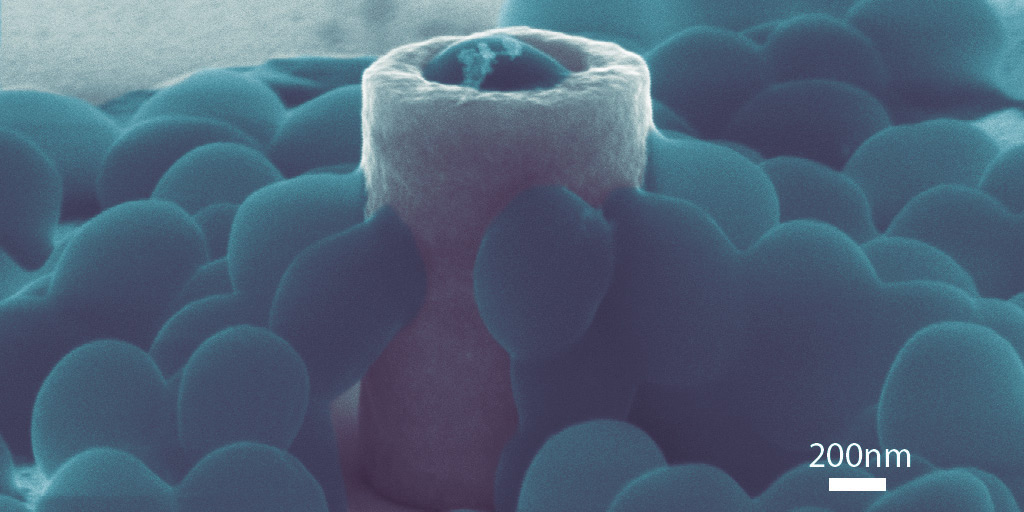
Bacteria interacting with a nanostructure

Scientists show which surfaces attract clingy Staph bacteria

03/04/14 Berkeley Lab — Berkeley Lab and UC Berkeley researchers are investigating how shapes and surface texture influence the adhesion of infectious Staphylococcus Aureus bacteria. Their work, led by Mohammad Mofrad, a Berkeley Lab faculty scientist and a professor of bioengineering and mechanical engineering at UC Berkeley, could guide the development of bacteria-resistant materials.
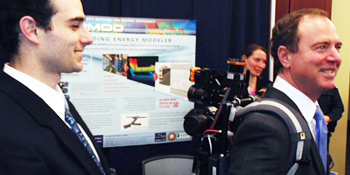
Researchers with energy-mapping backpack

Berkeley team takes its energy innovation to Capitol Hill

02/28/14 — A research team from Berkeley Engineering and the Berkeley Lab appeared on Capitol Hill Thursday to show off their innovation in energy efficiency: a backpack-mounted system for quickly mapping energy use throughout a building and identifying ways to reduce it
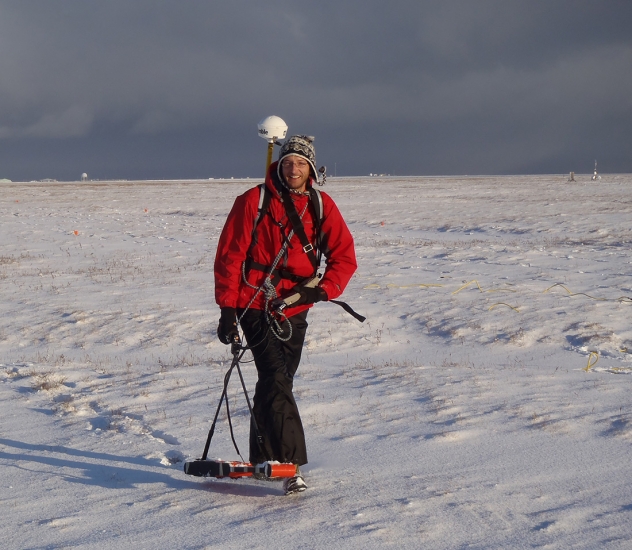
Berkeley Lab scientist Baptiste Dafflon collects electromagnetic data

The underground: Studying the Arctic tundra

02/12/14 — Normally, scientists don't have to worry about a polar bear charging them at 30 miles per hour. But this can be a big safety concern for researchers in Barrow, Alaska, where geophysicist Susan Hubbard (Ph.D'98 CEE) studies the Arctic ecosystem to improve climate modeling.

A ‘game-changer’ for HIV/AIDS

02/12/14 — Second-year bioengineering doctoral student Sylvia Natividad-Diaz may have found a way around a persistent obstacle in the treatment of HIV/AIDS-identifying when an HIV-positive patient's condition is worsening before irreversible symptoms are evident. Having that information allows health care providers to deliver the right medications at the right time, leading to better outcomes.

BEARS CREATE

02/12/14 — The Berkeley Education Alliance for Research in Singapore (BEARS) is part of an innovative research model launched in partnership with Singapore's National Research Foundation. The foundation is supporting 10 of the world's best research institutions with ample funding, space and opportunities to scale their investigations beyond the lab.
Lydia Sohn and her research

Pinning down malevolent cancer cells

02/07/14 Berkeley Research — Lydia Sohn, associate professor of mechanical engineering, is analyzing circulating tumor cells in the bloodstream of breast cancer patients, aiming to find new methods for early diagnosis and treatment of the disease. Her work has earned her recognition as one of five new Bakar Fellows on the Berkeley campus.
Seafloor carpet design

Seafloor carpet catches waves to generate energy

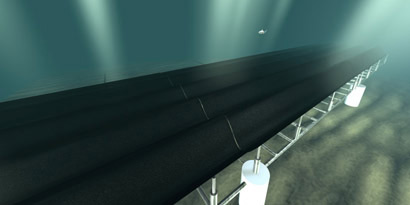
01/28/14 — UC Berkeley mechanical engineers are developing a seafloor carpet system to capture ocean wave energy and convert it into usable electricity. The system could eventually help lower the cost of converting seawater into fresh water, easing the pressure during periods of drought.
Cat whiskers

What if robots had whiskers?

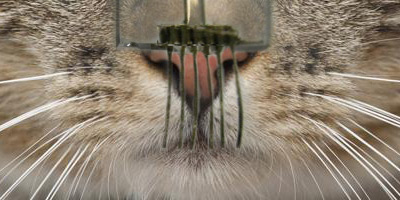
01/21/14 Berkeley Lab — Researchers with Berkeley Lab and Berkeley Engineering have created e-whiskers – highly sensitive tactile sensors made from carbon nanotubes and silver nanoparticles that should have a wide range of applications including advanced robotics, human-machine interfaces, and biological and environmental sensors.
Sally Thompson

CEE’s Sally Thompson on NSF-funded team studying watershed’s critical zone

01/15/14 — A team of UC Berkeley scientists, including Sally Thompson of Civil and Environmental Engineering, will receive $4,900,000 from the National Science Foundation to study the Eel River watershed in Northern California and how its vegetation, geology and topography affect water flow all the way to the Pacific Ocean.
Cleantech to Market team lead Michael Lebow and College of Engineering Ph.D. candidate Sibel Leblebici demonstrate an innovative new fuel cell

Symposium spotlights clean-technology solutions

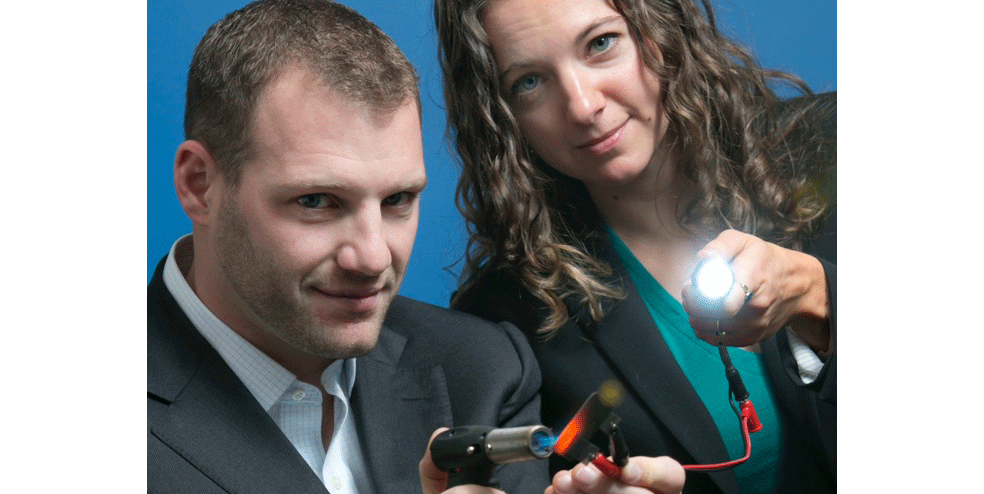
01/10/14 — Through the Cleantech to Market program, UC Berkeley students work with campus and Berkeley Lab scientists to bring new, environmentally friendly innovations to the world via commercialization.
Light-activated curtain

Engineers create light-activated ‘curtains’

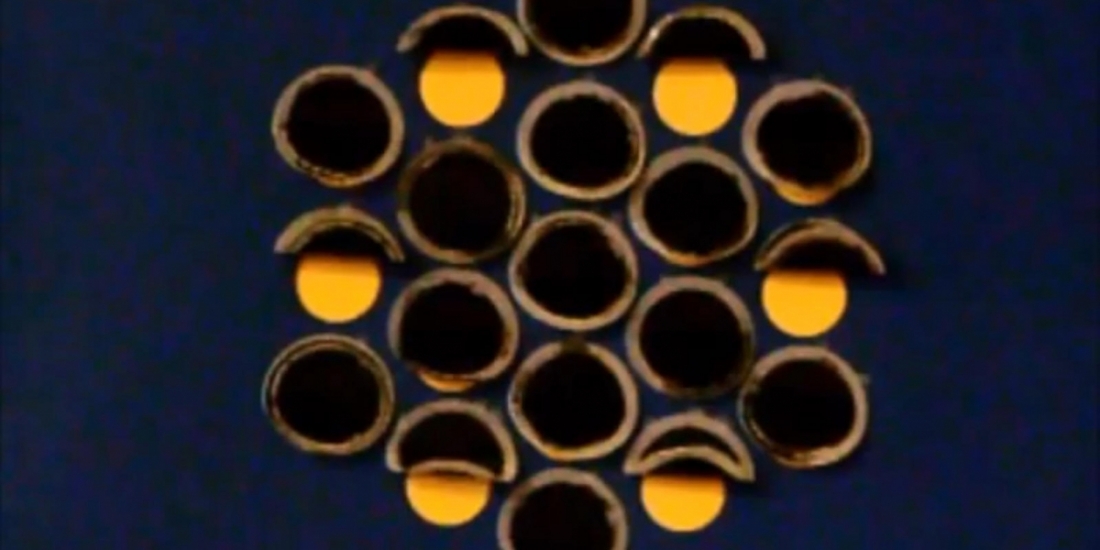
01/09/14 — A research team led by UC Berkeley's Ali Javey, associate professor of electrical engineering and computer sciences, used carbon nanotubes and plastic polycarbonate to create a new material that moves in response to light. The material can be used to create “smart curtains” that open or close with the flick of a light switch.

ME professor’s research determines particles most likely to cause stroke

12/09/13 Daily Californian — While some mechanical engineers use their supercomputers to build airplanes and vehicles, assistant professor Shawn Shadden uses his to map the inner workings of the human heart, and to improve its man-made replacement parts.
  • « Go to Previous Page
  • Go to page 1
  • Interim pages omitted …
  • Go to page 27
  • Go to page 28
  • Go to page 29
  • Go to page 30
  • Go to page 31
  • Interim pages omitted …
  • Go to page 34
  • Go to Next Page »
  • Contact
  • Give
  • Privacy
  • UC Berkeley
  • Accessibility
  • Nondiscrimination
  • instagram
  • X logo
  • linkedin
  • facebook
  • youtube
  • bluesky
© 2025 UC Regents