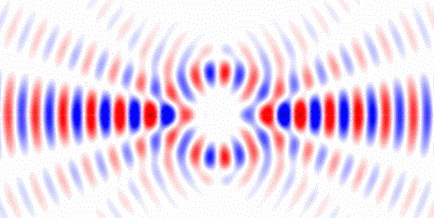
08/07/14 Berkeley Lab — Berkeley Lab researchers, led by Berkeley Engineering materials science professor Xiang Zhang, have developed a technique for generating self-bending acoustic bottle beams that hold promise for ultrasonic imaging and therapy, and for acoustic cloaking, levitation and particle manipulation.
08/06/14 The Independent — Lawrence Livermore scientist William Pitz (Ph.D.'82 ME) has been named to Thomson Reuters list of “The World's Most Influential Scientific Minds” for his research papers on combustion modeling.
08/06/14 New York Times — Despite enormous U.S. investments in high-speed rail projects since 2009, little progress has been made. Civil engineering professor C. William Ibbs explains why that might be.
08/06/14 R&D Magazine — A team including EECS professor Alexei Efros, formerly of Carnegie Mellon but now at Berkeley, created a photo editing tool that lets users manipulate images in 3-D so that objects can be turned or flipped and even originally hidden surfaces can be exposed.
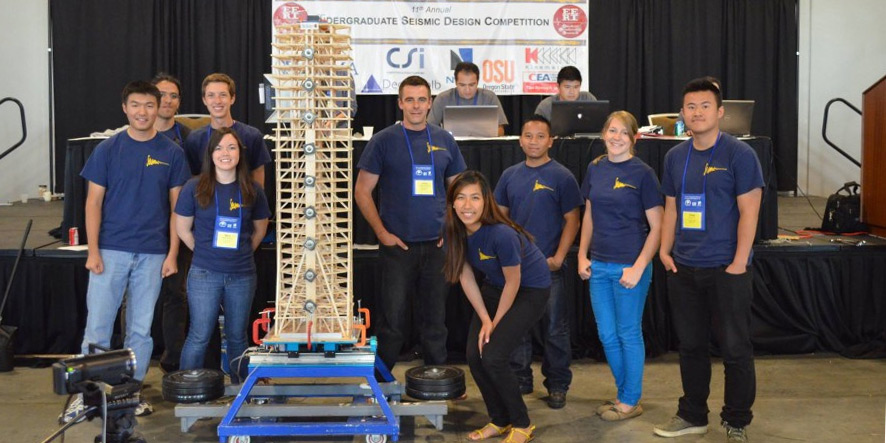
08/04/14 Daily Clog — The Cal Seismic Design student team finished second in the world in late July's 2014 Undergraduate Seismic Design Competition, held in Anchorage, Alaska.
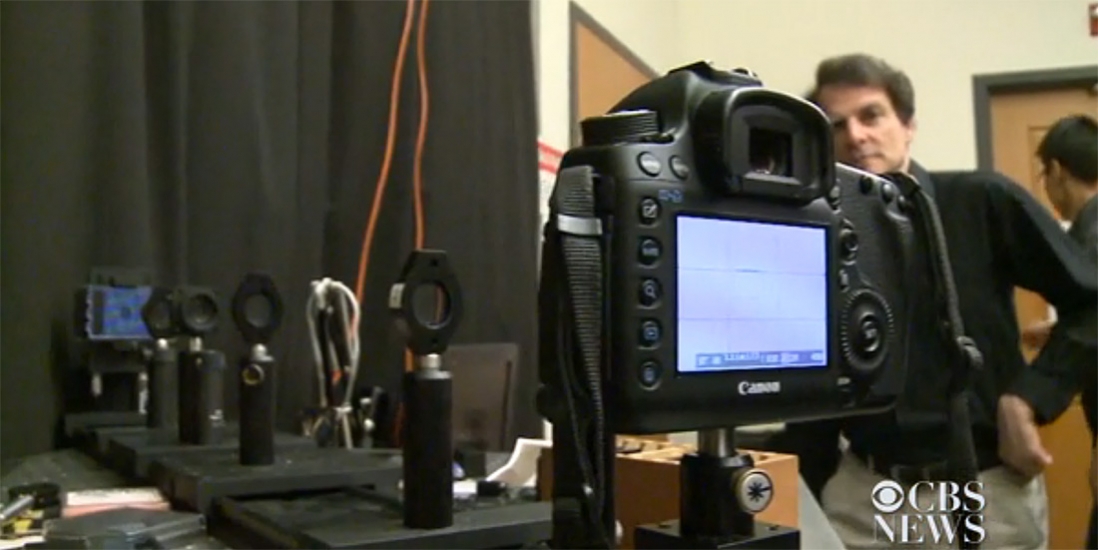
07/31/14 CBS News — UC Berkley professor Brian Barsky's experiments could solve a common modern problem. He's developing software designed to help anyone who has to wear glasses every time they look at a computer or smartphone.
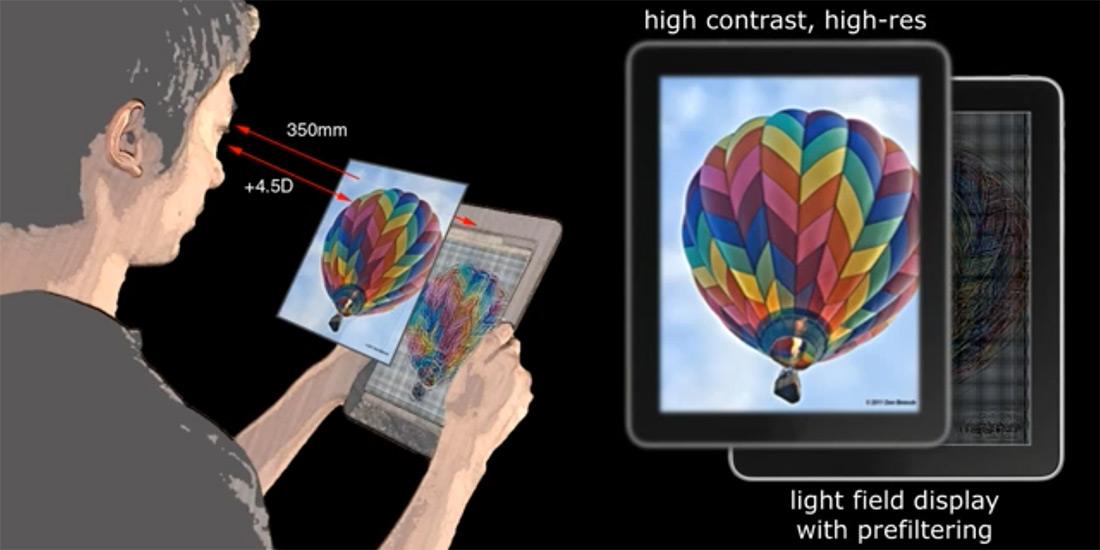
07/29/14 — Researchers at UC Berkeley are developing vision-correcting displays that can compensate for a viewer's visual impairments to create sharp images without the need for glasses or contact lenses.
07/28/14 — EECS and statistics professor Michael Jordan is the 2015 recipient of the prestigious David E. Rumelhart Prize for his contributions to computational models of human learning.
07/21/14 — UC Berkeley professor and synthetic-biology pioneer Jay Keasling was on Capitol Hill Thursday, stressing the need for a federal strategy to ensure continued U.S. leadership in a field he said can yield significant medical benefits for people throughout the world.
07/20/14 — UC Berkeley researchers, led by mechanical engineering professor Xiang Zhang, are developing ultra-sensitive bomb detectors using tiny laser sensors that could detect incredibly minute concentrations of explosives.
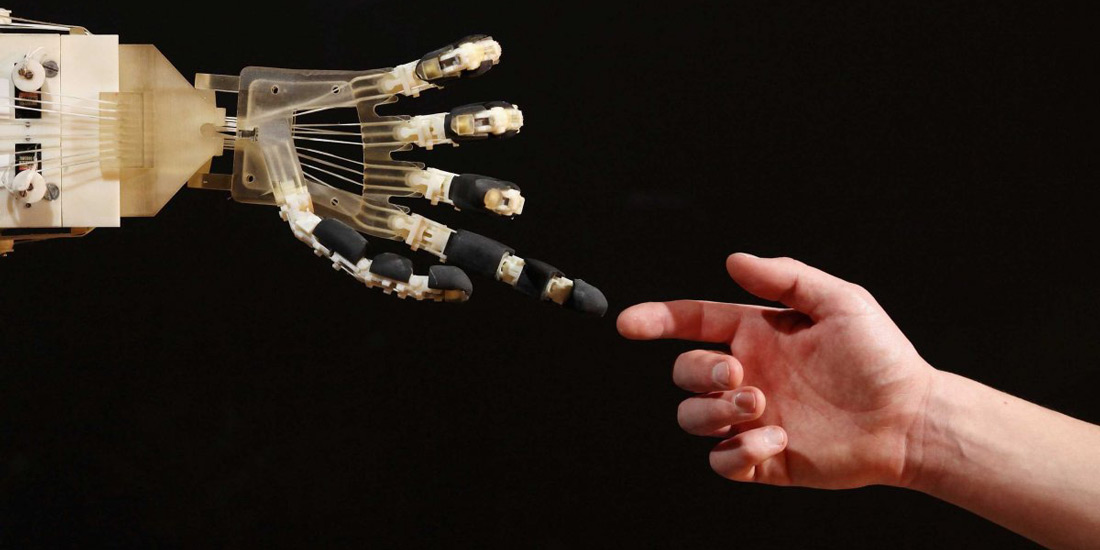
07/18/14 Business Insider — In a roundup of university robotics options from around the country, UC Berkeley lands at the top of the list, described as "an incredibly robust college for robotics that will likely meet your interests no matter what they are."
07/16/14 Forbes — Three Berkeley undergraduates, including EECS junior Noah Gilmore, have created an interactive website designed to help students choose classes. Called Berkeleytime, it gathers all of the school's curricular information in one place, allowing students to filter and sort by thousands of criteria.
07/15/14 siliconANGLE — Berkeley Engineering researchers have discovered several quickly-patched vulnerabilities in popular password managers that could allow attackers to gain access.
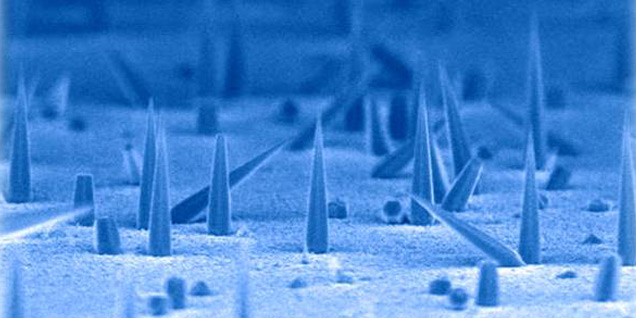
07/14/14 LiveScience — New technology in development at Berkeley Engineering promises to ensure that fiber optic networks will be able to keep pace with consumer demand for speed and seamless data flow. The work, led by EECS professor Connie Chang-Hasnain, involves growing lasers (called nanoneedles) on silicon , the base layer of choice for electronic devices.
07/10/14 U.S. News & World Report — Sheila Humphreys, director of diversity for Berkeley Engineering's electrical engineering and computer science department, talks about efforts in her department to encourage minorities and women breaking into the field.
07/01/14 — Imagine feeling a slimy jellyfish, a prickly cactus or map directions on your iPad display. Virtual textured touchscreens are where tactile technology is headed. New research has found that people are faster at navigating tactile technology when using both hands and several fingers. Moreover, blind people in the study outmaneuvered their sighted counterparts.
07/01/14 Information Week — Ian Stoica, computer science professor and CEO of Databricks, talks about his company's bold vision to make Databricks and its Apache Spark core, developed in UC Berkeley's AMPLab in 2009, into big data's epicenter of analysis.
06/27/14 Daily Californian — Thanks to a change in policy, the University of California is now able to invest directly in companies that use and market technology developed at UC facilities, or to accept equity from such companies or from campus-run “incubators” - such as UC Berkeley's SkyDeck, which supports fledgling companies with resources and expertise.
06/24/14 SciDev.net — The open access Journal of Development Engineering is due to launch in 2015, a move that could encourage more researchers to enter this nascent and holistic field, where UC Berkeley's Blum Center for Developing Economies plays a leading role.