• Skip to main content
  • Skip to primary navigation
  • Departments
    • Bioengineering
    • Civil and Environmental Engineering
    • Electrical Engineering and Computer Sciences
    • Industrial Engineering and Operations Research
    • Materials Science and Engineering
    • Mechanical Engineering
    • Nuclear Engineering
    • Aerospace program
    • Engineering Science program
  • News
    • Berkeley Engineer magazine
    • Social media
    • News videos
    • News digest (email)
    • Press kit
  • Events
    • Events calendar
    • Commencement
    • Homecoming
    • Cal Day
    • Space reservations
    • View from the Top
    • Kuh Lecture Series
    • Minner Lecture
  • College directory
  • For staff & faculty
Berkeley Engineering

Educating leaders. Creating knowledge. Serving society.

  • About
    • Facts & figures
    • Rankings
    • Mission & values
    • Equity & inclusion
    • Voices of Berkeley Engineering
    • Leadership team
    • Milestones
    • Buildings & facilities
    • Maps
  • Admissions
    • Undergraduate admissions
    • Graduate admissions
    • New students
    • Visit
    • Maps
    • Admissions events
    • K-12 outreach
  • Academics
    • Undergraduate programs
    • Majors & minors
    • Undergraduate Guide
    • Graduate programs
    • Graduate Guide
    • Innovation & entrepreneurship
    • Kresge Engineering Library
    • International programs
    • Executive education
  • Students
    • New students
    • Advising & counseling
    • ESS programs
    • CAEE academic support
    • Grad student services
    • Student life
    • Wellness & inclusion
    • Undergraduate Guide
    • > Degree requirements
    • > Policies & procedures
    • Forms & petitions
    • Resources
  • Research & faculty
    • Centers & institutes
    • Undergrad research
    • Faculty
    • Sustainability and resiliency
  • Connect
    • Alumni
    • Industry
    • Give
    • Stay in touch
Home > News > Igniting knowledge
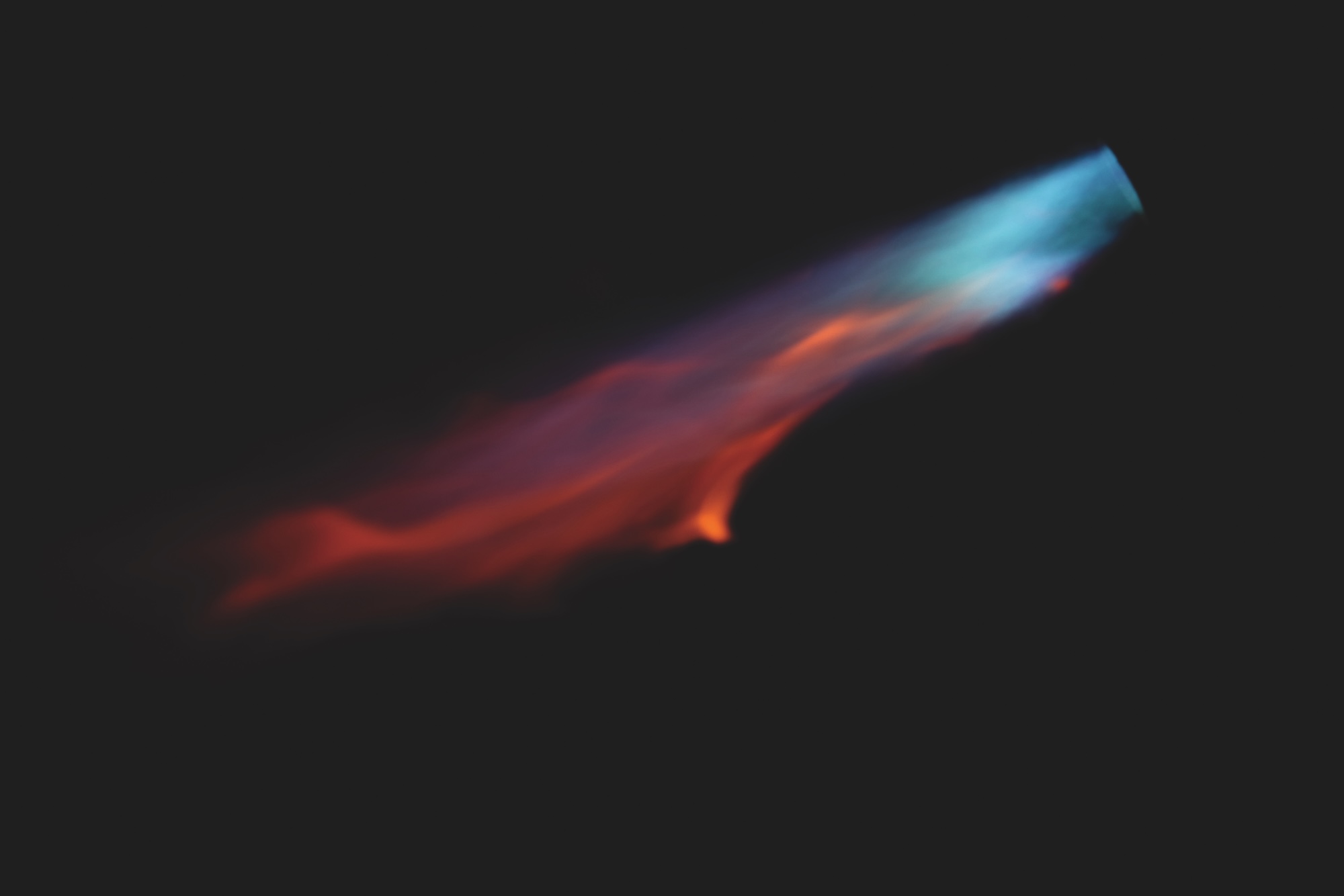
Gas flame over black backgroundGas flame over black background

Igniting knowledge

Berkeley engineer summer 2025 magazine cover
June 11, 2025
This article appeared in Berkeley Engineer magazine, Summer 2025
  • In this issue
    crowd of students in the lower level of a building

    Designed to inspire

    rendering of a blue dna helix with color blocks behind it

    Cracking the code of life

    Dean Tsu Jae King Liu holding a molecule structure smiling at the camera

    Leadership and legacy

    Honorees cut the ribbon during the Grimes Engineering Center opening celebration

    Transforming engineering

    Upfront

    • The chameleon effect
    • Igniting knowledge
    • Antenna evolution
    • From silence to sound
    • Insect-sized innovation
    • Unraveled
    • Q+A on assistive devices

    New & noteworthy

    • Three professors named to NAE
    • Smarter searches
    • Spring design showcase
    • Farewell
    • Support Berkeley Engineering
    • Where inspiration meets innovation
  • Past issues

Engineers from UC Berkeley and NASA have teamed up to conduct remote, robot-operated flammability testing aboard the International Space Station. Known as the Material Ignition and Suppression Test (MIST), this research will help designers select safe materials for space suits, spacecraft cabins and space habitats.

MIST researchers are investigating the flammability of acrylic plastic, specifically, plexiglass. A lighter-weight alternative to glass, this material could someday be used in new spacecraft windows, helping to increase fuel efficiency. Findings from these experiments will also be applicable to other thermoplastics, such as electrical wire insulation, electronic boards and spacecraft cabin paneling.

“Through these experiments, we hope to improve our understanding of early fire growth behavior and validate models for material flammability,” said Carlos Fernandez-Pello, Professor of the Graduate School, Department of Mechanical  Engineering. “This will help NASA select safer materials for future space facilities and determine the best methods for extinguishing fires in spacecraft.”

During their first round of experiments, the researchers discovered something new: materials are combustible at oxygen concentrations well below those in normal gravity.

“In normal gravity, the limit of the oxygen concentration at which materials are flammable is approximately 18%. We are finding that in the Space Station, in the spacecraft environment, it’s about 15%,” said Fernandez-Pello. “We were expecting that it would be lower, but not that low.”

For Michael Gollner, associate professor of mechanical engineering, this finding offers new insight into potential fire risks in space. “Whether the change in this limit is due to air flow velocity or gravity, it means that materials can burn in space that aren’t able to burn on Earth, or that they can sustain a flame for a longer period,” he said.

MIST marks the sixth experiment that Fernandez-Pello has led with NASA. His first was in 1997 with the Kennedy Space Center. Since then, his continued work with the space agency’s microgravity fire program has helped foster a strong, lasting connection between Berkeley engineers and NASA scientists.

“It’s been almost 30 years of Berkeley students participating in these projects, which have become more sophisticated as spacecraft have evolved, as NASA has evolved,” he said. “It has been a tremendous experience to work with astronauts, not only as a researcher but as an academic and a teacher.”

Learn more: NASA-funded project offers new insights into fire behavior in space

Topics: Mechanical engineering, Aerospace
  • Contact
  • Give
  • Privacy
  • UC Berkeley
  • Accessibility
  • Nondiscrimination
  • instagram
  • X logo
  • linkedin
  • facebook
  • youtube
  • bluesky
© 2025 UC Regents