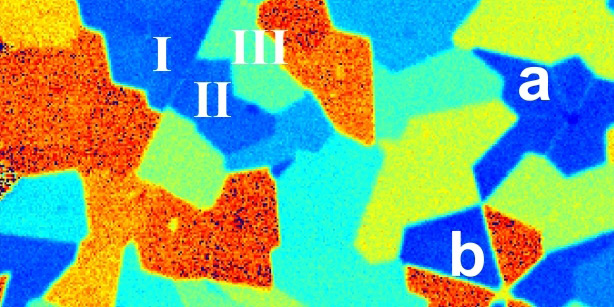
04/01/14 The Scientist — Inspired by turkey skin, bioengineering professor Seung-Wuk Lee's team has devised a bacteriophage-based sensor whose color changes upon binding specific molecules.
03/31/14 San Francisco Business Times — The $68 billion cost estimate for a Los Angeles-to-San Francisco high-speed rail network is far too low, and the system may be eclipsed by emerging technologies before the 30-year project is completed, civil engineering professor C. William Ibbs warned the state Senate transportation committee last week.
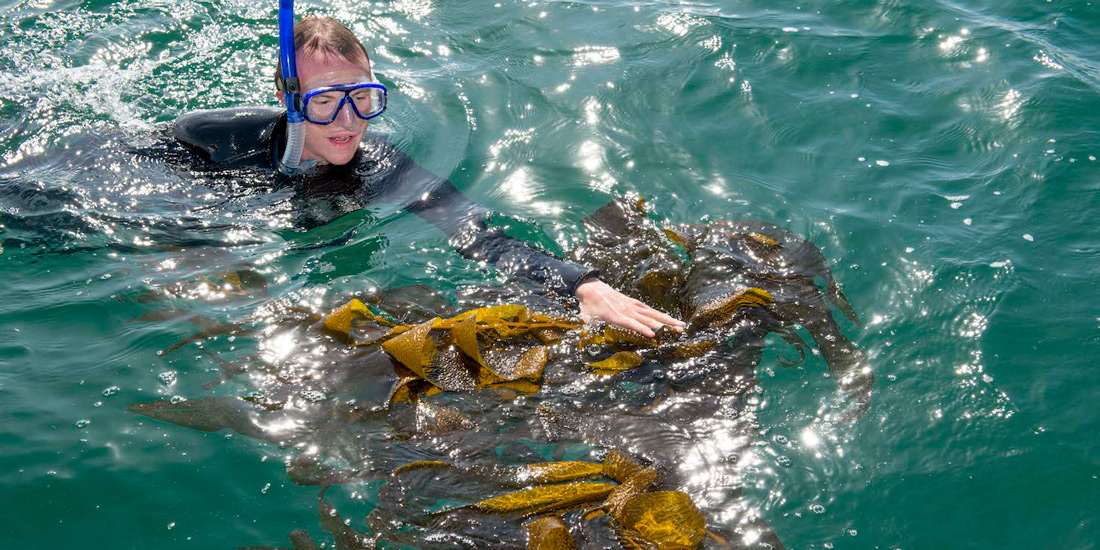
03/27/14 California magazine — Fish got to swim, birds got to fly, and engineering students got to do wild and wacky things -- like designing, building, and racing canoes made of concrete. And nowhere do they do it better than at Berkeley Engineering, where civil engineering students are working overtime getting this year's canoe, Calamari, ready for the Mid-Pacific Regional Conference in early April.
03/26/14 Daily Californian — A team of four Berkeley Engineering undergraduates won “Most Innovative” in one of six categories at the Department of Energy's Better Buildings Case Competition for its proposal to improve energy efficiency at universities. Members of the Golden EnergTech team were Nanavati Low (IEOR '16), Daniel Tjandra (ChemE '14), Michael Chang (CEE '15) and Grace Vasiknanonte (MSE '16).
03/24/14 Contra Costa Times — Japanese radioisotopes aren't lurking in the sand at Miramar Beach, the California Department of Public Health said in a final report debunking suggestions that the beach contained radioactive material from the 2011 Fukushima Daiichi nuclear disaster. "Nuclear radiation is something you can't smell, see and feel; it tends to scare people" said UC Berkeley nuclear engineering professor Kai Vetter, leader of the school's Rad Watch project, which has tested West Coast air, rain, milk and fish without finding any evidence that Fukushima-related contamination poses a health threat.
03/21/14 EE Times — Berkeley scientists led by mechanical engineering professor Liwei Lin report they have found a way to advance on-chip inductor technology, a breakthrough that could lead to a new generation of miniature electronics and wireless communications systems.
03/19/14 — Backed by a vibrant startup culture that serves as the engine of economic growth for much of the Bay Area, UC Berkeley has established several new programs that support the translation of university research into real-world solutions. One key element is the SkyDeck startup incubator, a collaboration of Berkeley Engineering, the Haas School of Business and the Office of the Vice Chancellor of Research.
03/19/14 — Academic research sponsored by industry has a strong track record of leading to innovative patents and licenses, challenging assumptions that corporate support skews science toward inventions that are less accessible and less useful to others than those funded by the government or non-profit organizations, according to a new analysis.
03/17/14 San Francisco Chronicle — More than 70 years after UC Berkeley's mining school was absorbed into the College of Engineering, earthquake researchers studying the Hayward Fault plan to install seismographs and high-frequency microphones inside the Lawson Adit -- a rocky mine shaft stretching east from Hearst Memorial Mining Building that was built by Berkeley students a century ago.
03/14/14 Daily Clog Science — In an Ask Me Anything session this week on Reddit, six professors from UC Berkeley's department of nuclear engineering answered questions ranging from concerns about thorium reactor design to environmental monitoring in Fukushima.
03/12/14 Berkeley Research — Ben Recht is looking for problems. Recht, an assistant professor with dual appointments in EECS and statistics, develops mathematical strategies that help researchers cut through blizzards of data to find what they're after, be they urban planners or online retailers.
03/11/14 U.S. News & World Report — In the U.S. News & World Report rankings of graduate programs released Tuesday, Berkeley Engineering ranked 1st in computer science, environmental engineering, civil engineering, and electrical engineering. Bioengineering moved from 10th to 7th. All programs remain ranked in the top 10.
03/11/14 U.S. News & World Report — Berkeley Engineering alum William T. Hagen (M.Eng.'12 ME) is an example of how job prospects in fields that allow engineers to help the world – such as energy, civil and mechanical engineering – are projected to grow.
03/11/14 — Berkeley engineers have found that an electrical current can be used to orchestrate the flow of a group of cells. This achievement sets the stage for more controlled forms of tissue engineering and for potential applications such as “smart bandages” that use electrical stimulation to help heal wounds.
03/10/14 Berkeley Lab — Berkeley researchers, led by Ashok Gadgil and Susan Amrose of civil and environmental engineering, have developed technology that uses electricity to remove arsenic from groundwater, where it can be a silent killer. More importantly, they have created a business model and partnered with a company in India to improve the technology's chances for longevity.
03/04/14 National Inventors Hall of Fame — Ashok Gadgil, professor of civil and environmental engineering, had been inducted into the National Inventors Hall of Fame. Gadgil was honored for two inventions that have helped millions of people in remote areas: UV Waterworks, a low-powered water disinfection system that uses UV light to kill pathogens, and the Berkeley-Darfur Stove, which reduces fuel demands of those in displacement camps.
03/04/14 Berkeley Lab — Berkeley Lab and UC Berkeley researchers are investigating how shapes and surface texture influence the adhesion of infectious Staphylococcus Aureus bacteria. Their work, led by Mohammad Mofrad, a Berkeley Lab faculty scientist and a professor of bioengineering and mechanical engineering at UC Berkeley, could guide the development of bacteria-resistant materials.
03/04/14 Contra Costa Times — In a guest commentary, four California professors, including Berkeley Engineering's Jack Moehle, write about their joint research into the seismic risks posed by older concrete buildings, and the methods and costs of mitigating that risk.
02/28/14 — A research team from Berkeley Engineering and the Berkeley Lab appeared on Capitol Hill Thursday to show off their innovation in energy efficiency: a backpack-mounted system for quickly mapping energy use throughout a building and identifying ways to reduce it
02/27/14 SiliconValley.com — A special report on women in computing profiles Ayushi Samaddar (B.S.'13 EECS), having a "marvelous" time in her first post-graduation job as an associate software engineer, and talks to EECS chair David Culler about the need to involve more women in shaping information technology, "something that is so important to our future."