• Skip to main content
  • Skip to primary navigation
  • Departments
    • Bioengineering
    • Civil and Environmental Engineering
    • Electrical Engineering and Computer Sciences
    • Industrial Engineering and Operations Research
    • Materials Science and Engineering
    • Mechanical Engineering
    • Nuclear Engineering
    • Aerospace program
    • Engineering Science program
  • News
    • Berkeley Engineer magazine
    • Social media
    • News videos
    • News digest (email)
    • Brand & Press kit
  • Events
    • Cal Day
    • Commencement
    • Events calendar
    • Homecoming
    • Kuh Lecture Series
    • Minner Lecture
    • Space reservations
    • View from the Top
  • College directory
  • For staff & faculty
Berkeley Engineering

Berkeley Engineering

Educating leaders. Creating knowledge. Serving society.

  • About
    • Facts & figures
    • Rankings
    • Mission & values
    • Equity & inclusion
    • Voices of Berkeley Engineering
    • Leadership team
    • Milestones
    • Buildings & facilities
    • Maps
  • Admissions
    • Undergraduate admissions
    • Graduate admissions
    • New students
    • Visit
    • Maps
    • Admissions events
    • K-12 outreach
  • Academics
    • Undergraduate programs
    • Majors & minors
    • Undergraduate Guide
    • Graduate programs
    • Graduate Guide
    • Innovation & entrepreneurship
    • Kresge Engineering Library
    • International programs
    • Executive education
  • Students
    • New students
    • Advising & counseling
    • ESS programs
    • CAEE academic support
    • Grad student services
    • Student life
    • Wellness & inclusion
    • Undergraduate Guide
    • > Degree requirements
    • > Policies & procedures
    • Forms & petitions
    • Resources
  • Research & faculty
    • Centers & institutes
    • Undergrad research
    • Faculty
    • Sustainability and resiliency
  • Connect
    • Alumni
    • Industry
    • Give
    • Stay in touch
Home > News

AI & robotics

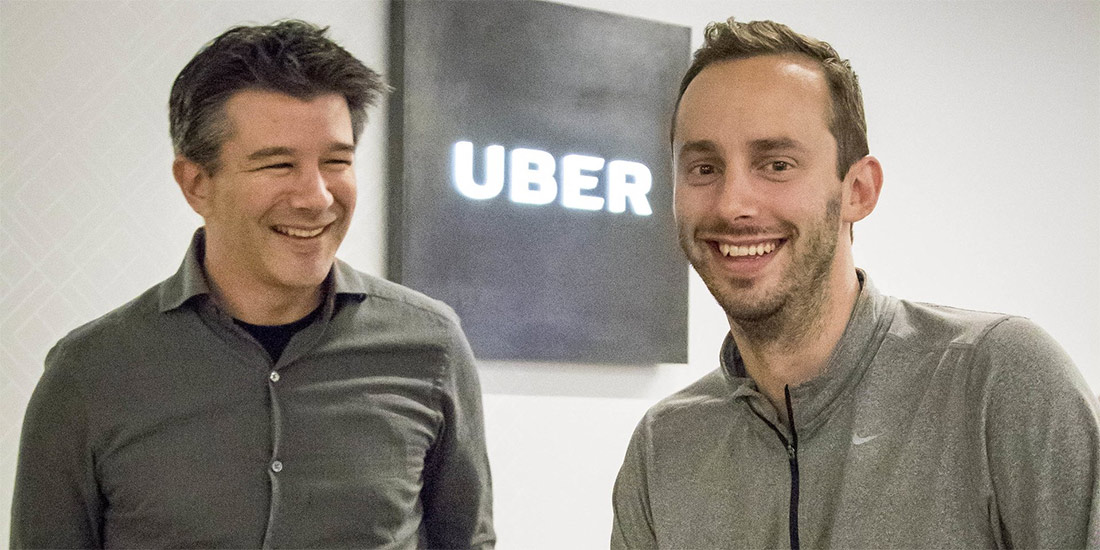
Anthony Levandowski (right) and Uber CEO Travis Kalanick in the lobby of Uber’s headquarters

How robot lover Anthony Levandowski pioneered the driverless car

08/22/16 The Guardian — Anthony Levandowski (B.S.'02, M.S.'03 IEOR) is one the most influential engineers behind self-driving vehicles. Now that Uber has bought his latest startup, Otto, he talks about how it all started with a phone call from Mom.
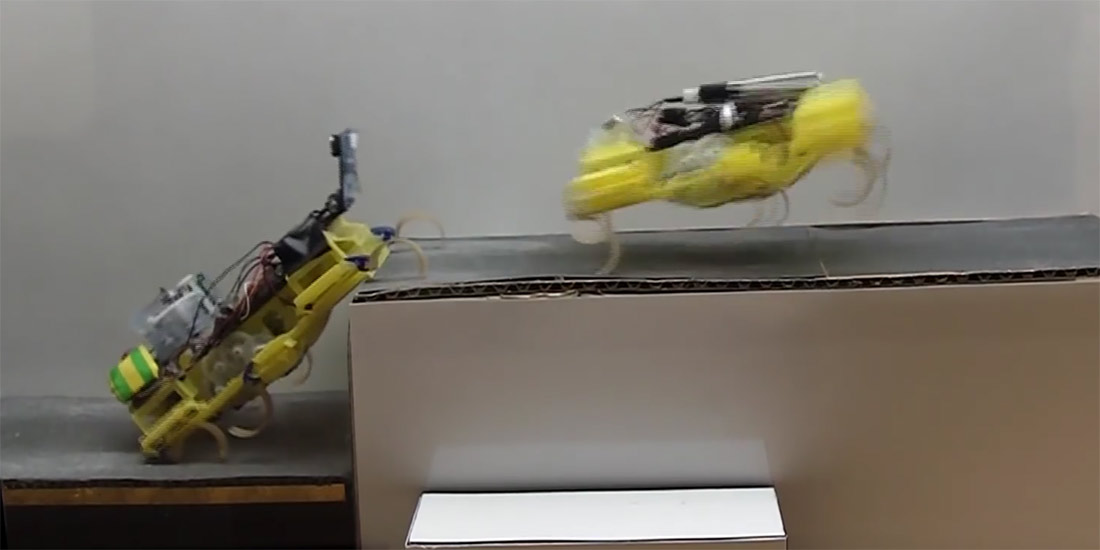
Two two VelociRoACH robots work together to climb a step

Roach-like robots run, climb and communicate with people

06/13/16 National Science Foundation — While the ability of insects to go just about anywhere can be disturbing at times, electrical engineer Ronald Fearing sees their talent as inspiration for a special breed of tiny robots that can travel rough terrain, follow instructions, and work together to save lives in a disaster.
Stuart Russell

We can’t prevent AI changing the world but we can stop robots cooking cats

06/07/16 TechRepublic — EECS professor Stuart Russell on the dramatic changes he believes artificial intelligence will bring about, and the thorny problem of making sure smart machines have our interests at heart.
Ken Goldberg and robot surgery

Would you trust a robot surgeon to operate on you?

06/02/16 IEEE Spectrum — The role of surgeons may change dramatically as more and more surgical tasks are automated within the next 10 years, says Ken Goldberg, a roboticist and professor of industrial engineering who recently programmed a da Vinci surgical robot in his lab to conduct surgical incisions.

Dean’s word: The future of intelligence

05/01/16 — Deep Learning technology has made a huge strides recently, advances built on pioneering research at Berkeley starting in the 1980s and carried on by a new generation of roboticists.
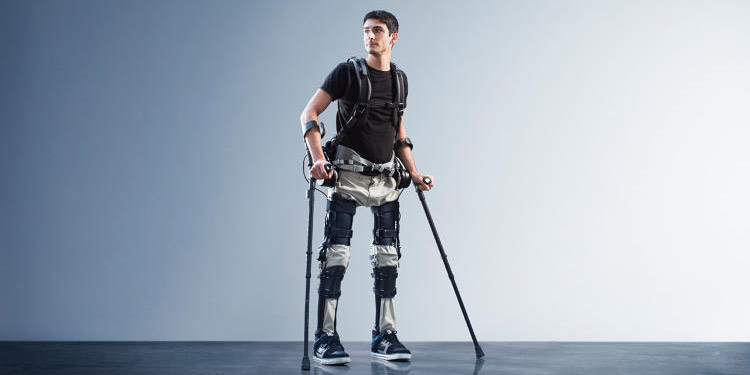
robot walking upright

Affordable and lightweight suitX design honored

05/01/16 — The startup company suitX won a Robotics for Good competition this spring for their plan to adapt one of their exoskeleton designs to assist children with conditions such as cerebral palsy, spina bifida or spinal muscular atrophy.
Rikky Muller

Life with machine: Robot relationships get real

05/01/16 — Three Berkeley professors studying artificial intelligence and robotics are testing how machines and humans come into physical contact, behave independently and interact with one another. The common goal: to create machines with the intelligence to better serve and work with human beings.
Photo illustration of how Lightsense LED array works to identify drones.

Making unmanned flight safe

05/01/16 — Responsible Robotics is creating new technologies that enable drone operators to easily comply with emerging Federal Aviation Administration regulations.

PiE brings robotics to budding young engineers

04/26/16 — Hundreds of Bay Area high school students gathered at the Lawrence Hall of Science over the weekend to pit robots they had built against one another in a competition hosted by Pioneers in Engineering (PiE), a Berkeley student mentorship program.
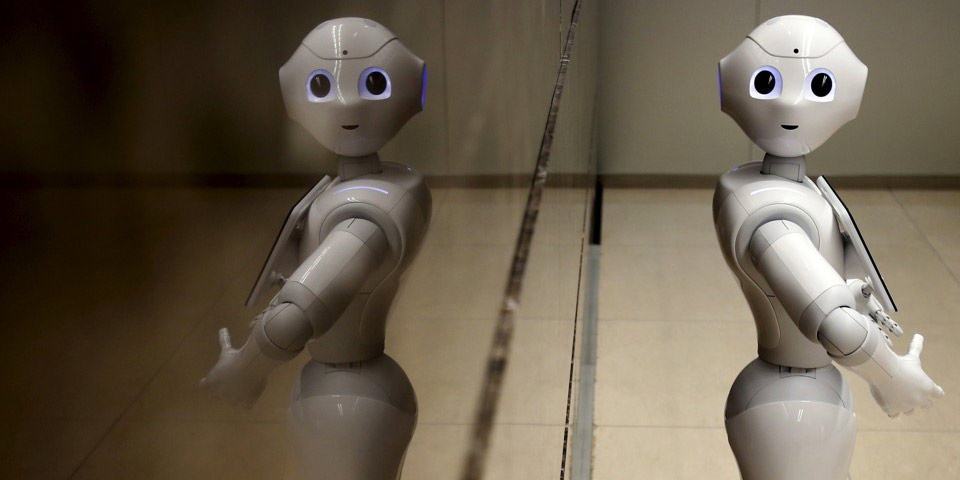
Robot by a mirror

Robots that act differently when you’re around

04/19/16 The Atlantic — Roboticist Anca Dragan, head of Berkeley's Interactive Autonomy and Collaborative Technologies lab, is working on algorithms that can help robots coexist with people in the real world.
Arduino Day at Jacobs Hall

Arduino Day: Underwater robots, R/C trains and more

04/08/16 Make — Arduino’s founders and fans gathered at Jacobs Hall on April 2 for Arduino Day, a worldwide celebration of the open-source electronics platform that allowed makers and enthusiasts to show off their projects, share ideas and participate in workshops.
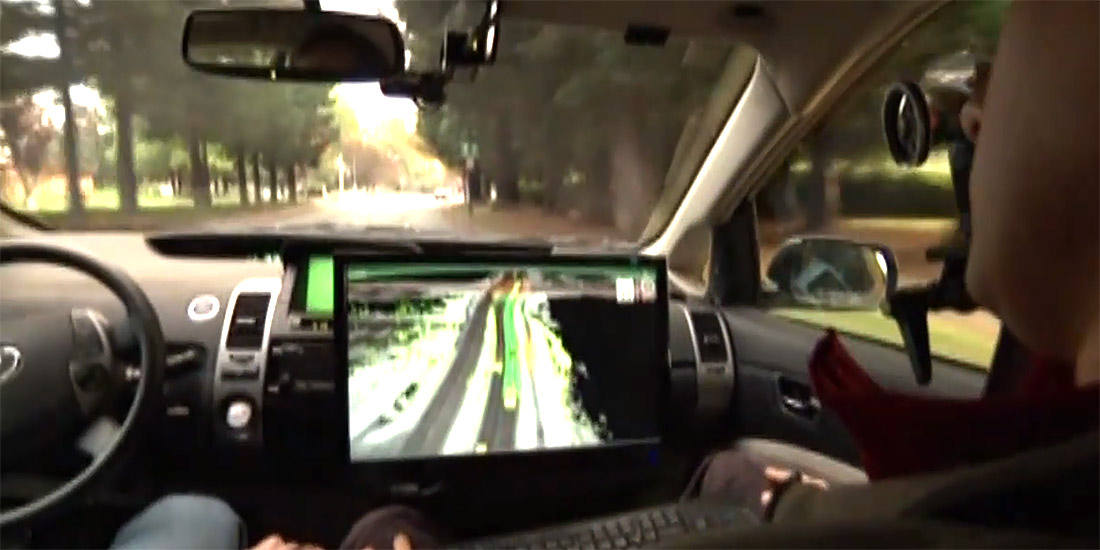
Inside a self-driving car

Automakers go back to school for self-driving cars

03/16/16 Bloomberg Business — Automakers Ford, Toyota and Volkswagen, along with electronic companies Nvidia, Samsung, Qualcomm and Panasonic, are collaborating to fund artificial intelligence research at UC Berkeley, hoping this DeepDrive alliance can help them build the brains behind self-driving cars.
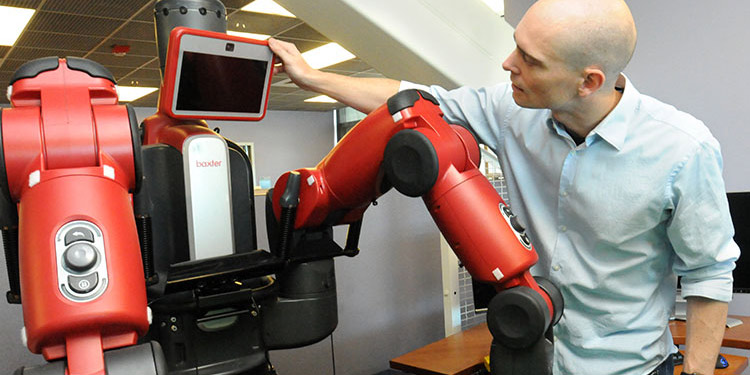
Pieter Abbeel with the Baxter Research Robot

‘Deep learning’ – a giant step for robots

03/04/16 Berkeley Research — For 15 years, Berkeley robotics researcher Pieter Abbeel has been looking for ways to make robots learn. In 2010 he and his students programmed a robot to fold towels. Now, he's gotten robots to learn from their experience.
UC Berkeley

Inside the artificial intelligence revolution

02/29/16 Rolling Stone — A visit to Sutardja Dai Hall's "robot nursery school," where EECS professor Pieter Abbeel and colleagues are trying to teach robots to understand the world and think intelligently, kicks off a look at the potential and the perils of artificial intelligence.
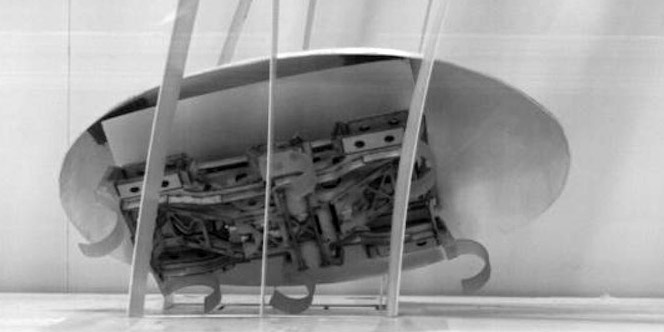
Cockroach atop a rescue robot prototype

Building a rescue roach

02/18/16 New York Times — Humans may never eliminate cockroaches, but they could learn enough from them to build robots that crawl through rubble to look for survivors or gather information after disasters, according to scientists at UC Berkeley's PolyPEDAL Lab.
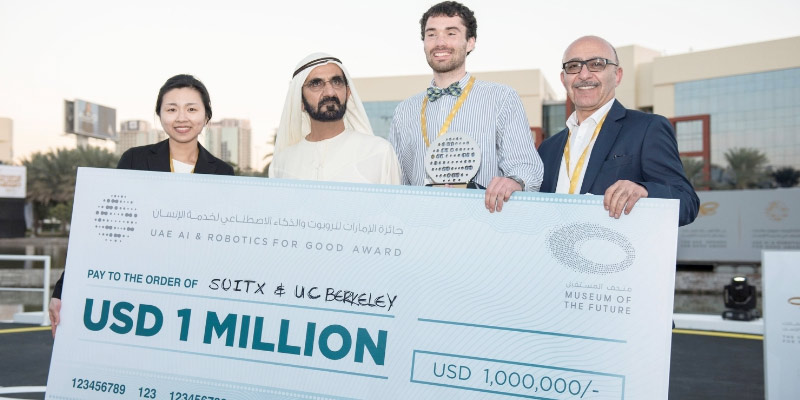
UC Berkeley and SuitX team, winner of UAE AI and Robotics for Good Award

SuitX wins $1M at “Robotics for Good”

02/10/16 Cult of Android — The suitX team designing medical exoskeletons for children with cerebral palsy, led by mechanical engineering professor Homayoon Kazerooni, won the $1 million international grand prize at the “Robotics for Good” competition in Dubai.
Robot design inspired by cockroach

Cockroach robot squeezes though cracks

02/08/16 — Berkeley robotics engineers hope their new cockroach-inspired bot will be able to crawl through tiny spaces to find people buried in the rubble of collapsed buildings.
The Phoenix exoskeleton

The paralyzed can walk again with this super-light robotic exoskeleton

02/01/16 Fast Company — The Phoenix, a lightweight exoskeleton developed under the guidance of mechanical engineering professor Homayoon Kazerooni, can provide an affordable way to walk again.
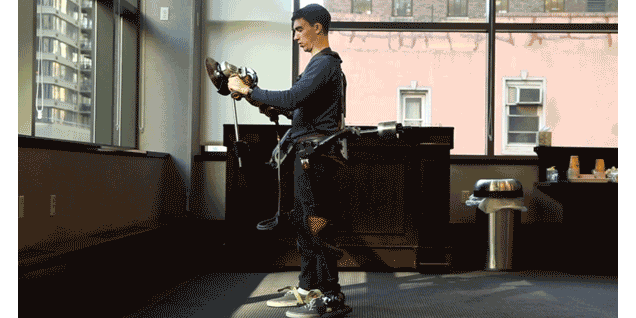
Tester operating an industrial grinder while wearing an exoskeleton

I wore an exoskeleton that gave me super strength

01/26/16 Time — Ekso Bionics, which grew out of Berkeley Engineering's Robotic and Human Engineering Lab, is working on an exoskeleton that can help workers lift and use heavy power tools for long stretches of time by literally taking the weight off their backs.
Exoskeleton from Ekso Bionics

Finding the solution by changing the problem

01/19/16 ZDNet — On their way to launching Ekso Bionics, engineers at Berkeley's Robotic and Human Engineering Lab faced problems with noise, smell and weight as they struggled to develop an exoskeleton for military use. They succeeded by inverting the problem - starting from scratch and viewing the project from a new angle.
  • « Go to Previous Page
  • Go to page 1
  • Interim pages omitted …
  • Go to page 12
  • Go to page 13
  • Go to page 14
  • Go to page 15
  • Go to page 16
  • Interim pages omitted …
  • Go to page 18
  • Go to Next Page »
  • Contact
  • Give
  • Privacy
  • UC Berkeley
  • Accessibility
  • Nondiscrimination
  • instagram
  • X logo
  • linkedin
  • facebook
  • youtube
  • bluesky
© 2026 UC Regents