• Skip to main content
  • Skip to primary navigation
  • Departments
    • Bioengineering
    • Civil and Environmental Engineering
    • Electrical Engineering and Computer Sciences
    • Industrial Engineering and Operations Research
    • Materials Science and Engineering
    • Mechanical Engineering
    • Nuclear Engineering
    • Aerospace program
    • Engineering Science program
  • News
    • Berkeley Engineer magazine
    • Social media
    • News videos
    • News digest (email)
    • Press kit
  • Events
    • Events calendar
    • Commencement
    • Homecoming
    • Cal Day
    • Space reservations
    • View from the Top
    • Kuh Lecture Series
    • Minner Lecture
  • College directory
  • For staff & faculty
Berkeley Engineering

Berkeley Engineering

Educating leaders. Creating knowledge. Serving society.
  • About
    • Facts & figures
    • Rankings
    • Mission & values
    • Equity & inclusion
    • Voices of Berkeley Engineering
    • Leadership team
    • Milestones
    • Buildings & facilities
    • Maps
  • Admissions
    • Undergraduate admissions
    • Graduate admissions
    • New students
    • Visit
    • Maps
    • Admissions events
    • K-12 outreach
  • Academics
    • Undergraduate programs
    • Majors & minors
    • Undergraduate Guide
    • Graduate programs
    • Graduate Guide
    • Innovation & entrepreneurship
    • Kresge Engineering Library
    • International programs
    • Executive education
  • Students
    • New students
    • Advising & counseling
    • ESS programs
    • CAEE academic support
    • Grad student services
    • Student life
    • Wellness & inclusion
    • Undergraduate Guide
    • > Degree requirements
    • > Policies & procedures
    • Forms & petitions
    • Resources
  • Research & faculty
    • Centers & institutes
    • Undergrad research
    • Faculty
    • Sustainability and resiliency
  • Connect
    • Alumni
    • Industry
    • Give
    • Stay in touch
Home > News

International

Tsinghua University

UC Berkeley and Tsinghua University launch research and graduate education partnership

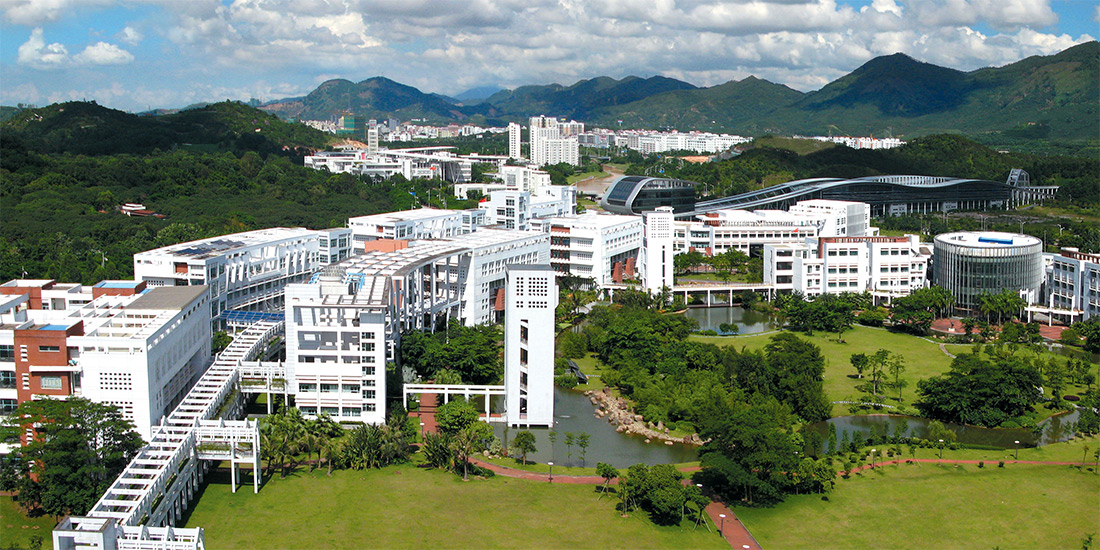
09/06/14 — UC Berkeley and Tsinghua University have signed an agreement to establish a joint institute in the city of Shenzhen in South China to promote research collaboration and graduate student education. First areas of focus for the institute will be nanotechnology and nanomedicine, low-carbon and new energy technologies, and data science and next-generation Internet.
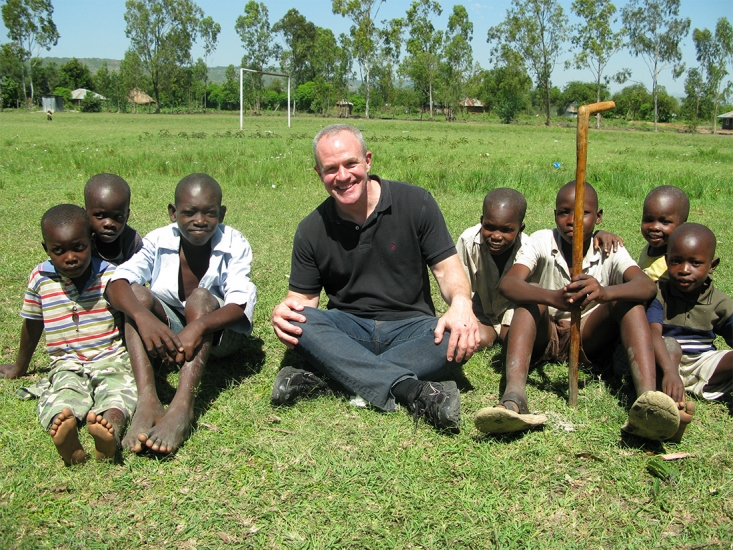
Jay Keasling with Kenyan children

Antimalarial drug based on Berkeley technology shipped to Africa

08/13/14 Berkeley Lab — The road from lab bench to market can be long, but UC Berkeley's Jay Keasling has been patient. Thirteen years after he discovered how to make an antimalarial drug in microbes, the product - the world's first semisynthetic antimalarial drug - has been shipped from Italy to Africa to bolster the fight against this killer disease.
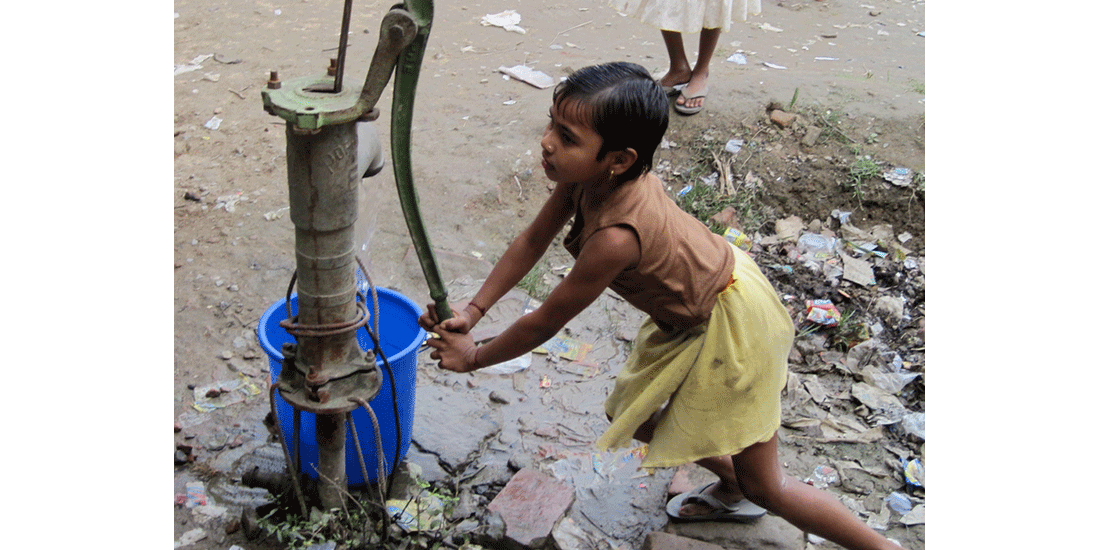
Girl in India pumping water

Indian company licenses invention for arsenic-free water

03/10/14 Berkeley Lab — Berkeley researchers, led by Ashok Gadgil and Susan Amrose of civil and environmental engineering, have developed technology that uses electricity to remove arsenic from groundwater, where it can be a silent killer. More importantly, they have created a business model and partnered with a company in India to improve the technology's chances for longevity.
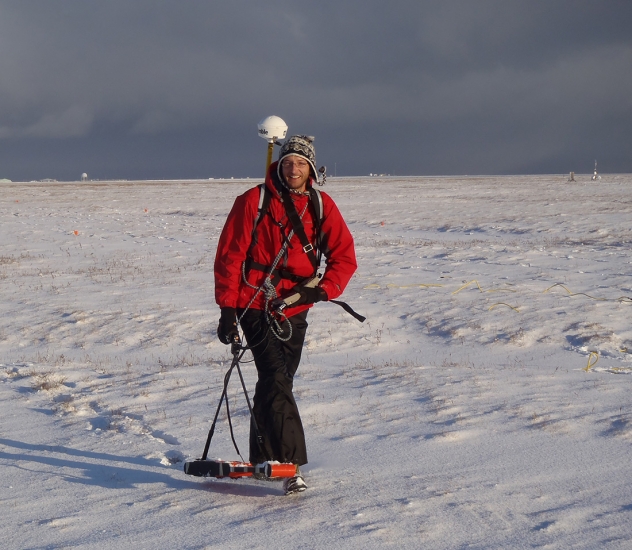
Berkeley Lab scientist Baptiste Dafflon collects electromagnetic data

The underground: Studying the Arctic tundra

02/12/14 — Normally, scientists don't have to worry about a polar bear charging them at 30 miles per hour. But this can be a big safety concern for researchers in Barrow, Alaska, where geophysicist Susan Hubbard (Ph.D'98 CEE) studies the Arctic ecosystem to improve climate modeling.
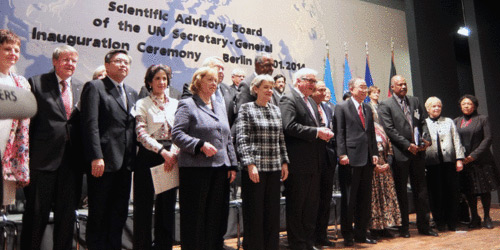
UN Scientific Advisory Board members

UN Scientific Advisory Board aims to build ties between science and policy

02/04/14 UNESCO — At its inaugural meeting in Berlin Jan. 30, members of the United Nations Scientific Advisory Board, including Berkeley Engineering Dean Shankar Sastry, vowed to "pull our resources and wisdom together," strengthening cooperation between the scientific community and policy-makers "to put the world on a sustainable path."

Do-it-yourself cellular coverage for remote places

12/12/13 MIT Technology Review — With Swedish telephone numbers, a tree-bound base station, and help from a team of Berkeley engineers, a remote Indonesian village is running its own telecommunications company.

Young engineer’s smart prepaid meter helps remote villages gain access to electricity

12/09/13 dnaindia.com — When Yashraj Khaitan traveled to remote villages in India in 2009 as a member of Engineers without Borders, he came back with the idea for Gram Power, a company that provides remote areas with on-demand, reliable electricity through affordable prepaid purchases modeled on cellphone recharge plans.

College of Engineering opens innovation center in Shanghai

11/15/13 — A new center now open in Shanghai will strengthen the College of Engineering's research and educational partnerships with academic and industry colleagues in China. The Shanghai Zhangjiang Berkeley Engineering Innovation Center, or Z-BEI, was formally launched in a Nov. 15 ceremony presided over by officials from UC Berkeley, Zhangjiang High-Tech Park and the Shanghai-area government.

Berkeley Engineering in Shanghai – FAQ

11/15/13 — Questions and answers on agreement between UC Berkeley College of Engineering and Shanghai Zhangjiang Group Co., Ltd.

Helping dissenters evade foreign eavesdropping

11/05/13 San Francisco Chronicle — Yahel Ben-David, a computer science doctoral student, has been working with other Berkeley Engineering researchers to create an Android application that will allow activists and citizens to communicate anonymously even when oppressive governments try to shut down communications channels.

Luck, smarts lead from Uganda to UC Berkeley

10/22/13 San Francisco Chronicle — The amazing journey of Christopher Ategeka, who went from teenage orphan and human scarecrow in Uganda to mechanical engineer at UC Berkeley (two degrees down, one more in the works), winning honors and prizes, founding a nonprofit and a biotech company, even giving a TED talk.

Dean Sastry appointed to United Nations scientific advisory board

10/04/13 UNESCO — On Sept. 24, the first day of the UN General Assembly, Secretary-General Ban Ki-moon announced his decision to create a Scientific Advisory Board to inform international decision-making on sustainable development. Dean S. Shankar Sastry will serve as one of two U.S. representatives on the 26-member board, which includes leading figures in the natural, social and human sciences. “We must strengthen the interface between science and policy,” said Ki-moon, “so that the latest scientific findings are reflected in our high-level policy discussions.” Ki-moon made the announcement during the inaugural meeting of the High Level Political Forum on Sustainable Development, a platform created to realize the vision adopted at the UN's Rio+20 conference in 2012. He has entrusted UNESCO's Director-General to establish the advisory board.

Paris, San Francisco choose Inria and CITRIS to conduct ‘smart city’ research

04/05/13 CITRIS — The mayors of Paris and San Francisco recently signed an agreement focusing on the digital economy and smart cities, and designated France's Inria (National Institute for Research in Computer Science and Control) and UC's CITRIS (Center for Information Technology Research in the Interest of Society) to carry out joint research on the topic.

The worldwide reach of Berkeley Engineering

03/05/13 — Global problems demand global cooperation. To tackle a wide range of challenges, from clean energy and intelligent infrastructure to cost-effective healthcare delivery, we are launching ambitious research and teaching partnerships with a number of international colleagues.

From Kenya to California

03/05/13 — Growing up in western Kenya, Lilian Kabelle had always dreamed of going to Berkeley-only 10,000 miles, an acceptance letter and the means stood in her way. Now, as a MasterCard Foundation Scholar, Kabelle is attending Berkeley at no cost as part of a $500 million education initiative to provide full scholarships for students in developing countries who exemplify a “give back” ethos.

A new loo

02/07/13 — Answering a challenge from the Bill and Melinda Gates Foundation to improve sanitation in developing countries, environmental engineering professor Kara Nelson and postdoctoral researcher Temitope Ogunyoku have developed a toilet that safely disinfects waste. Their hand-cranked pHree Loo yields “safe sludge” that does not endanger human health.

ShanghaiTech, Berkeley launch 5-year collaboration

11/13/12 ShanghaiTech — ShanghaiTech University and UC Berkeley have signed a Memorandum of Understanding to launch a collaboration in education, culture, and scientific research over the next five years. The first stage of the project will involve Electrical Engineering and Computer Sciences faculty from Berkeley sharing core instructional resources and research methodology with their Chinese counterparts.

Arsenic water filter recognized with international prize

10/09/12 Berkeley Lab — A team led by Ashok Gadgil, Berkeley Engineering professor and head of LBNL's environmental energy technologies division, has received the Prince Sultan Bin Abdulaziz International Prize for Water. The prize recognizes his team's advances in developing an effective and economical way to treat arsenic contamination in groundwater.

MasterCard Foundation brings African students to Berkeley

09/26/12 — Civil engineering undergrad Lilian Kabelle is one of seven new students from Sub-Saharan Africa attending Berkeley this fall at no cost as part of The MasterCard Foundation Scholars Program. The $500-million initiative will provide some 15,000 talented yet financially disadvantaged young people in developing countries with full scholarships and comprehensive support for their high school and college educations.

Cal Energy Corps working worldwide on smart solutions

09/24/12 — Launched in 2011, the Cal Energy Corps provides undergraduates with practical research and experiential-learning opportunities through internships with partner organizations across the academic, corporate and nonprofit sectors. Modeled on the U.S. Peace Corps, the program aims to engage Berkeley students tackling alternative energy, climate change and sustainability issues around the world. This summer, 13 of the 32 Cal Energy Corps interns were Berkeley Engineers
  • « Go to Previous Page
  • Go to page 1
  • Go to page 2
  • Go to page 3
  • Go to page 4
  • Go to page 5
  • Go to page 6
  • Go to Next Page »
  • Contact
  • Give
  • Privacy
  • UC Berkeley
  • Accessibility
  • Nondiscrimination
  • instagram
  • X logo
  • linkedin
  • facebook
  • youtube
  • bluesky
© 2025 UC Regents