• Skip to main content
  • Skip to primary navigation
  • Departments
    • Bioengineering
    • Civil and Environmental Engineering
    • Electrical Engineering and Computer Sciences
    • Industrial Engineering and Operations Research
    • Materials Science and Engineering
    • Mechanical Engineering
    • Nuclear Engineering
    • Aerospace program
    • Engineering Science program
  • News
    • Berkeley Engineer magazine
    • Social media
    • News videos
    • News digest (email)
    • Press kit
  • Events
    • Events calendar
    • Commencement
    • Homecoming
    • Cal Day
    • Space reservations
    • View from the Top
    • Kuh Lecture Series
    • Minner Lecture
  • College directory
  • For staff & faculty
Berkeley Engineering

Berkeley Engineering

Educating leaders. Creating knowledge. Serving society.

  • About
    • Facts & figures
    • Rankings
    • Mission & values
    • Equity & inclusion
    • Voices of Berkeley Engineering
    • Leadership team
    • Milestones
    • Buildings & facilities
    • Maps
  • Admissions
    • Undergraduate admissions
    • Graduate admissions
    • New students
    • Visit
    • Maps
    • Admissions events
    • K-12 outreach
  • Academics
    • Undergraduate programs
    • Majors & minors
    • Undergraduate Guide
    • Graduate programs
    • Graduate Guide
    • Innovation & entrepreneurship
    • Kresge Engineering Library
    • International programs
    • Executive education
  • Students
    • New students
    • Advising & counseling
    • ESS programs
    • CAEE academic support
    • Grad student services
    • Student life
    • Wellness & inclusion
    • Undergraduate Guide
    • > Degree requirements
    • > Policies & procedures
    • Forms & petitions
    • Resources
  • Research & faculty
    • Centers & institutes
    • Undergrad research
    • Faculty
    • Sustainability and resiliency
  • Connect
    • Alumni
    • Industry
    • Give
    • Stay in touch
Home > News

Computing

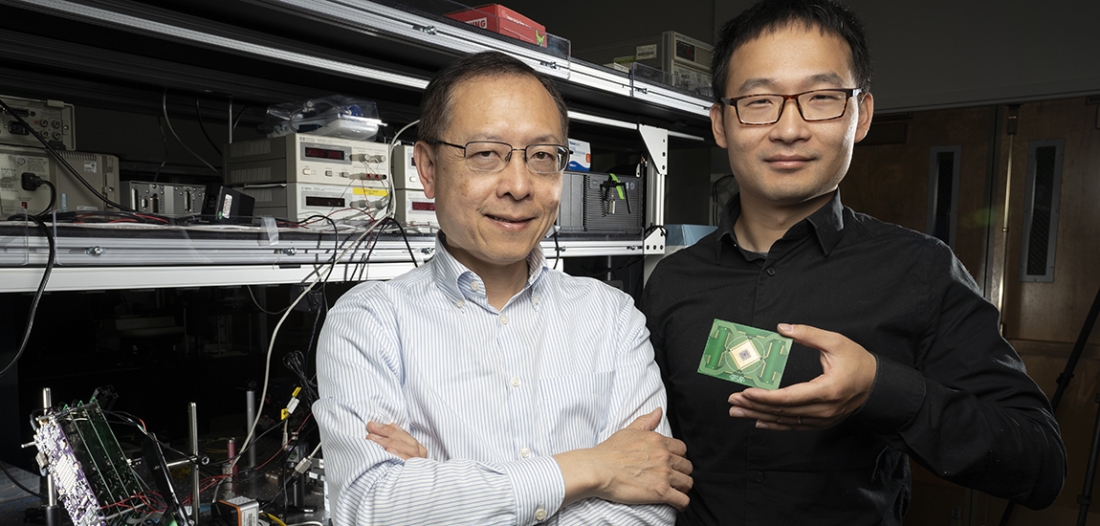
2D OPA Chip

New chip could lead to cheaper and better medical imaging devices and self-driving cars

08/06/19 — Berkeley engineers have created the fastest silicon-based, programmable two-dimensional optical phased array, which could improve medical imaging, optical communications and LiDAR sensors.
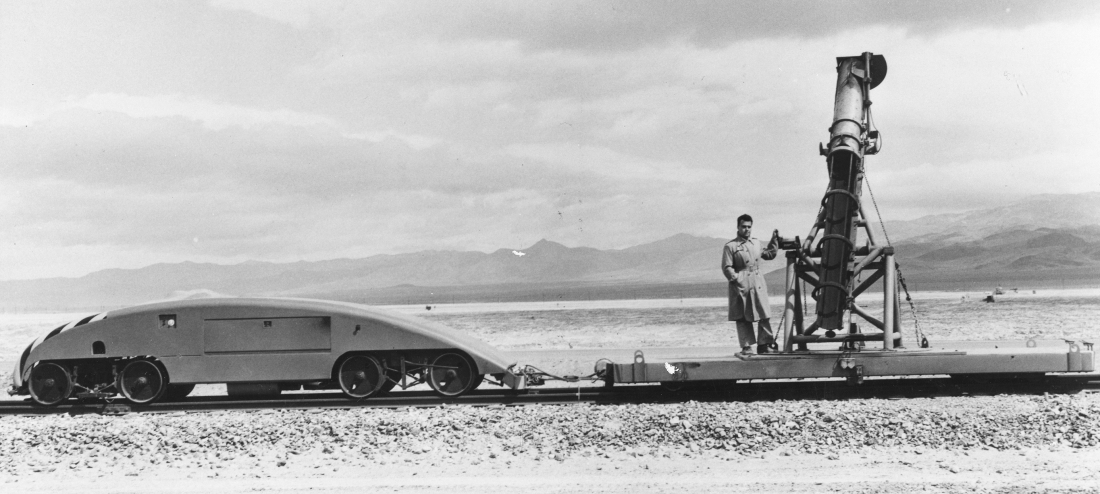
George Leitmann on rocket test track, Naval Ordnance Test Station, China Lake

Bancroft Library oral history, podcast highlight Berkeley Engineering achievements

08/01/19 — Berkeley Engineering's contributions to the rise of the semiconductor industry were featured in a recent library podcast, while mechanical engineering professor emeritus George Leitmann was interviewed for an oral history project.

New RIOS Lab to expand open-source ecosystem for dominant computer processor instruction set

07/01/19 — The Tsinghua-UC Berkeley Shenzhen Institute (TBSI) has launched a non-profit research lab to expand and elevate the capabilities of reduced instruction set computer (RISC) microprocessors. The RISC-V International Open Source Laboratory, or RIOS, will involve the development of open-source hardware and software designs.
Facial Manipulations in Adobe Photoshop

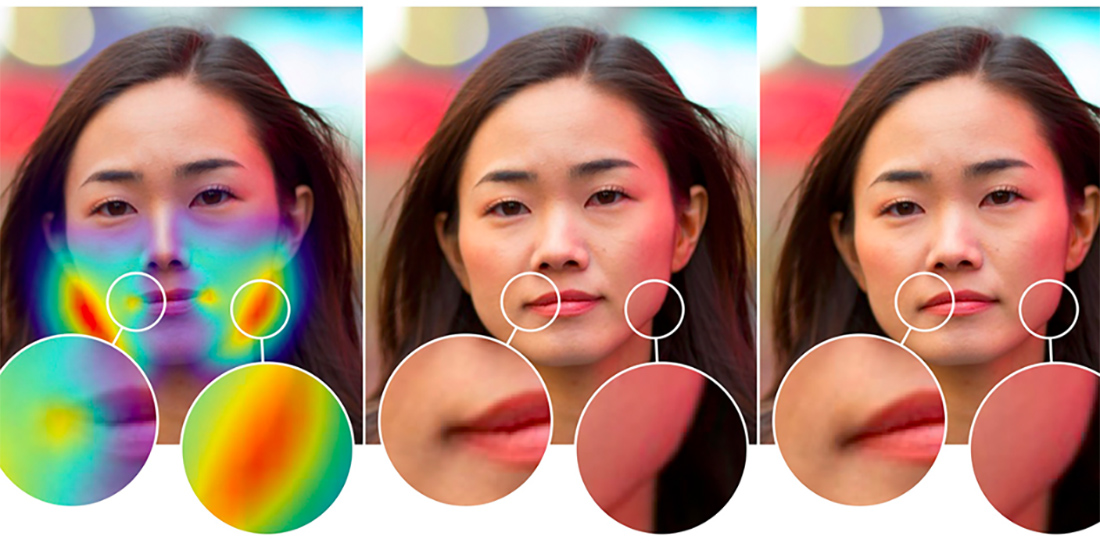
Adobe Research and UC Berkeley: Detecting Facial Manipulations in Adobe Photoshop

06/19/19 Adobe — UC Berkeley and Adobe researchers have developed a method for detecting edits to images that were made using Photoshop's Face Aware Liquify feature. While still in its early stages, this collaboration between Adobe Research and UC Berkeley, is a step towards democratizing image forensics, the science of uncovering and analyzing changes to digital images.
Demo of SIGNAL, a new multi-player computer game

Bringing out the science of war games

05/07/19 — A first-of-its-kind online game is poised to revolutionize the field of war-gaming. This new multi-player computer game was custom-built to explore deterrence and decision-making in an escalating conflict.
Scott Shenke

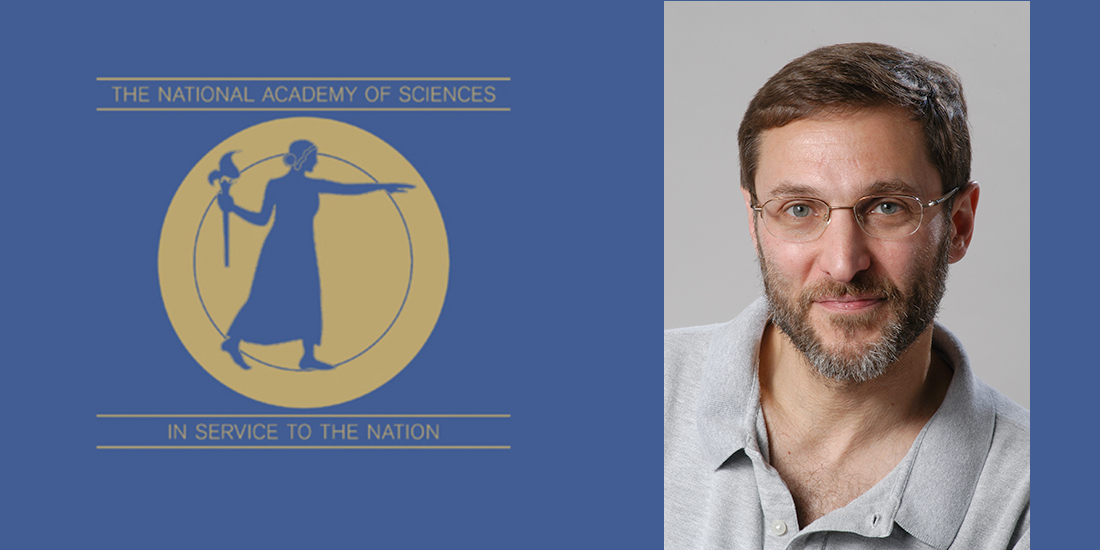
Scott Shenker elected to the NAS

05/01/19 — EECS professor Scott Shenker is one of eight UC Berkeley faculty elected to the National Academy of Sciences this year. He is considered to be one of the top computer scientists in the country and has designed new ways to configure complex computer networks.
Responsible Computer Science Challenge

UC Berkeley expands responsible data and computer sciences curriculum

04/30/19 — The Responsible Computer Science Challenge, an ambitious $3.5 million initiative, has chosen UC Berkeley as one of its inaugural awardees. The award will support UC Berkeley faculty and students in computer science, social science, and humanities to develop and scale Berkeley's groundbreaking ethics curriculum for data science and computer science.
Ellen Ullman onstage with Dean Liu

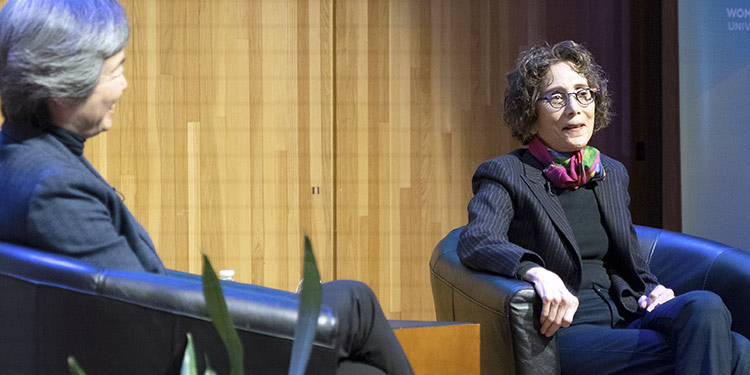
Ellen Ullman on her life in code

04/01/19 — In a Berkeley Talks podcast, programmer and author Ellen Ullman chats with Berkeley Engineering Dean Tsu-Jae King Liu about digital technology's loss of innocence, and reckons with all that has changed - and so much that hasn't.
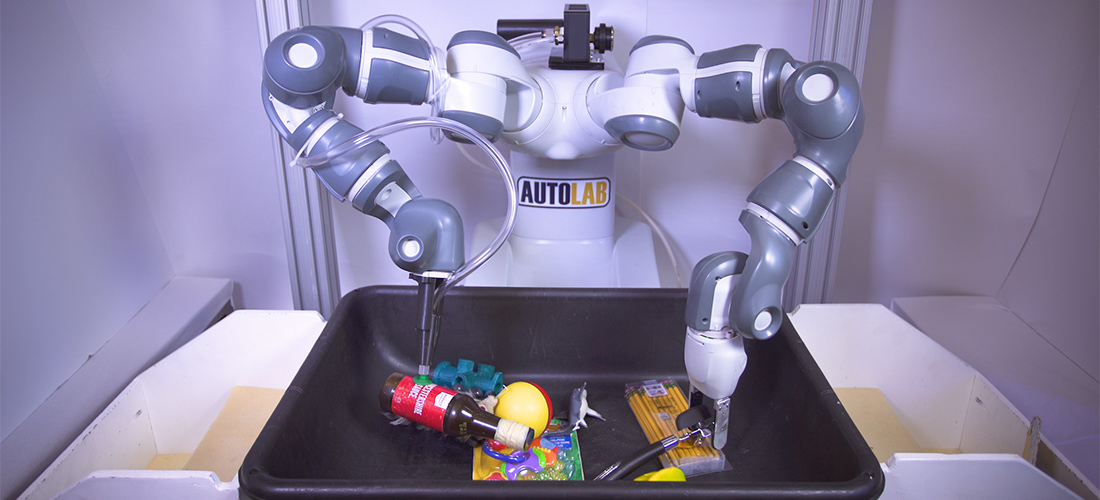
Ambidextrous robot

‘Ambidextrous’ robots could dramatically speed e-commerce

01/16/19 — In a new paper, Berkeley engineers build on 35 years of research with new algorithms that compute robust robot pick points, enabling robot grasping of a diverse range of products without training.

Researchers capture an image of negative capacitance in action

01/14/19 — For the first time ever, an international team of researchers imaged the microscopic state of negative capacitance. This novel result could have far-reaching consequences for energy-efficient electronics.
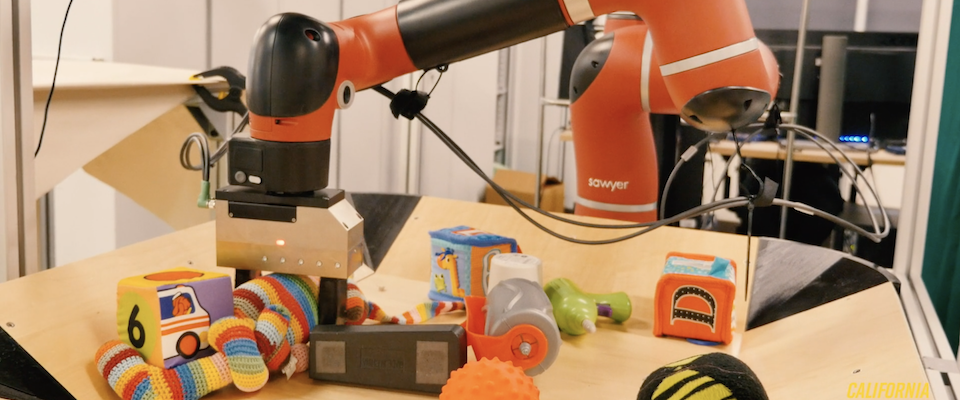
Robots in the Berkeley Artificial Intelligence Research (BAIR) Lab

These robots are learning the old-fashioned way—by playing

12/19/18 California Magazine — Unlike most robots, the ones in the Berkeley Artificial Intelligence Research (BAIR) Lab haven't been programmed to perform a specific task. Instead, they've been programmed to learn new stuff by observation or through physical trial and error.
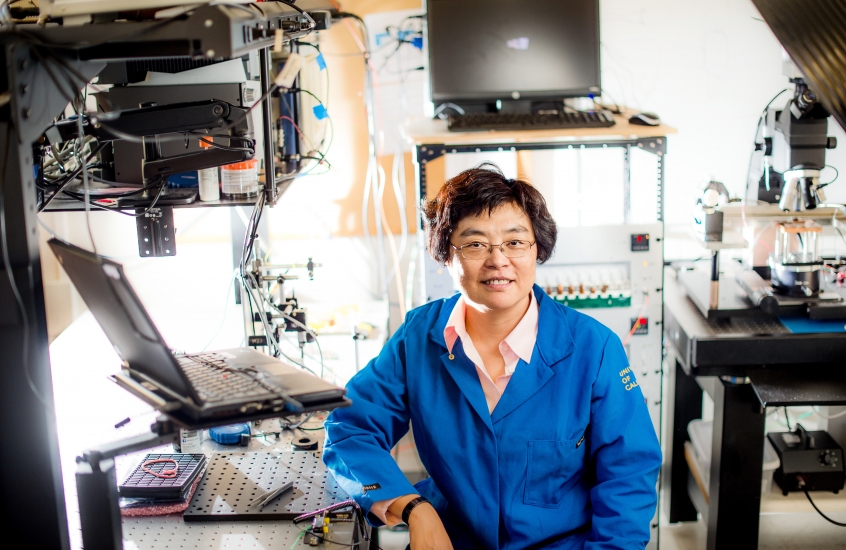
Connie Chang-Hasnain

Connie Chang-Hasnain named National Academy of Inventors Fellow

12/11/18 — EECS professor Connie Chang-Hasnain has been named a fellow of the National Academy of Inventors, an organization that champions the societal benefits of university research.
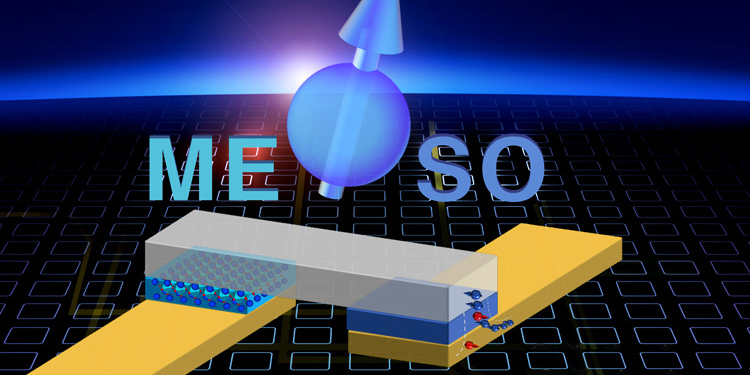
MESO Project

New quantum material could take computers beyond semiconductors

12/03/18 — Researchers from Intel Corp. and UC Berkeley's MSE are looking beyond current transistor technology and preparing the way for a new type of memory and logic circuit that could someday be in every computer on the planet.
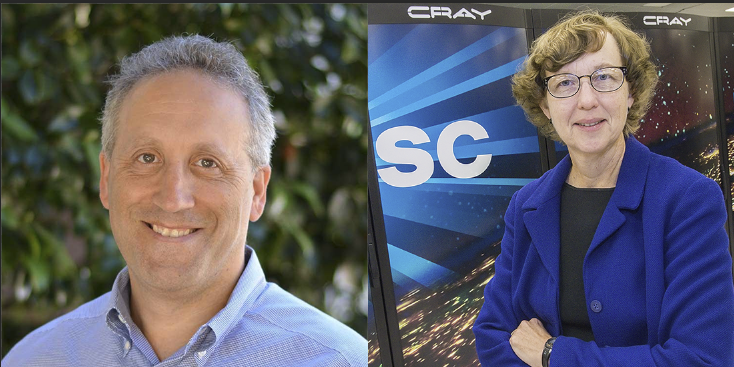
Allen Goldstein and Katherine Yelick

Allen Goldstein and Katherine Yelick elected AAAS fellows

11/27/18 — EECS professor Katherine Yelick and CEE professor Allen Goldstein, both faculty scientists at Berkeley Lab, were elected to the American Association for the Advancement of Science.
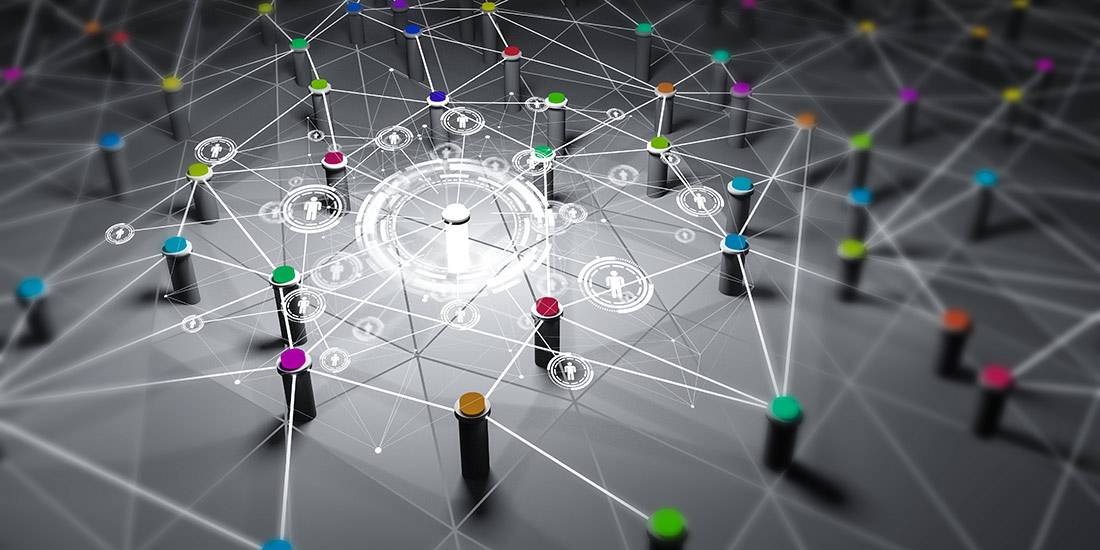
Stock photo of colored pins and networking connections

Data science division to connect teaching and research across campus

11/01/18 — UC Berkeley is forming a new academic division, provisionally referred to as the Division of Data Science and Information, to facilitate interactions among researchers, students and faculty in a wide variety of disciplines.
Abstract image of quantum circuit board

Berkeley computer theorists show path to verifying quantum supremacy

10/30/18 — Berkeley computer theorists have shown that there is merit behind a method of verifying quantum supremacy, a term that describes a quantum computer's ability to solve a problem that is prohibitively difficult for any classical algorithm.

Turning cars into robot traffic managers

10/29/18 — Berkeley transportation researchers are addressing the emerging era of smart vehicles with a project that uses machine learning to manage traffic where autonomous, semi-autonomous and manned vehicles share the road. They presented their project, called Flow, at the Conference on Robotic Learning.
Cybersecurity abstract mage

Berkeley researchers to help develop trustworthy machine learning systems

10/24/18 — Berkeley engineers, led by computer sciences professor Dawn Song, are part of the new Center for Trustworthy Machine Learning funded by the National Science Foundation. The NSF center, led by Pennsylvania State University and announced today, will focus on developing secure systems in the era of machine learning models. The center will receive $10 million over five years.
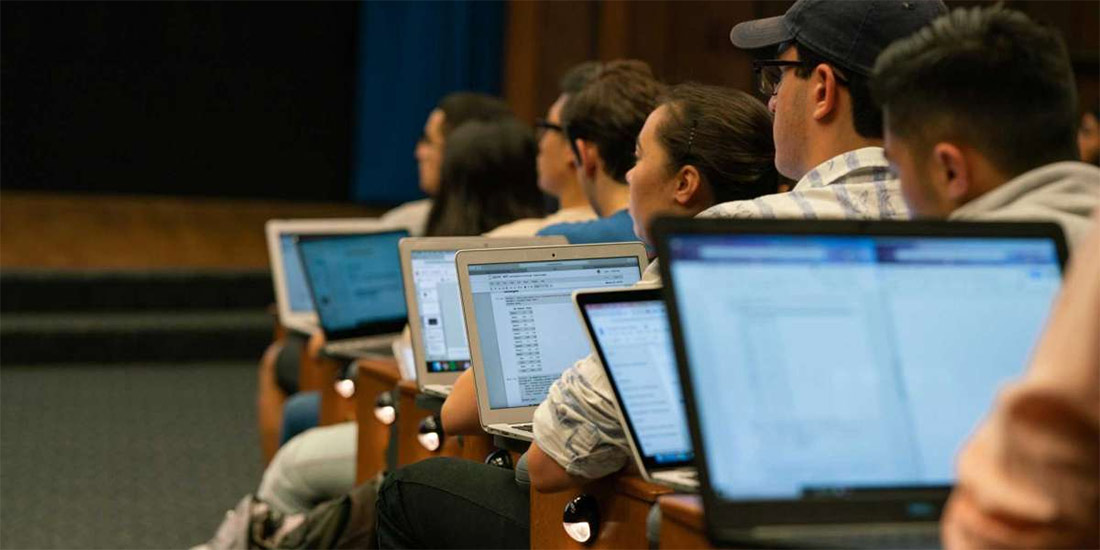
Students with computers listen to a lecture in David Wagner

Data science, the ‘new Latin’ for students, in demand in Silicon Valley

10/19/18 SF Chronicle — Data science is one of the fastest-growing fields of study at Berkeley, but the field is in such demand that jobs far outstrip the supply of graduates in the Bay Area
Illustration showing UC Berkeley ranked number two

Berkeley ranked #2 for blockchain

10/09/18 CoinDesk — A new survey ranks UC Berkeley second in the nation for blockchain education (and the only public school on the list). Berkeley was praised for its engineering prowess, its interdisciplinary courses and its vibrant on-campus community, including the Blockchain at Berkeley student group.
  • « Go to Previous Page
  • Go to page 1
  • Interim pages omitted …
  • Go to page 3
  • Go to page 4
  • Go to page 5
  • Go to page 6
  • Go to page 7
  • Interim pages omitted …
  • Go to page 13
  • Go to Next Page »
  • Contact
  • Give
  • Privacy
  • UC Berkeley
  • Accessibility
  • Nondiscrimination
  • instagram
  • X logo
  • linkedin
  • facebook
  • youtube
  • bluesky
© 2025 UC Regents